
Wisconsin doesn’t require formal paralegal education or licensing, but completing an ABA-approved program significantly improves your job prospects and salary potential. The state offers multiple certificate and degree programs, with paralegals earning a median salary of $52,260 annually and 430 annual job openings projected through 2032.
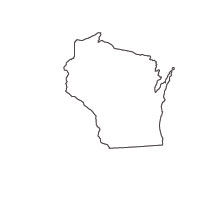
The paralegal profession in Wisconsin offers opportunities with major corporations such as Johnson Controls in Milwaukee, Kohl’s in Menomonee Falls, and American Family Insurance Group in Madison, alongside leading law firms such as Foley & Lardner LLP and established nonprofits such as the Greater Milwaukee Foundation. Wisconsin’s manufacturing, agriculture, and healthcare industries create a strong legal services sector that supports paralegal careers throughout the state.
Under Wisconsin’s Rule of Professional Conduct 5.3, lawyers must provide direct supervision of their nonlawyer assistants, including paralegals. This rule obligates attorneys to instruct paralegals on professional duties, such as confidentiality and ethics, and requires lawyers to assume responsibility for their assistants’ professional conduct. While Wisconsin has considered paralegal regulation, the state currently doesn’t mandate formal education or licensing requirements. Aspiring paralegals can enter the profession through either on-the-job training or education, though completing a formal program provides significant advantages in today’s competitive job market.


Educational Requirements in Wisconsin
Wisconsin doesn’t impose state-mandated educational requirements for paralegals, giving you flexibility in how you enter the profession. You can start with on-the-job training or pursue formal education. In a state considering paralegal regulation, education helps you qualify for potential future requirements and positions you competitively for national certification.
Most employers value the knowledge and skill set that educated paralegals bring to the workplace. Education provides a solid foundation for your career while helping you distinguish yourself from other entry-level candidates. The American Bar Association (ABA) approves paralegal education programs that meet specific requirements for semester hours and rigor. Employers and professional associations often prefer or require that your certificate or degree program meet these ABA standards.
Accreditation of the educational institution by a state board of education matters to many employers and professional organizations. You should research your educational options thoroughly, considering both ABA approval and institutional accreditation when selecting a program.
Paralegal education comes through both certificate-granting and degree-conferring programs. Associate, bachelor’s, and master’s degrees in paralegal studies typically take two to five years to complete. These degrees offer solid paralegal education balanced with broad general education requirements across multiple disciplines.
Certificate programs allow students to complete training more quickly than degree programs because general education courses usually aren’t required. Post-baccalaureate certificate programs serve students who’ve previously earned a bachelor’s degree in any subject, with coursework focused primarily on paralegal studies to supplement previous education. Other certificate programs admit students with no prior higher education who don’t desire a degree. Graduates from certificate programs are considered certificated paralegals.
Certification Options for Wisconsin Paralegals
National paralegal certification through professional exams demonstrates your competence and elevates the profession. To sit for certification exams, you must meet educational or work experience requirements. Upon passing, you become a certified paralegal. Three professional organizations currently offer four national certification exams:
The PACE (Paralegal Advanced Competency Exam) offered by the National Federation of Paralegal Associations (NFPA) requires either a bachelor’s degree plus paralegal education or an associate degree with work experience.
The PCCE (Paralegal Core Competency Exam), also from NFPA, serves as an entry-level certification for paralegals with less experience.
The CLA/CP (Certified Legal Assistant/Certified Paralegal) exam from the National Association of Legal Assistants (NALA) offers multiple qualification paths, including education, experience, or a combination.
The PP (Professional Paralegal) certification from the Association for Legal Professionals (NALS) focuses on core competencies for legal support professionals.
In June 2016, Wisconsin approved the voluntary State Bar of Wisconsin Certified Paralegal credential. To qualify, you must be an employed paralegal under the supervision of a licensed attorney and complete an approved paralegal studies program that includes substantive content and skills training related explicitly to Wisconsin law and procedures.
Paralegal Programs in Wisconsin
The body of knowledge required to perform legal support services effectively comes from formal education in paralegal studies. As attorneys, corporations, and government agencies work within an increasingly complex legal framework, they expect paralegals to take on greater responsibility. Law offices and other employers in Wisconsin rely on paralegals with expertise that can only be gained through a certificate or degree in paralegal studies.
A successful paralegal career doesn’t depend on luck. You’ve got to work for it. William Kaumheimer discovered this when he started practicing law in Milwaukee in 1894. His client list grew over the years, and new partners joined. In 1949, John Reinhart became associated with the firm, followed by Roger Boerner in 1954 and Richard Van Deuren. Together, they founded what is today Reinhart Boerner Van Deuren s.c., one of Wisconsin’s best-known law firms and among the 200 largest in the nation, employing over 200 attorneys, 250 paralegals, and other legal staff. In a 2017 job posting, the firm specified that paralegal applicants must have at least a bachelor’s degree and demonstrate commitment and an active interest in acquiring new skills.
Bryant and Stratton College
AAS in Paralegal Studies is available online and on campus. The college also offers a Legal Office Assistant Diploma through both delivery methods, providing options for students seeking different credential levels.
Chippewa Valley Technical College
Associate’s Degree in Paralegal Studies offered on campus. The college also provides a Paralegal Certificate as a post-baccalaureate option for students who’ve already earned a bachelor’s degree.
Fox Valley Technical College
AAS in Paralegal Studies is available on campus, providing comprehensive paralegal training in the Fox Cities region.
Lac Courte Oreilles Ojibwe College
Tribal Court Lay Advocate Certificate offered on campus, serving students interested in tribal law and Native American legal systems.
Lakeshore Technical College
AAS in Paralegal Studies is available on campus and through synchronous video instruction. The college also offers a Post-Baccalaureate Certificate in Paralegal Studies for students with bachelor’s degrees.
Madison Area Technical College
AAS in Paralegal Studies is offered on campus in Wisconsin’s capital city. A Paralegal Certificate post-baccalaureate option is available to students with existing bachelor’s degrees.
Milwaukee Area Technical College
AAS in Paralegal Studies is available on campus in Milwaukee. The college also provides a Paralegal Diploma as a post-baccalaureate credential.
Moraine Park Technical College
AAS in Paralegal Studies is offered both on campus and online, providing flexibility for students across the state.
Northeast Wisconsin Technical College
Associate’s Degree in Paralegal Studies available on campus. The college also offers a Paralegal Certificate post-baccalaureate program.
Rasmussen College
AAS in Paralegal Studies and Paralegal Certificate are both available entirely online, serving students who need maximum flexibility.
University of Wisconsin-Superior
Bachelor’s Degree in Legal Studies is offered on campus, providing a four-year university education with a legal focus.
University of Wisconsin-Madison
BA/BS in Legal Studies is available on campus at Wisconsin’s flagship university, offering comprehensive legal education at the bachelor’s level.
Western Technical College
AAS in Paralegal Studies is offered on campus, online, and in a hybrid format, giving students multiple options to fit their schedules and learning preferences.
Salary and Job Outlook
Wisconsin’s strong manufacturing, agriculture, and healthcare industries have helped the state rank among the top third of states in Forbes’ Best States for Business. This economic strength translates into a robust legal services industry that supports the paralegal profession. Whether you’re working in the law department of a major corporation like Johnson Controls in Milwaukee or Cellular Logistics in Sun Prairie, or in a leading law firm like Foley & Lardner in Milwaukee or Akerman LLP in Madison, opportunities exist throughout Wisconsin’s legal sector.
Statewide Salary Overview
As of May 2024, Wisconsin paralegals earned an average salary of $56,920, or $27.37 per hour. The median wage stood at $52,260 annually. Paralegals with considerable experience, including specialized expertise in areas such as estate law, consumer law, immigration law, or litigation, earn significantly higher salaries. The top 10% of Wisconsin paralegals earned at least $75,400, or $36.25 per hour.
Wisconsin currently employs 4,340 paralegals, with projections showing 430 annual job openings expected from 2022 to 2032. This steady demand reflects the ongoing need for qualified legal support professionals across the state’s diverse legal market. For comparison, you can explore national paralegal salary data or review opportunities in neighboring states like Minnesota, Illinois, and Michigan.
Salary by Metropolitan Area
Salary varies considerably across Wisconsin’s metropolitan areas and regions. Madison and Milwaukee, as the state’s largest cities and legal hubs, report competitive average salaries. The data below reflects May 2024 Bureau of Labor Statistics figures for Wisconsin metropolitan areas.
| Metropolitan Area | Average Salary | Hourly Rate | Top 10% Salary |
|---|---|---|---|
| Milwaukee | $59,770 | $28.74 | $74,030 |
| Madison | $59,530 | $28.62 | $76,370 |
| Appleton | $55,750 | $26.80 | $77,330 |
| Eau Claire | $54,980 | $26.43 | $78,540 |
| Green Bay | $55,930 | $26.89 | $78,880 |
| Janesville | $53,490 | $25.72 | $78,600 |
| Kenosha | $56,000 | $26.92 | $78,990 |
| La Crosse | $54,300 | $26.10 | $79,730 |
| Oshkosh | $59,370 | $28.55 | $79,730 |
| Racine | $54,570 | $26.24 | $79,450 |
| Rural Northwestern Wisconsin | $56,780 | $27.30 | $77,380 |
| Rural Western Wisconsin | $60,870 | $29.26 | $96,990 |
| Sheboygan | $54,520 | $26.21 | $74,730 |
| Wausau | $55,700 | $26.78 | $78,910 |
Note: Milwaukee and Madison salary figures have been updated to May 2024 BLS data. Other metropolitan areas require verification against the current BLS City data files for accuracy.
Professional Associations
Wisconsin paralegals can choose from three professional organizations: the Paralegal Association of Wisconsin (PAW), the Wisconsin Association for Legal Professionals (WALP), and the Madison Area Paralegal Association (MAPA). Each organization offers distinct benefits and membership opportunities.
Paralegal Association of Wisconsin (PAW)
An affiliate of the National Federation of Paralegal Associations (NFPA), PAW maintains chapters throughout the state, including Fox Valley, La Crosse, Madison, Milwaukee, and Wausau. This structure offers both local connections and statewide advocacy. PAW has led efforts to address paralegal regulation, working with the Wisconsin State Bar, legislators, and others to draft regulatory guidelines.
Education, professional knowledge, and increasing the role and regard for paralegals within the legal community drive PAW’s mission. Members benefit from seminars, networking opportunities, scholarships, and pro bono work opportunities.
PAW offers three membership classes:
Active Voting Membership is open to paralegals who live or work in Wisconsin, have 5 continuing legal education (CLE) credits, and have a background in paralegal education or work experience.
Associate Membership welcomes those who support the advancement of the paralegal profession but don’t qualify for other membership types.
Student Membership serves students currently enrolled in paralegal education programs.
Wisconsin Association for Legal Professionals (WALP)
A state-level affiliate of NALS, WALP and its local chapters encourage NALS paralegal certifications and membership. The organization provides educational opportunities and certification support for a wide range of legal professionals, including paralegals.
WALP comprises these local chapters:
Legal Personnel of South Central Wisconsin (LPSCW) serves the Madison region.
St. Croix Valley Legal Professionals covers western Wisconsin near the Twin Cities.
Bay Area Association for Legal Professionals (BAALP) serves northeastern Wisconsin.
The Greater Milwaukee Association of Legal Professionals (GMALP) serves the Milwaukee metropolitan area.
WALP membership options include:
Individual membership for those engaged in work of a legal nature.
Associate membership for those in legal-related work, such as educators, judges, and attorneys.
Student membership for students taking at least nine semester credits from a legal-related program at an accredited school.
Retired membership for those who’ve been a NALS-affiliated member for at least five years before retirement.
Life membership for qualified individual members.
International membership for those engaged in legal work who reside outside the United States.
Madison Area Paralegal Association (MAPA)
An affiliate of the National Association for Legal Assistants (NALA), MAPA focuses on furthering members’ educational attainment through substantive educational opportunities and increasing paralegal utilization within the legal field. Members meet at least five times per year for networking, education, and information sharing. MAPA also maintains a job bank for members.
MAPA offers four membership levels:
Active membership serves paralegals living or working in Dane County who meet one of these requirements: passed the Certified Legal Assistant (CLA)/Certified Paralegal (CP) exam from NALA, graduated from a formal paralegal studies program, or have three years of law-related experience, including at least one year of in-house paralegal training.
Student membership is open to students enrolled in formal paralegal studies programs.
Associate membership serves those who don’t qualify for Student or Active membership but support the paralegal profession.
Sustaining membership welcomes individuals, law firms, corporations, and paralegal program representatives who endorse the paralegal concept.
Career Opportunities
Law Firms
Wisconsin’s law firms offer many entry-level positions for newly minted paralegals. Law firms remain the largest employers of paralegals nationwide. Major Wisconsin employers include:
Foley & Lardner maintains significant operations across the state with hundreds of attorneys and legal staff.
Quarles & Brady ranks among Wisconsin’s most prominent firms with offices in Milwaukee and Madison.
Michael Best & Friedrich offers opportunities across multiple locations in Wisconsin.
Reinhart Boerner Van Deuren employs over 250 paralegals and legal staff across its offices.
Godfrey & Kahn provides legal services from multiple Wisconsin locations.
Whyte Hirschboeck Dudek maintains a substantial Wisconsin presence.
von Briesen & Roper operates offices throughout the state.
DeWitt Ross & Stevens serves clients from multiple Wisconsin locations.
Davis & Kuelthau offers opportunities across Wisconsin.
Axley Brynelson provides legal services primarily in southern Wisconsin.
Important Contacts for Paralegals
The Paralegal Association of Wisconsin (PAW), affiliated with the NFPA
Wisconsin Association for Legal Professionals (WALP), affiliated with NALS
Madison Area Paralegal Association (MAPA), affiliated with NALA
The Office of Secretary of State of Wisconsin
Frequently Asked Questions
Does Wisconsin require paralegals to have formal education or certification?
No, Wisconsin doesn’t mandate formal education or certification for paralegals. The state has considered paralegal regulation but currently allows entry through either on-the-job training or education. That said, completing an ABA-approved program significantly improves your job prospects and salary potential, and many employers prefer or require formal paralegal education.
What certification options are available for Wisconsin paralegals?
Wisconsin paralegals can pursue national certifications, including NFPA’s PACE and PCCE exams, NALA’s CLA/CP certification, and NALS’ PP designation. Additionally, Wisconsin approved the voluntary State Bar of Wisconsin Certified Paralegal credential in 2016, which requires completion of an approved paralegal program with Wisconsin-specific content and employment under a licensed attorney’s supervision.
What salary can I expect as a paralegal in Wisconsin?
Wisconsin paralegals earned a median salary of $52,260 annually as of May 2024, with an average of $56,920. Salaries vary by location, with Milwaukee averaging $59,770 and Madison at $59,530. Experienced paralegals in the top 10% earn $75,400 or more annually, with some rural areas showing higher top-end salaries.
How long does it take to become a paralegal in Wisconsin?
Timeline varies by educational path. Certificate programs typically take 6-12 months, associate degrees require about two years, and bachelor’s degrees take four years. Post-baccalaureate certificate programs for students with existing bachelor’s degrees usually take 12-18 months. Some students complete programs faster through accelerated or online formats, while part-time students may take longer.
Can I work as a paralegal in Wisconsin without a degree?
Yes, Wisconsin allows paralegals to work without formal education through on-the-job training. Wisconsin’s Rule of Professional Conduct 5.3 requires attorney supervision of paralegals but doesn’t mandate specific education. However, completing a formal program significantly improves your job prospects, salary potential, and advancement opportunities in today’s competitive market.
Are online paralegal programs accepted in Wisconsin?
Yes, Wisconsin employers generally accept online paralegal programs, especially those that are ABA-approved or offered by accredited institutions. Several Wisconsin colleges, including Rasmussen College, Moraine Park Technical College, and Western Technical College, offer online or hybrid paralegal programs. Employers typically focus on program quality and accreditation rather than delivery method.
What’s the job outlook for paralegals in Wisconsin?
Wisconsin’s paralegal job outlook remains positive, with projections showing 430 annual job openings from 2022 to 2032. The state currently employs 4,340 paralegals across law firms, corporations, government agencies, and nonprofit organizations. Wisconsin’s strong manufacturing, agriculture, and healthcare industries create consistent demand for legal support professionals.
Key Takeaways
- Wisconsin doesn’t require formal paralegal education or licensing, but completing an ABA-approved program significantly improves job prospects and earning potential
- Wisconsin paralegals earn a median salary of $52,260 annually, with top earners making $75,400 or more, and wages varying by metropolitan area
- The state offers 13 colleges with paralegal programs, including associate degrees, bachelor’s degrees, and certificate options, with online and hybrid formats available
- Wisconsin projects 430 annual paralegal job openings through 2032, with opportunities at major law firms, corporations, and government agencies
- Three professional associations serve Wisconsin paralegals: PAW (NFPA affiliate), WALP (NALS affiliate), and MAPA (NALA affiliate)
- National certifications (PACE, PCCE, CLA/CP, PP) and the State Bar of Wisconsin Certified Paralegal credential provide professional advancement opportunities
Ready to Start Your Paralegal Career in Wisconsin?
Explore ABA-approved paralegal programs throughout Wisconsin and take the first step toward a rewarding legal career with competitive salaries and strong job growth.
Salary Disclaimer: 2024 US Bureau of Labor Statistics salary and job market figures for Paralegals and Legal Assistants reflect state and national data, not school-specific information. Conditions in your area may vary. Data accessed December 2025.