Online paralegal certificate programs give career changers who already hold a degree focused legal training in about 3 to 14 months. Strong programs hold institutional accreditation, and ABA-approved options are now available fully online, though the ABA requires at least 9 semester credits of live, synchronous instruction.

Earning a paralegal certificate is one of the fastest, most flexible paths into legal support work available today. These programs offer an efficient way to move into legal work without starting a second degree from scratch.
The Bureau of Labor Statistics reports a median paralegal wage of $62,890 per year, or $30.24 per hour, as of May 2025. BLS projects little or no change in national paralegal employment between 2025 and 2035, with about 40,800 openings each year as workers leave the occupation. That means hiring continues, but you’ll be competing for it, and specialized training in the legal field is what sets candidates apart. If your bachelor’s degree didn’t prepare you for legal work, a post-degree certificate program can provide the focused expertise employers screen for.
Whether you’re switching careers or returning to the workforce, online paralegal certificate programs deliver professional training on your schedule. You’ll gain practical skills in legal research, document preparation, case management, and litigation support without putting your life on hold.
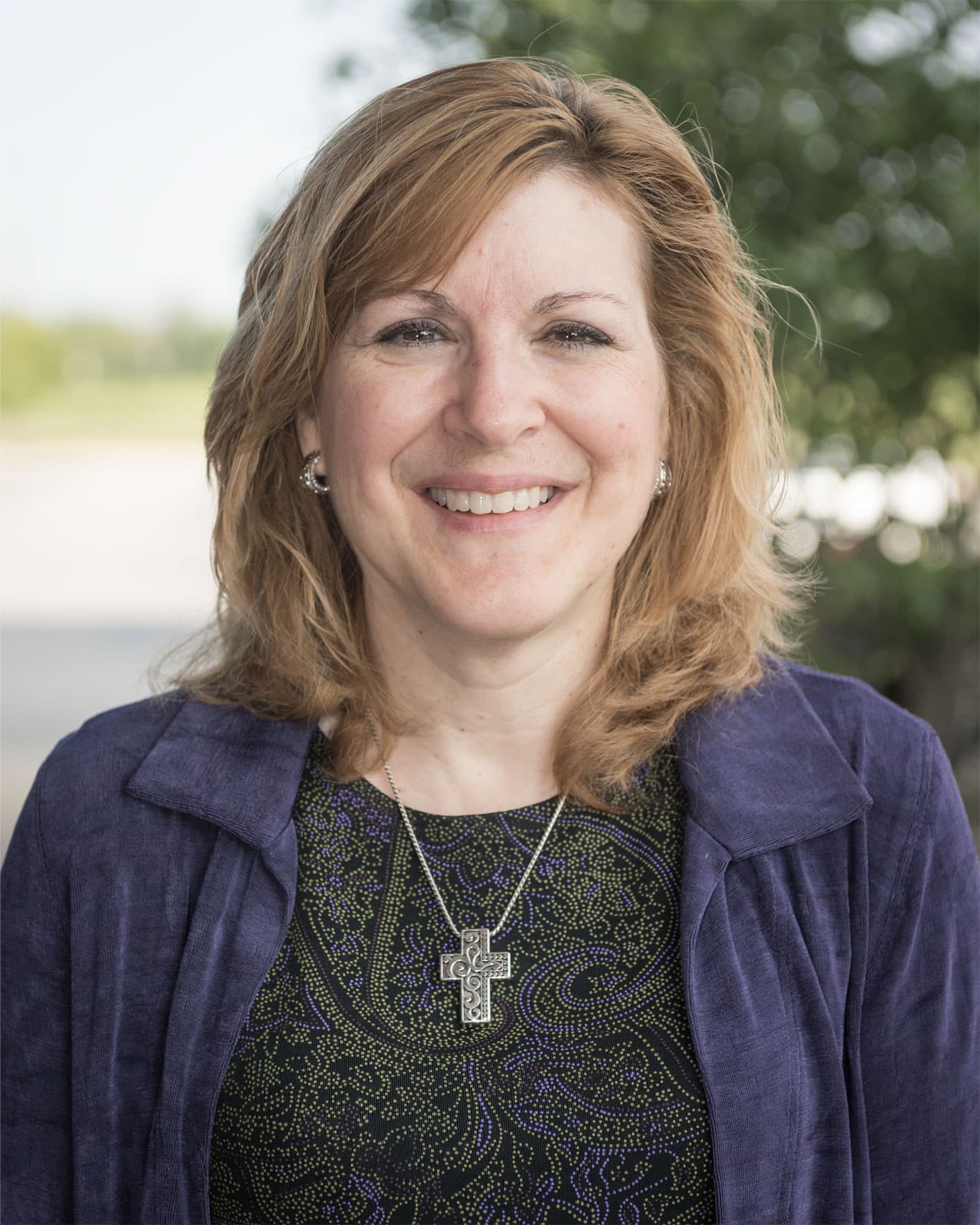
Program Coordinator, Moraine Valley Community College
Cathi is an associate professor at Moraine Valley Community College, where she coordinates the Office Technology program and serves as internship coordinator. She also works with the college’s paralegal studies students. She spoke with us about training students to prepare legal documents through the systems courts actually use, which is one of the practical skills that separates a strong certificate program from a purely theoretical one.
Interviewed for our faculty series. Not an author of this page.
Why Choose an Online Paralegal Certificate Program?
If becoming a paralegal sounds like the start of an exciting legal career, online certificate programs should be at the top of your list. You’ve already earned the bachelor’s degree that most employers want to see. What you need now is specialized legal training.


Law firms, corporate legal departments, and court systems increasingly expect paraprofessional training in law, regardless of your degree field. Gone are the days when you could start at the front desk and work your way into paralegal duties. Today’s legal employers look for focused education in legal procedures, research methods, and case management.
Post-degree online paralegal certificate programs directly address this need. With completion times of a year or less, they’re quick and accessible. You can maintain your current job and responsibilities while building expertise for your next career move.
How We Evaluated These Programs
We assessed programs on instructor credentials, curriculum quality, accreditation status, student support, and delivery format. Every program detail in this guide was checked against the school’s own published materials in September 2026, and every ABA approval claim was verified against the American Bar Association’s August 2026 approved-program directory rather than school marketing copy or third-party rankings.
That verification step matters more than it sounds. Program pages go stale, institutions merge and change names, and approval status gets repeated secondhand long after it’s no longer accurate. Where we couldn’t confirm something from a primary source, we left it out or said so.
Four of our ten picks hold ABA approval and are delivered online. The other six are solid programs that sit outside the approval process, for reasons worth understanding before you rule anything out. Each entry states its status plainly.
Comparison of Certificate Types
Certificate programs come in a few distinct forms, and the differences affect cost, transferability, and who can enroll. The table below sets out what to expect from each.
| Program Feature | Post-Bachelor’s Certificate | Graduate Certificate | Standalone Certificate |
|---|---|---|---|
| Typical Duration | 6-12 months | 9-15 months | 3-8 months |
| Prerequisites | Bachelor’s degree required | Bachelor’s degree required | None to associate’s degree |
| Credit Hours | 18-30 credits | 15-24 credits | 12-18 credits |
| ABA Approval | Available at some institutions | Available at some institutions | Rarely, credit-hour minimums apply |
| Transferability | Usually non-transferable | May transfer to master’s | Rarely transferable |
| Format | Fully online or hybrid | Online, hybrid, or on-campus | Primarily online |
| Best For | Career changers with degrees | Those considering law school | Quick entry or skill building |
What Makes These Programs Stand Out?
You’re probably wondering how we narrowed hundreds of options down to ten. These are the criteria that separate a program worth your tuition from one that has a website.
Expert Legal Instructors

Any education is only as strong as the people delivering it. The best programs employ a mix of experienced paralegals and practicing attorneys who bring real-world perspective to your coursework.
Learning from attorneys gives you insight into how lawyers think and work. Since you’ll be taking direction from lawyers on the job, understanding their perspective from day one gives you a real advantage. But teaching requires more than legal expertise. The programs we recommend combine practical experience with genuine teaching ability.
Flexible Access and Scheduling
Flexibility is the main draw of online training, but it’s worth understanding what kind of flexibility a program actually offers.
Some programs are fully asynchronous, meaning you watch lectures and complete assignments whenever it suits you. Others hold live virtual class sessions on a set evening each week. Both work for people with jobs, but they ask different things of your calendar, so check the format before you enroll. Any ABA-approved program will include some live instruction, because the ABA requires at least nine semester credits of synchronous legal specialty coursework.
“Our program is also all online and that makes it so convenient for those working students who can work at their own pace from their own homes.”
Cheryl Clark, ACP · Hutchinson Community College at the time of this interview
Strong learning management systems make either format workable. The best programs provide multiple communication channels, including discussion boards, email, and video conferencing so that you can reach instructors and classmates on your terms.
Reliable Technical Support
Flexibility means nothing if technical issues prevent you from accessing your coursework. That’s why solid technical support is non-negotiable for online education.
You need support available whenever you’re studying, whether that’s early morning or late at night. The best programs offer extended-hours assistance and use proven, reliable technology platforms. Of course, the best support call is the one you never have to make.
Reasonable Costs
Certificate program pricing varies widely, and the number on a program page doesn’t always tell you much on its own. Tuition changes annually, so check the current figure directly with any school you’re considering.
A few things drive the differences. Non-credit continuing-education certificates generally cost less than graduate-level certificates that award transferable academic credit. Programs at private universities tend to run higher than those at public institutions or community colleges. Materials and technology fees are sometimes bundled and sometimes billed separately, which makes advertised prices hard to compare directly. Ask for the all-in cost, including books and any exam or proctoring fees, before you commit.
Credit-bearing programs at accredited institutions may also qualify for federal financial aid, which non-credit programs typically don’t. That can matter more to your out-of-pocket cost than the sticker price does.
Verified Program Details
A program that looked good three years ago may not exist in the same form today. Schools merge, programs get discontinued, and course catalogs quietly change while marketing pages stay put.
Two of our ten picks illustrate the point. The paralegal certificate now at National University started at John F. Kennedy University, moved to Northcentral University when JFKU closed, and landed at National when Northcentral was consolidated. Rasmussen University combined with American Public University System in August 2026. Neither change is a problem, but older guides still list these programs under institutions that no longer exist under those names. Confirm what you’re applying to.
Certificate vs Certification: Key Differences

These two similar words cause endless confusion. Even professional organizations sometimes use them inconsistently. But understanding the distinction matters for your career planning.
The American Bar Association has clarified this issue, and here’s what you need to know.
Paralegal Certificates: Educational Programs
A paralegal certificate is an educational credential you earn by completing a structured program of study. Think of it as specialized training delivered through a college, university, or proprietary school.
Post-degree certificates in paralegal studies are designed for people who already hold an associate’s or bachelor’s degree in another field. These programs assume you’ve completed general education requirements, so they focus on legal coursework.
You’ll study topics like legal research and writing, civil litigation, contracts, torts, criminal law, and legal ethics. Programs typically take 6 to 12 months to complete and result in a certificate showing you’ve finished the coursework.
Good programs don’t stop at the doctrine. They put you in the systems you’ll use on the job, which is what Cathi Predl described about her students’ coursework at Moraine Valley Community College.
Faculty Voice
“We also work on the Cook County Clerk of the Circuit Court website so that students are familiar with going online and preparing documents online.
Post-bachelor’s certificate programs differ from graduate certificates. Most post-bachelor’s programs mirror the paralegal courses offered in a school’s bachelor’s program but skip the general education classes. Credits usually don’t transfer toward master’s degrees, making the certificate your endpoint rather than a stepping stone. Graduate-level certificates sometimes do transfer, so ask if that matters to you.
Paralegal Certification: Professional Credentials
Paralegal certification means demonstrating your competence by passing an examination after you meet specific education and experience requirements. Once you earn it, you can use the credential after your name.
National paralegal certifications, such as NALA’s CP and NFPA’s CRP and RP, are voluntary. State requirements vary, and some states regulate use of the paralegal title or run their own registration, certification, or limited-license programs, so check your state’s rules alongside the national picture.
Two national organizations currently offer certification exams open to individual candidates:
NALA: The Paralegal Association
Awards the Certified Paralegal (CP) credential. Candidates qualify through one of three pathways based on paralegal education, a bachelor’s degree, or work experience. The education pathway covers graduates of ABA-approved programs, associate and bachelor’s paralegal programs, and post-baccalaureate certificate programs, and it doesn’t require prior paralegal work experience. NALA also offers the Advanced Certified Paralegal (ACP) program in specific practice areas, which builds on the CP. ACP practice-area courses are advanced coursework for existing CP holders, not standalone credentials.
National Federation of Paralegal Associations (NFPA)
Administers two distinct exams. The Paralegal CORE Competency Exam (PCCE) confers the CORE Registered Paralegal (CRP) credential and is designed for paralegals early in their careers. The Paralegal Advanced Competency Exam (PACE) confers the Registered Paralegal (RP) credential and carries higher experience requirements. The exam and the credential have different names, so watch for sources that treat “PACE certification” as a credential.
NALS, the National Association for Legal Support Professionals
NALS has placed all of its individual certification exams on temporary hiatus while it revises them, so new candidates can’t currently register for the Professional Paralegal (PP) exam. Existing PP and CLP holders keep their credentials and can recertify. The organization’s entry-level exam, the Certified Legal Support Professional (LSP), is administered only through partner school groups during the pause. New PLS credentials stopped being issued in January 2022, and the NALS Specialty Certificate program is closed to new applications. If you see a source listing four open national exam paths, it’s out of date.
Continuing education and periodic renewal maintain any of these credentials in good standing. Learn more at NALA, NFPA, and NALS.
Some states add their own layer. Florida, North Carolina, Ohio, and Texas run voluntary bar-sponsored registration or certification programs, with Texas certifying paralegals in selected practice areas through its Board of Legal Specialization. These carry weight in-state but don’t transfer nationally.
A separate group of states regulates who may use the title or perform certain work. California’s Business and Professions Code section 6450 sets education requirements for anyone calling themselves a paralegal in the state; it is a title regulation rather than a certification credential. Arizona licenses Legal Paraprofessionals, who can represent clients in limited matters. Washington’s Limited License Legal Technician program was closed to new applicants and has since sunset, so it’s no longer a path for newcomers, even though existing licensees remain. Check your state’s current rules directly, since these change.
How to Choose the Right Program
With hundreds of programs available, selecting the right one requires careful consideration of your specific situation and goals.
Consider your timeline. If you need to enter the field quickly, shorter certificate programs might work better than comprehensive post-bachelor’s options. Longer programs often provide deeper preparation, so weigh speed against depth.
Evaluate the total cost. Calculate tuition, fees, and materials together, and ask whether the program is credit-bearing and aid-eligible. Consider whether you can work while studying or if you will need to reduce your hours.
Check accreditation carefully. Verify the institution holds accreditation from a U.S. Department of Education-recognized agency, and check ABA approval separately if your local market values it.
Review the curriculum. Strong programs cover legal research and writing, litigation procedures, legal technology, and professional ethics. Look for courses in practice areas that interest you.
Investigate instructor credentials. Faculty should include experienced paralegals and attorneys with real-world practice experience. Teaching ability matters as much as legal expertise.
Assess technology and support. Online programs require reliable platforms and responsive technical support. Request a demo or trial access to evaluate the learning environment.
Ask what career support you get. A certificate opens doors, but you still have to walk through them. Find out what resume help, interview preparation, and placement assistance the program provides, and whether alums keep access after they finish.
Career services vary a lot between programs, and the tools a school gives you can matter as much as the coursework. Christen Pacton-Garcia described what her students at Ashworth College could draw on when they started applying for roles.
“Which is an online toolkit that offers step-by-step guidance for building their resume, drafting cover letters, writing thank you notes, and more.”
Christen Pacton-Garcia · Ashworth College
Connect with current students or alums. Ask about their experiences with course quality, instructor engagement, technical issues, and career support services.
Understanding Accreditation Standards
Two separate things are called “accreditation” in paralegal education, and keeping them apart will save you from confusion.
Institutional accreditation from an agency recognized by the U.S. Department of Education is the baseline. It affects financial aid eligibility, credit transfer, and whether employers recognize your credential. Institutional accreditors examine everything from financial stability to faculty credentials to student outcomes. Verify it first, using the Department of Education’s database rather than the school’s own marketing copy. Every program we recommend holds it.
ABA approval is separate and voluntary. The American Bar Association’s Standing Committee on Paralegals has been approving paralegal education programs for over 50 years. Its directory, updated each February and August, listed 164 institutions with approved programs as of August 2026. It signals that a program meets the association’s standards for curriculum content, faculty qualifications, library and technology resources, and student services. Some employers in larger legal markets prefer or require graduates of approved programs, so it’s worth checking whether local postings mention it.
Yes, You Can Earn an ABA-Approved Certificate Online
This is where much of the older guidance, including an earlier version of this page, got it wrong. The ABA once declined to approve programs delivered entirely online. That is no longer the case. The association revised its guidelines in 2020 to accept synchronous online classroom technology in place of a traditional classroom, and 31 of those 164 institutions now offer at least one online option, among them LSU, UCLA Extension, National University, the University of Oklahoma Law Center, Loyola University Chicago, and the University of San Diego.
Two conditions are worth understanding before you treat approval as a filter.
First, at least nine semester credits of legal specialty coursework must be completed synchronously. An approved online program is therefore never fully self-paced. If you need complete scheduling freedom, a non-approved program from a properly accredited institution may suit you better, and plenty of them are strong.
Second, approval attaches to a specific program at an institution, not to every format that institution offers. A school can hold ABA approval for its on-campus certificate while running a separate online track that isn’t approved by the ABA. Nova Southeastern, further down this list, is exactly that case. The ABA’s directory flags only whether at least one online option exists, so it won’t tell you which format carries the approval, and the annotation isn’t exhaustive. Ask the program directly which track you’d be enrolling in.
When Approval Isn’t the Right Test
The absence of ABA approval doesn’t make a program inadequate, and treating it as a pass-fail screen will cut good options from your list.
Undergraduate certificate programs with fewer than 60 semester hours can’t be approved, regardless of quality, because they don’t meet the credit-hour threshold. Non-credit continuing-education certificates fall outside the process entirely, which is why well-regarded programs at Boston University, Duke, and Rice don’t appear in the directory. Many respected programs operate outside it by design.
Approval also isn’t permanent. The ABA can place a program under sanctions, and the directory notes when it has, so it’s worth looking at the actual listing rather than a school’s summary of it.
For more information about ABA paralegal education standards, visit the American Bar Association’s paralegal resources.
Our Top Picks for the Ten Best Online Paralegal Certificate Programs for 2026
Every program below is delivered online and sits at an institutionally accredited school. Details were verified against each school’s published materials in September 2026, and approval status was verified against the ABA’s August 2026 directory. Tuition changes annually and schools bundle fees differently, so confirm current pricing directly with the program before you apply.
| Program | Format | Length | ABA-Approved |
|---|---|---|---|
| UCLA Extension | Live Online | About 5 or 11 months | Yes |
| Hamline University | Fully online, live weekly | About 12 months | Yes |
| National University | Online, hybrid available | Varies by certificate | Yes |
| American National University | Fully online | Varies | Yes |
| Boston University | Fully online | 14 weeks | No, non-credit |
| Rice University | Online or on campus | 3 to 5 months | No |
| Nova Southeastern University | Online track available | 30 credits | On-campus track only |
| Purdue Global | Fully online | 36-37 quarter credits | No |
| Duke University | Fully online, self-paced | Up to one year | No, non-credit |
| Rasmussen University | Fully online | As few as 8 months | No |

UCLA Extension
Paralegal Training Program
Los Angeles, California
- ABA-approved for more than 50 years, and one of the first paralegal programs in the country to earn approval
- Delivered in a Live Online format, with a two-quarter daytime sequence of roughly five months or a four-quarter evening sequence of roughly eleven months
- Instructors are approved by the UCLA School of Law
- Meets the education requirements to work as a paralegal in California under Business and Professions Code section 6450
- An internship course is available to eligible students for real-world experience
UCLA Extension’s Paralegal Training Program is among the longest-running approved programs in the country. The two scheduling tracks are the main decision point. The daytime sequence meets Monday through Friday mornings and moves quickly, while the evening sequence meets two nights a week and spans a year. Coursework covers contracts, torts, criminal law, real property, business organizations, civil procedure, legal research, and legal technology.

Hamline University
Graduate Paralegal Certificate
Saint Paul, Minnesota
- Approved by the American Bar Association Standing Committee on Paralegals
- Fully online, completed in about 12 months across five courses
- Classes meet live one weekday evening per week
- All credits are graduate-level and apply toward Hamline’s Master in the Study of Law
- Requires a bachelor’s degree with a GPA of at least 3.0
Hamline has been training paralegals since 1984. The distinguishing feature here is that the certificate is graduate-level, so the credits aren’t a dead end. Finish the certificate, and you can move into the Master in the Study of Law and complete it in one additional year. Hamline’s own licensure disclosure notes the certificate prepares graduates for paralegal employment in Minnesota and any state where licensure isn’t required, and that it doesn’t qualify graduates to practice law.
Paralegal Specialist Certificates
Los Angeles, California
- ABA-approved, covering all of the school’s paralegal certificates
- Choose a specialization in corporate law, criminal law, or litigation, with a separate certificate in legal technology and e-discovery
- Offered online, with onsite and hybrid options at the Los Angeles campus
- At least nine semester credits of legal specialty coursework are completed synchronously, per ABA guidelines
- National University is accredited by the WASC Senior College and University Commission
This program has moved twice, which is worth knowing if you find older write-ups. It originated at John F. Kennedy University, which closed at the end of 2020 and transferred its law programs to Northcentral University as the JFK School of Law. Northcentral has since been consolidated into National University, where the paralegal certificates now sit. The specialization structure is the draw. Rather than a single generalist certificate, you pick the practice area you want to work in.
American National University
Certificate Program in Paralegal Studies
Salem, Virginia
- Approved by the American Bar Association
- Among the first DEAC-accredited online paralegal certificate programs to hold ABA approval
- Designed exclusively for students who already hold an associate’s or bachelor’s degree
- Curriculum built with NALA’s Certified Paralegal exam in mind
- Career services support for resume, cover letter, and interview preparation
ANU built this program specifically for people arriving with a degree in another field, so there’s no general education padding. Coursework covers the structure of the American legal system, legal research and writing, professional ethics, and the major civil law categories including torts, contracts, corporate, property, and family law. The combination of ABA approval and fully online delivery is still relatively uncommon, which is what earns ANU a place here.
Boston University
Online Certificate in Paralegal Studies
Boston, Massachusetts
- Completed in 14 weeks, structured as seven two-week modules
- Six start dates per year
- All instructors are practicing attorneys
- Includes a legal technology module covering the tools paralegals use day to day
- A bachelor’s degree isn’t required, though BU recommends one or significant related work experience
This is the fastest program on our list, and it comes from BU’s Center for Professional Education, which has offered paralegal training for nearly 40 years. Coursework spans legal research, legal writing and reasoning, legal technologies, real estate law, business law, litigation, and probate and family law. It’s a non-credit certificate, so it isn’t ABA-approved and generally won’t qualify for federal financial aid, but BU offers an interest-free two-installment payment plan. Graduates from 2026 onward can add two-week modules in criminal law, elder law, or a paralegal career workshop.

Rice University
Paralegal Certificate Program
Houston, Texas
- Completed in 3 to 5 months, with two scheduling options
- Offered in both an online format and an on-campus format
- Taught by practicing attorneys
- Skills-based curriculum with training transferable to any firm
- Includes career search support
- Not ABA-approved, as Rice does not appear in the ABA’s approved-program directory
Rice’s Glasscock School of Continuing Studies runs this as a skills-first program rather than a survey of legal theory. Coursework covers legal research and analysis, litigation stages, discovery and deposition preparation, Bluebook citation, client interviewing, and employment strategies. The school offers an Advanced Paralegal series afterward for graduates who want to concentrate in specific areas of law. Check which sections are running online in a given term, since the program is delivered in both formats and availability varies.
Nova Southeastern University
Paralegal Studies Post-Baccalaureate Certificate
Fort Lauderdale, Florida
- Offered through NSU’s Shepard Broad College of Law
- Requires 30 credits of paralegal studies coursework and an undergraduate degree for admission
- Completed with a paralegal portfolio and an exit interview with the program coordinator
- Online coursework requires proctored exams at approved testing sites
- NSU’s paralegal certificate is ABA-approved, but NSU publishes its 30-credit online sequence separately as a non-ABA track, so the approval covers the on-campus route
NSU is the largest private university in Florida, founded in 1964, and this certificate is housed in its law school rather than a continuing-education arm. That means access to law school faculty and academic resources. The portfolio and exit interview are unusual for a certificate program and give you something concrete to show employers.
This is also the clearest example on our list of approval attaching to a format rather than a school. NSU is genuinely ABA-approved for its paralegal certificate, and the ABA’s August 2026 directory confirms this. NSU itself publishes the online sequence separately as a non-ABA track, though, so the approved route here is the on-campus one. If ABA approval is what you’re after, one of the 31 institutions that record an online option is the better target. The proctored exam requirement also means the online coursework isn’t purely remote in practice.
Purdue Global
Pathway to Paralegal Postbaccalaureate Certificate
West Lafayette, Indiana
- Requires a bachelor’s degree from an accredited institution
- Consists of 36 or 37 quarter credit hours, depending on your elective
- Completed entirely online, with live seminars, discussion boards, and one-on-one instructor feedback
- Choose one of four electives, covering wills, trusts and estate planning, or family law, or bankruptcy and debtor-creditor law, or real estate law
- Accredited by the Higher Learning Commission, though not ABA-approved
Purdue Global describes itself as the largest university provider of legal support services programs in the country. Coursework covers legal research, evaluation of legal sources, communication in legal environments, civil litigation, criminal law, and legal ethics. The elective choice is the primary way to shape the credential to match the work you actually want. Purdue Global also offers a three-week introductory trial period for undergraduate programs, and prior learning credit may reduce both cost and time.
Duke University
Paralegal Online Certificate
Durham, North Carolina
- A 300-hour course of study offered entirely online and fully self-paced, with no assignment due dates
- All coursework must be completed within one year of starting
- Requires a minimum of a two-year associate degree for admission
- Instructors are experienced practicing attorneys who work one-on-one with students
- Choose two of five areas of law to study alongside the essential skills core
- Includes writing labs and document templates for all 50 states, plus access to Lexis and Westlaw
Duke Continuing Studies has offered a paralegal certificate since 2003, and the online version is the most schedule-flexible program on this list. There are genuinely no deadlines inside the one-year window, which suits people with unpredictable work hours. The 50-state template library is a practical touch, letting you produce documents for your own jurisdiction rather than a generic example. This is a non-credit certificate delivered in partnership with the Institute of Career Development, so it isn’t ABA-approved.
Rasmussen University
Paralegal Certificate
Online, part of the American Public University System
- Completed in as few as 8 months
- Designed for students who already hold an associate degree or higher
- Curriculum prepares graduates to sit for NALA’s Certified Paralegal exam
- Coursework uses legal-specific databases and practice software, with a capstone simulating a law office
- Dedicated academic advisor, librarian and tutoring access, and 24/7 technical support
- Not ABA-approved, as Rasmussen does not appear in the ABA’s approved-program directory
Rasmussen’s institutional status changed recently. On August 4, 2026, it combined with the American Public University System and the Hondros College of Nursing to form a single institution accredited by the Higher Learning Commission. The program continues to target degree holders seeking a fast, focused legal credential without an internship requirement. Coursework covers legal writing, family law, legal ethics, and civil litigation. Given the recent consolidation, confirm current program availability and accreditation details directly with the school.
Frequently Asked Questions
How long does an online paralegal certificate program take to complete?
Most online paralegal certificate programs take 6 to 12 months. Accelerated options run shorter, with Boston University’s program finishing in 14 weeks and Rice University’s in 3 to 5 months, while graduate-level certificates such as Hamline University’s take around 12 months. Your completion time depends on the program structure, your course load, and whether you study part-time or full-time.
Can you earn an ABA-approved paralegal certificate online?
Yes. The American Bar Association revised its guidelines in 2020 to accept synchronous online classroom technology in place of a traditional classroom. Of the 164 institutions with approved programs in the ABA’s August 2026 directory, 31 record at least one online option, including UCLA Extension, LSU, National University, and the University of Oklahoma Law Center. Two conditions apply. At least nine semester credits of legal specialty coursework must be completed synchronously, so an approved online program isn’t fully self-paced. And approval covers a specific program rather than every format a school offers, so confirm which track is approved before you enroll.
Do employers accept online paralegal certificates?
Yes, employers widely accept online paralegal certificates from accredited institutions. What matters most is that the school holds institutional accreditation and the curriculum covers essential legal skills. Some employers in larger legal markets prefer graduates of ABA-approved programs, and those are now available online, so check local job postings to see whether that preference shows up in your market.
What’s the difference between a paralegal certificate and paralegal certification?
A paralegal certificate is an educational credential earned by completing coursework at a college or university. Paralegal certification is a professional credential earned by passing an exam after meeting education and experience requirements. NALA offers the Certified Paralegal exam and NFPA offers the PCCE and PACE exams. You earn a certificate through education and earn certification through examination.
Can I get financial aid for an online paralegal certificate program?
It depends on whether the program is credit-bearing. Many credit-bearing certificate programs at accredited institutions qualify for federal financial aid, while non-credit continuing-education certificates generally don’t. Check with the program’s financial aid office and complete the FAFSA to determine your eligibility. Some employers also offer tuition assistance for professional development.
Do I need a bachelor’s degree before starting a paralegal certificate program?
It depends on the program type. Post-bachelor’s and post-baccalaureate certificate programs require a bachelor’s degree in any field. Others set the bar at an associate degree, as Duke University’s online program does, and some have no degree requirement at all. Many employers prefer candidates with a bachelor’s degree plus paralegal training, so post-bachelor’s certificates often provide the strongest credentials for career changers.
Are ABA-approved programs better than non-approved programs?
ABA approval indicates a program meets the association’s standards, and some employers in larger legal markets prefer it. It isn’t the only measure of quality. Undergraduate certificate programs under 60 semester hours can’t be approved regardless of how good they are, and non-credit programs fall outside the process entirely, which is why respected offerings at Boston University, Duke, and Rice aren’t listed. Institutional accreditation from a Department of Education-recognized agency remains the essential requirement for program quality and financial aid eligibility.
What salary can I expect after completing an online paralegal certificate?
The Bureau of Labor Statistics reports a median paralegal wage of $62,890 per year, or $30.24 per hour, as of May 2025. Pay is distributed widely, from $44,740 per year at the 10th percentile to $101,500 at the 90th. Those are pay-distribution percentiles rather than career stages, so where you land depends heavily on your metropolitan area, employer type, and practice area. Learn more about paralegal salaries by state.
Key Takeaways
- Online paralegal certificate programs deliver focused legal training in roughly 3 to 14 months for career changers who already hold a degree
- ABA-approved paralegal certificates are available online, but the ABA requires at least nine semester credits of live synchronous instruction, so approved programs are never entirely self-paced
- Approval attaches to a specific program rather than to a whole school, so a school can be ABA-approved while its online track is not
- Institutional accreditation from a Department of Education-recognized agency is the essential requirement, and it determines financial aid eligibility in a way ABA approval does not
- A certificate is an educational credential earned through coursework, while certification is a professional credential earned through examination
- Only NALA’s CP and NFPA’s PCCE and PACE exams are currently open to individual candidates, since NALS has paused its individual certification exams
- Tuition changes annually and is bundled differently by each school, so confirm the all-in cost, including materials and fees, directly with any program you’re considering
Ready to Start Your Paralegal Career?
Compare accredited paralegal certificate programs on format, length, and ABA approval status. Find the program that fits your schedule and your market.
May 2025 US Bureau of Labor Statistics salary figures for Paralegals and Legal Assistants. National 2025-35 employment projections from the US Bureau of Labor Statistics Employment Projections program. Figures reflect national data, not school-specific information. Conditions in your area may vary. Data accessed September 2026.