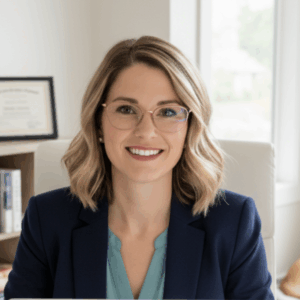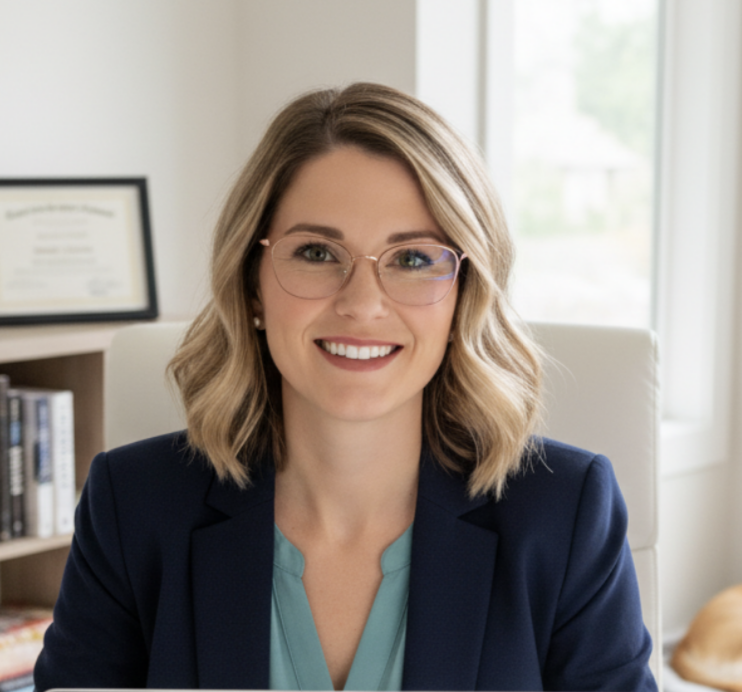
Dana Fischel, ACP and ICAP board member, shares firsthand insights on paralegal career paths, the value of professional associations for networking and mentorship, essential skills for success, job search strategies, education requirements, and the day-to-day realities of working in probate and conservatorship law.


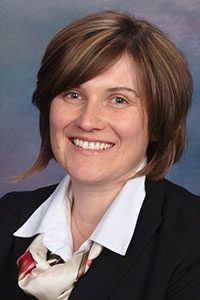
We sat down to talk with Dana Fischel, ACP, CAS. Dana is a board member and serves as treasurer of ICAP (Inland Counties Association of Paralegals), a professional organization serving legal professionals in and around the Riverside area in California. When Dana reached out to share her thoughts on what professional associations can do for a paralegal’s career, we knew it was time to lean in close and listen up.
Dana’s enthusiasm is infectious, and we found ourselves hanging on every word as she wowed us with her knowledge and charmed us with her accent, offering insights that can only come from an ambitious leader in the legal field with years of experience to draw on.
Getting Started as a Paralegal
Dana’s journey into the paralegal profession began unexpectedly. “I became a paralegal by default,” she explains. “My husband, an attorney, split from a large firm and needed somebody who would fill in the role of the office clerk. I started out as a clerk and eventually got more and more involved in the office work and later became not only his paralegal, but his office manager when his practice grew.”
Today, Dana wears multiple hats. “I’m not just a paralegal per se, I’m also office manager, and an accountant. I’m the company’s administrator, therefore I’m responsible for our own billing.”
| Credential/Role | Details |
|---|---|
| Education | University of California, Riverside Extension Certificate |
| ACP Certification | Advanced Certified Paralegal through NALA |
| CAS Certification | California Advanced Specialist in Discovery |
| Specialty Areas | Probate, Estate, Trust Administration, Conservatorships |
| ICAP Role | Board Member, Treasurer, MCLE Chair |
| Advisory Positions | UC Riverside and University of La Verne Paralegal Advisory Committees |
After finishing paralegal training at UC Riverside Extension, Dana took the exam through the National Association of Legal Assistants (NALA) and received her certification. “Afterwards, I took advanced certification courses and classes and took tests so I have an advanced certification in probate and estate law and in discovery. That’s our firm’s major clientele: trust, administration, litigation, and conservatorships. We specialize in this type of law.”
The Role of Professional Associations
Dana’s involvement with ICAP (Inland Counties Association of Paralegals) began with a personal need for connection and continuing education. “I felt the need to connect with the people who would understand what I was going through as a new paralegal. Also, I needed to get my continuing legal education. Paralegals are required by the professional business code 6450 to maintain their minimum continuing legal education up to date.”
ICAP, incorporated in 1985, serves San Bernardino and Riverside Counties, two of the largest counties in California and the United States. After joining as a member in 2010, Dana took “a bold leap” and got elected to the Board.
“Slowly through the ranks, starting first as a board director at large then taking minutes a secretary, and for the last two years I serve as the treasurer. I oversee ICAP’s finances,” she shares. “Last year I also got promoted to MCLE chair, so I’m the one who is responsible for finding interesting topics, interesting speakers for our members to listen to, to learn from.”
How ICAP Serves Paralegals at Different Career Stages
Dana describes ICAP’s dual purpose with a vivid metaphor: “I imagine ICAP as a dresser with two separate drawers. There is stuff for the new paralegals, and the experienced seasoned ones.”
| Career Stage | ICAP Benefits |
|---|---|
| New Paralegals & Students | Mentorship opportunities, networking with experienced professionals, job interview connections, continuing education units, and career guidance |
| Experienced Paralegals | Cost-friendly mandatory minimum legal education, socializing events, professional development, leadership opportunities, and knowledge sharing |
| Meeting Format | Monthly meetings (third Wednesday), social half hour before seminars, continuing education programs |
The networking opportunities happen organically. “ICAP meetings are monthly, on every third Wednesday. So the seasoned paralegals, who come there after work, mingle with the students or the new paralegals, and the conversations start. Simple inquiry of ‘Where do you work?’ ‘That’s interesting,’ could lead to great conversations or even to a job interview invitation.”
“It’s essentially a club,” Dana notes, emphasizing both the educational and social aspects that benefit paralegals throughout their careers.
Day-to-Day Paralegal Responsibilities
Working at a sole practitioner’s firm with two attorneys, Dana handles a substantial caseload. “We handle at this moment over 98 active cases,” she reveals. “It doesn’t mean that every single day I have to check all 98 cases, but I’m the first person who deals with clients on a daily basis.”
Dana describes herself as the office’s “designated detail checker,” a role she considers fundamental to paralegal work. “You have to be detail-oriented. As I said, there are numerous judicial council or local forms that start a process. Essentially, you are checking boxes. You’re asking the court what you want to do.”
Key Paralegal Tasks
Dana’s responsibilities include:
- Checking petitions for accuracy (hearing dates, case numbers, proper alignment)
- Verifying attachments are included, and page counts are correct
- Handling client communications and phone inquiries
- Managing the court calendar and hearing schedules
- Preparing attorneys with case details before client calls
- Reading and providing feedback on motions, briefs, and petitions
- Processing forms from start to finish
“I’m the one who picks up the phone when somebody calls in to inquire about the court date. I have to know the ins and outs of the Courts’ calendar. So, when I put callers on hold, because of course they want to talk to their attorney, it is me who is telling the Attorney, ‘by the way, this person is calling about a hearing, and it’s on this date, and it’s about this petition.’ So when the Attorney picks up the phone, he will be ready with the answer.”
The attorneys rely heavily on Dana’s expertise. “Both are not afraid of asking me for my feedback. I read their motions, briefs, and petitions. And when get the chance to I re-read their submitted paperwork later, it’s nice to see the changes they made based on what I suggested.”
Dana clarifies the division of work: “I don’t get involved as a paralegal with the case research. That’s the part that both attorneys do themselves. I deal with the forms.”
Career Challenges and Rewards
Dana can’t share specific case names due to confidentiality, but she provides meaningful insight into the emotional landscape of paralegal work. “As a paralegal, I come in contact with the firm’s clients daily, as I handle the cases from start to finish. In many ways, I’m the shoulder that people cry on.”
The Most Gratifying Work
Much of Dana’s work involves conservatorship cases for families with disabled adult children. “Lots of our clients are moms who take care of their disabled children, and when these children come of age, and they become adults, these moms have to obtain what is called Conservatorship of the Person.”
Dana shares a powerful example: “A mom will take her daughter to a doctor’s office for a routine checkup and is told by the doctor that she cannot stay in the office during the exam, and further that her daughter won’t receive her flu shot either, until the daughter signs the office paperwork because she’s an adult now. This child is disabled and cannot do that.”
The paperwork burden is substantial. “Mother now needs to file a Petition for the Conservatorship with the court, which could be a routine paperwork day for me at the offic,e but not for this lady. It’s an enormous amount of forms. One wrong box checked, or unchecked, means the petition rejection at the filing window.”
Dana finds deep satisfaction in helping these families. “The most gratifying part for me comes when this person leaves our office, relieved that all the paperwork will be ready for her, and this mom can go along with life, taking care of that child who needs her attention, not the court paperwork.”
She also helps clients navigate court filing fees. “Just for example, a simple filing of the Petition for Conservatorship of a Person is $465.00 in San Bernardino Superior Court. It’s a large sum of money to come up with at a moment.” Dana guides clients through fee waiver processes when they qualify, lifting a significant financial burden.
The Difficult Moments
Not every case ends successfully. “You start a case, and you get to know your firm’s clients very, very personally. You might have interviewed them with the attorney, you were present when they were actually retained by the Firm, and now the case doesn’t go the way it was envisioned.”
“It’s still very difficult to say, ‘No, we are not prevailing.’ It is hard to witness the low and not take it personally, that you are somehow personally responsible for this outcome,” Dana admits. “Sometimes probate cases go on for years. There are cases we are handling for ten years old and still not closed. So you know these people very, very well. You know their families. That’s the tough part.”
Dana also learned from early mistakes. Originally from the Czech Republic, she once mixed up date formats on a Notice of Hearing. “In Europe, you go date, month, year. In the United States, you go month, date, and year. I did switch the date and month. It was very difficult, but I had to fess up to the mistake I made.”
She adapted her process: “I learned from this to never put a month on documents in a number form. For the month, it’s always the abbreviation of the month. I always put it in a letter form. The date is a number and the year.”
Working in a small office also means navigating mood swings. “One has to be ready to work with someone who changes from Glinda the Good Witch into Elphaba the Wicked Witch in minutes,” she says with humor. “Learning how to not to be able to take it again personally was a slow and difficult process. It’s not my fault. I didn’t make them mad. Let’s let them breathe the fire out, let them cool down, and let’s move on.”
Essential Skills for Success
Dana’s background as a third-grade teacher prepared her well for paralegal work. “I don’t mind repeating the same thing over and over and over again because it is sometimes necessary.”
But she emphasizes another critical skill: “The human approach. Because sometimes when I see attorneys who practice in the field for a long time, they sometimes lose the human factor in their practice. I think sometimes it even happens to doctors, too. They see the case. This is the case.”
| Essential Skill | Why It Matters | Dana’s Example |
|---|---|---|
| Detail Orientation | One unchecked box can result in petition rejection | Checking every attachment, verifying page counts, confirming case numbers, and dates |
| Empathy & Compassion | Clients are often stressed, grieving, or overwhelmed | Taking time to talk about an elderly client’s late wife before discussing case details |
| Patience | Explaining processes repeatedly, managing difficult situations | Background as a teacher helped develop this skill |
| Emotional Resilience | Not every case succeeds; attorneys have bad days | Learning not to take losses personally, letting attorneys cool down after court |
| Communication Skills | First point of contact for clients, briefing attorneys | Managing phone inquiries, preparing attorneys with case details before calls |
| Adaptability | Multiple roles in small firms, changing priorities | Serving as a paralegal, office manager, and accountant simultaneously |
Dana shares a touching example of balancing professionalism with humanity: “I met this elderly gentleman, for example, and he has been married to this lady for 50 years, and she died suddenly, and now he deals with uncooperative institutions. Sometimes I interjected myself into the conversation and reminded the Attorney that he is an elderly, bereaved person, to kindly take a deep breath and let me handle the small talk instead. Let me be the person who sits with him and talks about his wife’s home cookies and apple cider for a minute and not about the case.”
Job Search Strategies for New Paralegals
Dana acknowledges she doesn’t do hiring at her firm, but offers valuable advice based on her experience as a board member and professional. “Some paralegals are getting into the legal field as a secondary career. They were something else before, and then they went for their certificate, and they are of age right now.”
Resume and First Impressions
“Treat your written communication in the media and remember that’s the first impression that a person will get,” Dana advises. “Remember, if you would show up at an interview in flip-flops, shorts, and a tank top, chewing gum, you would not be in the same category as a person who’s professionally dressed and neat. The same thing applies to the resume. Clean it up.”
She cautions against overly creative approaches: “I know there are lots of stories on the internet describing creative resumes like one on a Hershey bar wrapper. That’s very interesting… But a law office is a professional field.”
Tailoring Your Resume
Different employers need different emphasis. “Know what law firm you are applying to. Is it a big corporation, and they have a branch that you want to work at? Is it a sole practitioner firm, and does he have an opening for the job? Or is it a governmental entity? Not the same resume will work for those three.”
| Employer Type | Skills to Emphasize | What to Highlight |
|---|---|---|
| Large Firm | Teamwork, collaboration, communication | Ability to work with multiple attorneys, team projects, and handling high volume |
| Sole Practitioner | Versatility, bookkeeping, and office management | Computer skills, bookkeeping software knowledge, and the ability to handle multiple roles |
| Government Entity | Regulatory compliance, documentation | Government procedure knowledge, attention to detail, and formal processes |
References and Professional Conduct
Dana stresses the importance of reference management: “Make sure you also tell people that you put them down as a reference on your resume, because it happened to me in the past. Few students were putting my name on the resume as a reference, and it was only because I spoke to their introductory class and handed out my business card.”
She adds: “Make sure you actually want them, that person, to be approached by potential employer. Did you have a positive relationship? Did they actually have something nice to say about you?”
Social Media Awareness
Dana emphasizes the importance of digital presence: “In the age of digital data, I don’t know how many people do not have Facebook. Make sure you clean up your Facebook. Make sure you clean up your posts. ” Make sure you not only clean up your post, but also your friends’ and family’s posts too.”
She warns that employers do their homework: “There are companies that will know more about you days before you ever set foot in the office for the interview. Because they will do their due diligence and know absolutely everything they can about the applicant before they ever meet them and read their resumes.”
“Not everything you want to say to your friends about yourself or about your day would be something that necessarily a potential employer should find,” she cautions. “And not only about your posts, but what post you tag yourself to, what posts you click like, because there is software automatically searching for those posts, those tags, Likes, sites that you visited.”
Dana provides a practical example: “This company that is looking for a candidate, who is business-oriented and detail-oriented, and you find out the company handles mostly trust drafting where they are going to come in contact with elderly clientele, I don’t think you would want them to see your post of a cruise to Mexico and the drinking with buddies even though you were having a good time.”
Education and Certification Requirements
Dana is clear that high school diplomas alone don’t prepare paralegals adequately. “High school graduates’ writing skills have to develop. A lot of working in a law firm is about writing. A lot of writing. That contradicts a bit of what I said in the first part, because I deal in forms, but there is a lot of written communication with the client. You write letters and emails. You write memos. You write summaries for the attorneys for the petition that was received by our office.”
Why Minimum Training Is Essential
“I don’t know if there will be time in a busy office to train someone from ground zero,” Dana explains. “Attorneys who know I’m on the Board of a Paralegal Association will often ask me, ‘Do you have someone who can fill my immediate need?’ And most of the time they stress, ‘I don’t have time to train them to know what this is about.'”
She continues: “The minimum training is really necessary. And I’m saying not even sometimes the minimum training will suffice because Attorneys time…they would rather spend their time as a billable time rather than helping somebody learn how to write a simple paragraph.”
Understanding Legal Language
Dana highlights a critical skill learned in formal education: “Let’s stop and think for a minute how archaic the language of law sometimes is. You read some of the Motions, and you come across the words, and you say, ‘Oh my God, that’s not even English. What is this?’ That’s the part a paralegal needs to know from school. That’s the part you will learn there. It’s called legalese. It’s a lingo specifically tailored to the law.”
Theory vs. Practice
“That’s sometimes where the mentoring comes in. Seasoned paralegals teach the newbie. The theory is learned at school, but the practical must be experienced by working in a law practice,” Dana notes, emphasizing the balance between formal education and hands-on experience.
Finding Mentorship Opportunities
Dana provides practical guidance for paralegals seeking mentors. “A lot of paralegal organizations will offer a Mentoring program. For example, as I live in San Bernardino County, I would Google my local paralegal association’s website. Most of the paralegal associations would include a direct email link to mentoring on their website; if not, email their president and inquire.”
She offers an example of how it works: “I move, for example. I moved from California to Nevada. I will be in Reno, and I’m sure I could find a local legal paralegal Association in Reno and say, ‘I’m a new paralegal in your area. Where is your next meeting?’ I could go to the meeting of their paralegal organization and find out about a mentoring program, as I am in need of somebody who will actually help me transition from California to Nevada. This is how it works.”
The Attorney-Paralegal Dynamic
The relationship between attorneys and paralegals is evolving, with both positive and negative implications. A while back, I read a blog article that read that paralegals could be replaced by reliable software. That if you put in the right data, the computer would spit out the right form. And what these attorneys are forgetting is the human factor,” Dana observes.
Increasing Paralegal Responsibilities
“In some sole practitioner firms…the attorneys take anything what’s coming into the door, the paralegals might be the ones who actually need to sorts those things out, to find the forms and to knows what to actually prepare for this client,” Dana explains.
But she emphasizes an important boundary: “Sometimes the attorneys will rely way too much on their paralegal and won’t check their work as they should. That’s a requirement. The paralegal…cannot independently practice law. Let me make that clear. A paralegal cannot give legal advice. A paralegal cannot practice law. Paralegals are always working under the direct, and I stress that direct part, supervision of the attorney.”
Career Growth and Professional Development
Dana addresses common roadblocks to advancement in the paralegal profession. “I would say this is a two-way street. What you put into you will receive back. Sometimes the roadblocks are that a person expected something that was not offered.”
She shares an example from ICAP: “We had that experience with a few new student members. They believed that by joining Inland Counties, they would automatically be placed in a law firm, and we would find jobs for them. That’s not our function.”
Resistance to Change
“I think sometimes the biggest roadblock is that you don’t want to change what’s working. Not to innovate. Not to put new programs into place just because this works, let’s not touch it,” Dana observes.
She provides a specific example: “Especially for the young people coming into the law practices. They see large amounts of paper everywhere. ‘We can go paperless. How easy would it be? There would be no more paper anywhere.’ But this attorney has been practicing for 30 years, and he’s used to printing stuff. Sometimes the roadblocks the young are feeling in the law practices are the fear of letting go…and the reluctance of learning the new stuff on the part of the attorney.”
Ethics in Paralegal Practice
Dana brings up California Business and Professional Code 6450, which governs paralegal practice. “You brought up a very important point: ethical issues. What’s ethical, and what’s not ethical. I just said a little while ago, a paralegal is not authorized to practice law.”
Maintaining Professional Boundaries
“It’s very easy to sit and sip wine with your friend, and she brings up, ‘I have a mom, and she’s getting older…’ and because I work in that field, stop! Not your place giving legal advice how to solve the problem. I can suggest to them to contact an attorney…I can talk about the procedural part, but I cannot give them legal advice,” Dana explains.
Confidentiality Requirements
“It’s very important to know where our boundaries are. Yes, we can have a very juicy case in the office…I can know information about individuals that does not put them in the best light, but it’s unethical for me to go outside the office and say to my friends, ‘Guess what? You will not believe who I just met. You may know him as a nice guy, but he’s doing this and that.’ And go and talk about names and talk about cases. So those are the things that the paralegal has to know.”
Frequently Asked Questions
What does a paralegal actually do on a daily basis?
Paralegals handle forms and documentation, communicate with clients, manage court calendars, check legal documents for accuracy, and serve as the first point of contact for client inquiries. In Dana’s probate and conservatorship practice, she manages 98+ active cases, verifies petition accuracy, helps clients with fee waivers, and provides feedback on legal documents prepared by attorneys.
Why should I join a paralegal professional association?
Professional associations like ICAP offer cost-friendly continuing legal education, mentorship opportunities, networking with experienced paralegals, and potential job connections. Monthly meetings provide both educational seminars and social time where students and new paralegals can connect with seasoned professionals. These informal conversations often lead to job interviews and career opportunities.
Can I become a paralegal with just a high school diploma?
While it’s legally possible in some states, it’s not recommended. Attorneys don’t have time to train someone from ground zero, and paralegal work requires strong writing skills and understanding of legal terminology (“legalese”). Most employers expect at a minimum an associate degree or post-bachelor’s certificate from an ABA-approved program. Formal education provides the foundation, while practical experience develops through mentorship and on-the-job training.
How do I find a paralegal mentor?
Search for your local paralegal association’s website for mentoring program information, or contact the president directly. Attend monthly meetings to connect with experienced professionals. If you relocate to a new area, contact the local paralegal association, attend their next meeting, and express your interest in mentorship to help with your transition.
What’s the most critical skill for paralegal success?
Detail orientation is critical because one unchecked box on a court form can result in petition rejection. However, empathy and the “human approach” are equally important. Clients are often stressed, grieving, or overwhelmed. Successful paralegals balance precision with compassion, managing both paperwork accuracy and client emotional needs.
How should I prepare my resume for paralegal positions?
Tailor your resume to the employer type. Large firms want teamwork skills, sole practitioners need versatility and bookkeeping skills, and government positions require an emphasis on regulatory compliance. Always inform references before listing them, ensure they’ll provide positive recommendations, and thoroughly clean up your social media presence. Employers conduct extensive background research, including reviewing posts, tags, and likes on platforms like Facebook.
Can paralegals give legal advice?
No. Paralegals cannot give legal advice or practice law independently. California Business and Professional Code 6450 governs paralegal practice. Paralegals must work under the direct supervision of an attorney. They can discuss procedural information and suggest clients contact an attorney, but cannot advise on legal strategy or case outcomes, even to friends and family.
Key Takeaways
- Professional associations like ICAP provide essential continuing education, mentorship, and networking opportunities that can lead directly to job interviews and career connections.
- Detail orientation and empathy are equally critical skills; paralegals must balance precision in paperwork with compassion for clients facing difficult circumstances.s
- Formal paralegal education (associate degree or certificate) is essential because attorneys don’t have time to train from scratch, and paralegals need to understand legal terminology and writing.g
- Tailor your resume to the employer type (large firm, sole practitioner, or government) and thoroughly clean up your social media presence before job searching.
- Paralegals cannot give legal advice or practice law independently; they must work under direct attorney supervision and maintain strict confidentiality regarding client matters.
- Career advancement requires active participation; joining professional organizations alone isn’t enough. You must engage, volunteer, and build relationships within the legal community.
Ready to Start Your Paralegal Career?
Explore ABA-approved paralegal certificate and degree programs in your area. Get the education and credentials employers are looking for.