Delaware sets no mandatory education or training requirements for paralegals, though most employers expect a certificate or degree. The state’s 2,480 paralegals earn a median of $63,110 a year, or $30.34 an hour. The voluntary Delaware Certified Paralegal credential requires Full membership in the Delaware Paralegal Association plus qualifying education and experience.
Delaware may be small in size, but it offers notable professional opportunities for paralegals. Major corporations like DuPont and AstraZeneca, financial institutions like Citicorp Banking, and prominent law firms, including Richards, Layton & Finger and Potter Anderson & Corroon LLP, are among the state’s significant legal employers.  Delaware reports more than 2.2 million business entities with their legal home in the state, including over half of all US publicly traded companies and 66.7% of the Fortune 500. That concentration makes it particularly attractive for those with expertise in business incorporation, corporate law, bankruptcy, and intellectual property.
The state’s chemical industry and biotech sector provide additional opportunities for paralegals specializing in intellectual property licensing, trademark, and patent law. These specialized opportunities, combined with Delaware’s concentration of corporate legal work, create opportunities for competitive salaries among qualified professionals. Whether you’re starting your career or advancing in a specialty area, Delaware’s legal market offers prospects particularly in corporate specializations.


State Requirements & Regulations
Delaware imposes no state license, mandatory certification, or specific education requirement on paralegals. What the state does regulate is the lawyer’s side of the relationship. Delaware Lawyers’ Rule of Professional Conduct 5.3, titled Responsibilities Regarding Nonlawyer Assistance, requires lawyers with managerial or direct supervisory authority to make reasonable efforts to ensure that nonlawyer assistants act in a way compatible with the lawyer’s own professional obligations. A lawyer can be held responsible for a nonlawyer’s misconduct in the circumstances the rule specifies, such as ordering or ratifying the conduct, or knowing about it in time to avoid or mitigate the consequences and failing to act. This structure gives aspiring paralegals flexibility in how they enter the profession.
Despite the absence of mandatory requirements, the paralegal profession has evolved significantly in recent years. Most Delaware employers now prefer or require formal education, seeking candidates with certificates, associate’s degrees, bachelor’s degrees, or even master’s degrees in paralegal studies. As attorneys, corporations, and government agencies work within an increasingly complex legal framework, they expect paralegals to handle more sophisticated responsibilities that require specialized training.
The Delaware Paralegal Association began offering voluntary state certification in 2005 to raise professional standards. This certification allows paralegals to increase their credibility and advertise themselves as Delaware Certified Paralegals (DCPs), which can provide a competitive advantage in the job market.
What Delaware Paralegals Can and Cannot Do
Attorney supervision is the defining feature of the role in Delaware. Because Rule 5.3 places supervisory duties on the lawyer rather than licensing requirements on you, the boundaries of the job are drawn around that working relationship rather than around a credential you hold yourself.
Work that falls inside the role includes legal research, drafting pleadings and correspondence, managing discovery and case files, interviewing clients and witnesses, preparing exhibits, and filing documents with the courts. Work that falls outside it includes independently giving legal advice, establishing the attorney-client relationship, setting a fee, and representing a client as counsel. Those functions belong to a licensed attorney, and performing them can amount to the unauthorized practice of law. Attending a deposition or a hearing to assist supervising counsel is ordinary paralegal work. Conducting one as the client’s lawyer is not. The Delaware Paralegal Association treats unauthorized practice as grounds for revoking the DCP credential.
Education Pathways
While you can enter Delaware’s paralegal field through on-the-job training, completing a formal educational program has become the preferred path. Understanding the different types of credentials available will help you make informed decisions about your education and what to expect before becoming a paralegal.
Certificated Paralegals
A certificated paralegal has completed an educational program that awards a certificate upon completion. These certificate programs often suit individuals who already hold a degree in another field and want to transition into the legal profession, though admission requirements vary by program. The focused curriculum allows you to concentrate solely on paralegal studies without repeating general education coursework.
Certificate programs vary in their structure and approval status. Some admit students with no previous degree and issue standalone certificates, while others require completion of an associate’s or bachelor’s degree first. Programs may or may not carry American Bar Association (ABA) approval and can be offered by both accredited and non-accredited institutions. These distinctions matter for future employment opportunities and certification eligibility, so research ABA-approved paralegal programs carefully before enrolling.
Degree Programs
Associate’s and bachelor’s degree programs in paralegal studies provide a comprehensive education that combines legal training with general education coursework. These programs typically include broader skill development in research, writing, critical thinking, and technology that serve you throughout your career.
Delaware colleges offer programs at multiple degree levels, from associate’s degrees at community colleges to bachelor’s degrees with legal studies concentrations. Some institutions also provide post-baccalaureate certificates for those who already hold degrees in other fields.
Understanding the Terminology
If an employer requests a “certified” or “certificated” paralegal, clarify which level of training they actually need. These terms refer to different credentials:
- Certificated paralegals completed an educational program that awarded a certificate
- Certified paralegals earned a credential from a national certifying organization, such as NALA’s Certified Paralegal (CP) or NFPA’s CRP and RP designations
- Delaware Certified Paralegals (DCPs) met specific state association requirements and registered with the DPA
“Paralegals are taking on more and more responsibilities, in response Delaware Law School’s Legal Studies Program is teaching time management skills as well as it’s ABA programs continue to offer practical skills training within its courses to adequately prepare paralegals for the job market.
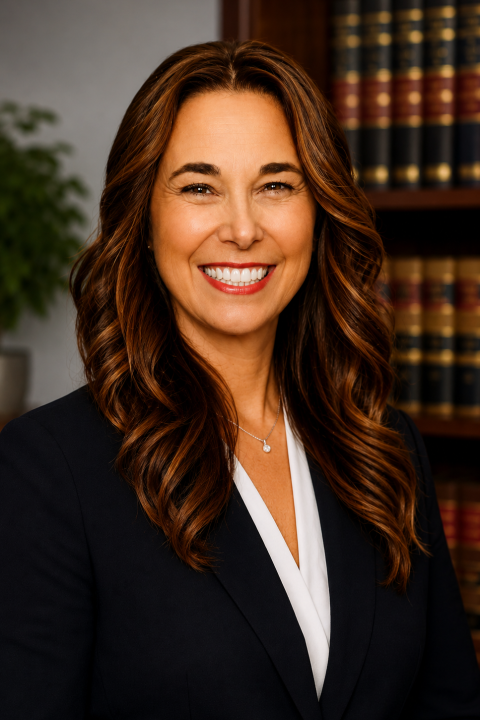
Adjunct Faculty, Kent State University. Assistant Dean and Executive Director for Graduate, International, Compliance and Legal Studies, Widener University Delaware Law School, at the time of this interview.
Certification Options
Voluntary certification demonstrates professional competency and commitment to the field. Delaware paralegals can pursue both national certifications and state-specific credentials.
National Certification Programs
Several national organizations maintain paralegal certification programs. Exam availability changes from time to time, so confirm current status with the certifying body before you plan around a particular credential:
- PACE (Paralegal Advanced Competency Exam), offered by the National Federation of Paralegal Associations (NFPA), leading to the Registered Paralegal (RP) designation
- PCCE (Paralegal CORE Competency Exam), also offered by NFPA, leading to the CORE Registered Paralegal (CRP) designation
- CP (Certified Paralegal), offered by the National Association of Legal Assistants (NALA). CLA, or Certified Legal Assistant, is the legacy form of this designation and some longstanding certificants still use it. New candidates today earn the CP. Learn more about NALA certification and exam requirements.
- PP (Professional Paralegal), offered by NALS, the association for legal professionals. NALS has periodically paused individual certification exams while revising its programs, so check directly with NALS for current availability.
Holding a national credential also shortens the documentation you need for state certification. The DPA allows Registered Paralegals and Certified Legal Assistants to submit a copy of their certificate and a current letter of good standing in place of academic transcripts when they apply.
Delaware Certified Paralegal (DCP)
Since 2005, the Delaware Paralegal Association has offered its members the option of becoming Delaware Certified Paralegals. This certification aims to raise professionalism within Delaware’s paralegal community and increase employer demand for qualified paralegals.
One requirement catches applicants out more than any other. You must already be a Full member in good standing of the DPA before you can apply. Education and experience alone are not enough, and you must maintain membership for as long as you hold the credential.
The DPA certifies both paralegals who entered through on-the-job training and those who met formal educational standards. You can qualify for DCP certification through any of these pathways:
| Education Level | Experience Required |
|---|---|
| Bachelor’s degree in paralegal studies | 1 year of substantive paralegal experience |
| Bachelor’s degree in any field + ABA-approved paralegal certificate | 1 year of substantive paralegal experience |
| Bachelor’s degree in any field | 2 years of substantive paralegal experience |
| Associate’s degree in paralegal studies | 3 years of substantive paralegal experience |
| ABA-approved paralegal certificate | 3 years of substantive paralegal experience |
| Associate’s degree in any field | 4 years of substantive paralegal experience |
| Non-ABA-approved paralegal certificate | 4 years of substantive paralegal experience |
| No formal education | 5 years of substantive paralegal experience |
Applying for the DCP Credential
The application goes to the DCP Certification Committee, a panel of five Full DPA members appointed by the board. You submit a completed verified application, proof of your education, and a declaration from an attorney you work with or have worked for attesting to your substantive legal experience. The attested years have to add up to the minimum for the pathway you are applying under. There is a $30 processing fee, refunded if your application is rejected.
The committee decides within 30 days. You can appeal a denial to the DPA Board of Directors within 30 days of receipt, and the board makes the final call.
Keeping the Credential Current
DCPs renew every two years from the date of their original approval. Renewal requires eight hours of continuing legal education across the two-year cycle, at least one of which must cover ethics. The DPA sends a renewal notice three months ahead of the deadline, and the paperwork is due at least a month before the renewal date.
CLE credit is available from a wide range of sources, including bar association and paralegal association courses, accredited institutions, professional education providers, and employer in-house programs. Teaching or guest lecturing earns up to two credits, authoring a substantive article earns up to one, and pro bono legal work earns one credit for every three hours served, capped at two. At renewal you must still be employed as a paralegal and still hold Full DPA membership.
The credential can be revoked for letting DPA membership lapse, for violating the DPA Code of Ethics, for a felony or crime of moral turpitude, for engaging in the unauthorized practice of law, or for failing to complete the required CLE hours. Anyone whose credential is revoked has to wait two years before reapplying.
Paralegal and Legal Studies Programs in Delaware
Choosing the right educational program represents one of your most important career decisions. Whether you’re starting straight out of high school, making a career change with a degree in another field, or advancing your current position with an advanced certificate or master’s degree, Delaware offers several quality options. If you’re exploring programs in nearby states, you might also consider becoming a paralegal in Pennsylvania, which offers additional ABA-approved programs.
The programs below fall into two categories that are worth keeping separate. Some are dedicated paralegal programs. Others are broader legal studies degrees that build legal knowledge without being structured as paralegal training. A legal studies concentration is not automatically an ABA-approved paralegal program, and the distinction matters for DCP eligibility. When evaluating programs, consider accreditation, ABA approval status, delivery format, tuition, curriculum, and fit with your career goals.
Note: ABA approval status varies by program and changes over time. Verify current approval status directly with institutions before enrolling, especially if ABA approval is important for your certification goals.
Delaware Technical and Community College
Delaware Technical Community College (DTCC) is a community college with campuses in Georgetown, Dover, Stanton, and Wilmington. The college offers both degree and certificate programs in paralegal studies.
Programs Offered:
- Associate of Applied Science (AAS) in Paralegal – On-campus
- Paralegal Certificate – On-campus (Post-associate)
Goldey-Beacom College
Goldey-Beacom College is a four-year private not-for-profit institution located in Wilmington. Its offerings are legal studies concentrations within broader degrees rather than dedicated paralegal programs, so confirm how a given concentration would be treated for certification purposes before enrolling.
Programs Offered:
- Bachelor of Arts (BA) in English with a Legal Studies concentration
- Bachelor of Science (BS) in Business Administration with a Legal Studies concentration
Wilmington University
Wilmington University is a four-year private college located in New Castle with a satellite campus in Dover. The university offers both on-campus and online options.
Programs Offered:
- Bachelor of Science (BS) in Law, Policy, and Political Science with a Legal Studies concentration – On-campus and online
- Post-Bachelor’s Paralegal Certificate – On-campus and online
When selecting a program, request detailed information about tuition rates, curriculum specifics, delivery formats, and any additional costs. Consider how each program’s structure fits your schedule, learning style, and career objectives.
One thing worth asking about is whether a program stacks credentials. Some Delaware legal studies programs are built so that a single course of study produces more than one qualification at graduation:
“Students in the Bachelors and Associates degree programs can graduate with two- degrees in one as they gain both the Associates and Bachelors as well as the ABA paralegal Certificate when they graduate.”
Eileen A. Grena-Piretti · Widener University Delaware Law School, at the time of this interview
Salary & Compensation
Delaware paralegals can earn competitive compensation reflecting the state’s corporate legal market. The concentration of major corporations, financial institutions, and law firms creates demand for qualified paralegals, particularly those with expertise in specialized areas like bankruptcy, intellectual property, business law, and litigation.
Statewide Salary Overview
According to May 2025 Bureau of Labor Statistics data, Delaware employed 2,480 paralegals earning a median of $63,110 per year, or $30.34 per hour. That sits above the national median of $62,890 per year ($30.24 per hour). Delaware’s mean wage runs higher still at $69,860 annually, or $33.59 per hour, which is close to the national mean of $69,700.
The gap between the state’s median and mean is worth understanding. When the mean sits above the median, the wage distribution is skewed upward, meaning higher earners pull the average above the midpoint. It tells you the range is wide, not that any particular specialty pays more.
| Percentile | Hourly Wage | Annual Salary |
|---|---|---|
| 10th percentile | $23.50 | $48,880 |
| 25th percentile | $26.53 | $55,190 |
| 50th percentile (median) | $30.34 | $63,110 |
| 75th percentile | $37.67 | $78,360 |
| 90th percentile | $47.78 | $99,390 |
These percentiles describe how pay is distributed across everyone working in the occupation. They aren’t career stages. A long-tenured paralegal in a smaller market can sit near the 10th percentile, and someone a few years into the field at a large Wilmington firm can sit near the 75th.
Regional Salary Variations
Salaries vary across Delaware based on local legal markets and the cost of living. The Wilmington area, home to the state’s major corporations and law firms, sits inside a large multi-state metro that pays above the Delaware average.
Philadelphia-Camden-Wilmington, PA-NJ-DE-MD:
This metropolitan area, which covers northern Delaware including Wilmington, employed 11,150 paralegals as of May 2025. The median wage was $70,430 per year ($33.86 per hour) and the mean was $72,410 ($34.81 per hour). At the 90th percentile, pay reached $97,950 annually, or $47.09 per hour. Both the median and the mean run above statewide Delaware figures, which reflects the pull of the Philadelphia and Wilmington corporate legal markets.
Dover, DE:
The Dover metropolitan area employed 220 paralegals with a median wage of $58,830 per year ($28.29 per hour) and a mean of $60,910 ($29.29 per hour). At the 90th percentile, pay reached $88,730 annually, or $42.66 per hour. Figures run below the statewide average, which reflects a different employer mix from the Wilmington corridor.
How Delaware Paralegals Are Paid
Paralegal compensation is almost evenly divided between hourly and salaried pay. NALA survey data found that 51% of paralegals were salaried, while about 49% were paid hourly. That means the hourly figures above are relevant to a large share of paralegals, not a minority. Being paid hourly does not make you a freelancer. An hourly-paid paralegal is typically still a firm employee whose time is tracked and billed by the employer.
Factors Affecting Salary
Several factors influence paralegal compensation in Delaware:
- Specialization: Experience in areas such as intellectual property, bankruptcy, corporate law, and litigation can affect both pay and hiring demand, though no single premium applies across employers
- Experience: Employers pay for demonstrated substantive experience, particularly in specialized practice areas
- Employer type: Pay varies considerably across large firms, corporations, government agencies, small practices, and nonprofits
- Education and certification: Advanced degrees, ABA-approved programs, and professional certifications can improve hiring prospects, though the effect on pay varies by employer
- Location: Urban areas with higher concentrations of corporate clients generally pay more than rural regions
Professional Associations
Delaware Paralegal Association (DPA)
The Delaware Paralegal Association is the statewide professional association for Delaware paralegals. Its own pages give slightly different membership figures in different places, so treat any specific count as approximate and check with the DPA directly. The DPA works to be a comprehensive resource for practicing and aspiring paralegals, providing information about education and certification, professional development opportunities, continuing legal education, forums for exchanging relevant information, a job bank, and pro bono service opportunities.
The DPA commits itself to raising professionalism and ethics standards within Delaware’s paralegal community while increasing the role of paralegals in the broader legal community. The association’s work in certifying Delaware Certified Paralegals and developing relationships with individuals, institutions, and the state bar association demonstrates this commitment.
Three DPA resources are worth bookmarking early:
- DPA job board, where Delaware firms and legal departments post paralegal openings
- DPA membership information, the starting point for anyone planning to pursue the DCP credential
- DCP program requirements, the association’s own current criteria for certification and renewal
DPA Membership Levels
The Delaware Paralegal Association offers five membership categories to accommodate professionals at different career stages:
Full Member – Any person currently employed as a paralegal who meets one of these conditions:
- Holds a paralegal certificate from an ABA-approved paralegal studies program, plus six months of paralegal work experience
- Has graduated from a two or four-year accredited institution, plus six months of paralegal work experience
- Has three years of paralegal work experience
Internships do not count toward the work experience requirement. Full membership carries voting, elective, and representative privileges. The other categories do not.
Charter Member – Paralegals who established DPA membership by September 24, 1976
Associate Member – Any person who meets one of these conditions:
- Completed an ABA-approved paralegal program that led to employment
- Has at least one year of paralegal work experience but is not currently employed as a paralegal
- Is employed full-time as a paralegal, but doesn’t yet have the work experience for Full Membership
Student Member – Anyone enrolled in a formal paralegal studies program
Sustaining Member – Open to any firm, association, or other entity that supports the DPA’s objectives
Only Full membership qualifies you to apply for the DCP credential, which is worth keeping in mind if you’re joining as a Student or Associate member with certification as an eventual goal.
Important Contacts for Delaware Paralegals
- Delaware Paralegal Association
- Delaware State Bar Association
- Delaware State Courts
- Delaware Secretary of State
Job Market & Outlook
Current Employment Landscape
According to May 2025 BLS data, Delaware employed 2,480 paralegals. That is a substantial number for a state of Delaware’s size, and BLS concentration measures have historically shown paralegal employment running high here relative to population. The driver is the state’s role as the legal home to more than 2.2 million business entities, including 66.7% of the Fortune 500.
The state’s chemical industry, biotech companies, and Fortune 500 corporations create demand for paralegals with expertise in intellectual property licensing, trademark and patent law, business incorporation, and corporate governance. Corporate registration, bankruptcy, and intellectual property work are prominent in the state’s legal sector, though how much paralegal hiring each specialty generates varies by employer and isn’t something the incorporation statistics measure directly.
Employment Projections (2024-2034)
Delaware’s long-term outlook is flat rather than declining. State projections published through ProjectionsCentral show paralegal employment holding steady between 2024 and 2034, with no net change in total positions over the decade. This is a change in direction from the previous 2022-2032 projection round, which had forecast a small decline.
A flat headline number doesn’t mean a closed job market. Delaware projects roughly 230 paralegal openings per year through 2034. When net employment is flat, openings arise mainly because people leave the occupation or the labor force rather than because new positions are created. Both routes produce jobs you can apply for, but they describe different labor-market conditions, and a market fed by replacement demand rewards persistence more than a fast-growing one does.
Nationally, BLS has since moved to a 2025-35 projection cycle. It characterizes the outlook for paralegals and legal assistants as little or no change, with about 40,800 openings projected each year on average, most of them from workers transferring to other occupations or exiting the labor force. BLS also notes that demand is expected to be limited by advances in technology, including artificial intelligence, which may make paralegals more efficient at research and document preparation. Delaware’s flat state projection tracks that national picture closely.
Attorney Growth Context
According to American Bar Association Profile reports, the state’s attorney population has shown growth. Between 2011 and 2021, the number of active lawyers in Delaware increased by more than 8%. As of 2024, the ABA reported Delaware was home to 3,058 resident lawyers. This growing attorney base suggests a continued need for paralegal support services in legal practices.
Where to Find Delaware Paralegal Jobs
Delaware’s legal market is compact enough that a targeted search usually beats a broad one. Start with the DPA job board, which carries postings from firms that specifically want Delaware-based paralegals. The Delaware State Bar Association and the state courts publish their own employment listings. Corporate legal departments in the Wilmington corridor often recruit through their own careers pages rather than job boards, so a direct application list is worth building.
Corporate registration, bankruptcy, and intellectual property come up often in Delaware postings, so if you have exposure to any of them, foregrounding it can make an application more relevant. Read current listings before deciding how to position yourself. If you’re weighing whether the role suits you before committing to a program, our guide to entry-level paralegal jobs covers what the first role typically involves.
Major Employers
Large law firms employ significant numbers of paralegals in Delaware. Major law firms in the state include:
- Richards, Layton & Finger
- Morris, Nichols, Arsht & Tunnell LLP
- Young Conaway Stargatt & Taylor, LLP
- Duane Morris LLP
- Ballard Spahr LLP
- Saul Ewing LLP
- Benesch, Friedlander, Coplan & Aronoff LLP
- Chipman, Brown, Cicero & Cole, LLP
- Abrams & Bayliss LLP
Beyond law firms, corporate legal departments, and government offices provide employment opportunities for paralegals. Municipal and U.S. district court systems, along with corporate employers in Delaware’s business, pharmaceutical, and financial sectors, offer diverse opportunities for paralegals with various specializations.
Frequently Asked Questions
Do I need certification to work as a paralegal in Delaware?
No. Delaware has no state license, mandatory certification, or specific education requirement for paralegals. Rule of Professional Conduct 5.3 governs how lawyers supervise nonlawyer assistants rather than setting training requirements for paralegals themselves. Most employers still prefer or require formal education such as a certificate, associate’s degree, or bachelor’s degree in paralegal studies. Voluntary credentials including the Delaware Certified Paralegal (DCP), NALA’s Certified Paralegal (CP), and NFPA’s CRP and RP can strengthen your professional standing and hiring prospects.
What’s the difference between certificated and certified paralegals?
A certificated paralegal completed an educational program that awarded a certificate upon completion. These programs focus specifically on paralegal training and can be ABA-approved or non-approved. A certified paralegal earned a credential from a national certifying organization, such as NFPA through PACE or PCCE, or NALA’s Certified Paralegal (CP). These are two different things, though some paralegals hold both. A Delaware Certified Paralegal (DCP) is a third category specific to Delaware, requiring Full DPA membership plus qualifying education and experience.
How much do Delaware paralegals earn?
According to May 2025 Bureau of Labor Statistics data, Delaware paralegals earned a median of $63,110 per year ($30.34 per hour), with a mean of $69,860 ($33.59 per hour). Pay ranged from $48,880 at the 10th percentile to $99,390 at the 90th. Those percentiles describe the spread of pay across the occupation rather than career stages. Earnings vary with specialization, employer type, location, and credentials, and paralegals in intellectual property, bankruptcy, and corporate work at large firms tend to sit higher in the range.
Are there ABA-approved paralegal programs in Delaware?
Delaware has several paralegal programs, though ABA approval status varies by institution and program. Delaware Technical and Community College offers both an Associate of Applied Science in Paralegal and a post-associate Paralegal Certificate. Other Delaware colleges offer legal studies concentrations and certificates that provide paralegal training. ABA approval isn’t required to work as a paralegal in Delaware, but it matters for certain certification pathways and may be preferred by some employers. When researching programs, verify current ABA approval status directly with the institution and consider whether it matters for your career goals.
What is a Delaware Certified Paralegal (DCP)?
A Delaware Certified Paralegal (DCP) is a voluntary credential offered by the Delaware Paralegal Association since 2005. Applicants must be Full members in good standing of the DPA and meet one of five education and experience combinations, ranging from a bachelor’s degree in paralegal studies plus one year of substantive experience to five years of experience with no formal education. The application requires a verified form, proof of education, an attorney declaration attesting to your experience, and a $30 processing fee. DCPs renew every two years with eight hours of continuing legal education, one of which must cover ethics.
What’s the job outlook for paralegals in Delaware?
State projections published through ProjectionsCentral show Delaware paralegal employment holding flat between 2024 and 2034, with no net change in total positions and roughly 230 openings a year. Those openings come mainly from people leaving the occupation or the labor force rather than from new positions. Nationally, BLS now projects 2025 to 2035 and describes the outlook as little or no change, with about 40,800 openings each year on average. BLS notes that technology, including artificial intelligence, is expected to limit demand growth. Delaware’s role as legal home to more than 2.2 million business entities continues to support corporate, intellectual property, and bankruptcy work in the state.
Can I work as a paralegal in Delaware without a degree?
Yes, Delaware law doesn’t require paralegals to have specific educational credentials. You can technically work as a paralegal through on-the-job training alone. The practical reality is that most modern employers prefer or require formal education. As the legal profession has become more complex, attorneys and law firms increasingly seek paralegals with certificates, associate’s degrees, or bachelor’s degrees in paralegal studies. Without formal education, you’ll likely face more limited job opportunities and may need significantly more experience to compete with formally educated candidates. Even for the DCP credential, you need five years of substantive experience with no formal education, compared to one year with a bachelor’s degree in paralegal studies.
Key Takeaways
- Delaware imposes no state license, mandatory certification, or specific education requirement, so employers set their own hiring standards, and most look for a certificate or degree
- Delaware paralegals earn a median of $63,110 per year, or $30.34 per hour (May 2025 BLS data), with the 90th percentile reaching $99,390
- Delaware’s corporate sector is unusually large for the state’s size, with more than 2.2 million business entities and 66.7% of the Fortune 500 registered there
- The voluntary Delaware Certified Paralegal credential requires Full DPA membership, qualifying education and experience, and eight CLE hours every two years
- Delaware institutions offer both dedicated paralegal programs and broader legal studies concentrations, and the two are not interchangeable for certification purposes
- Delaware employment is projected to hold flat from 2024 to 2034 with roughly 230 openings a year, while current national BLS projections for 2025 to 2035 show little or no change and about 40,800 openings annually
Ready to Start Your Paralegal Career in Delaware?
Explore Delaware’s paralegal programs and find the right education path for your legal career in a state with strong corporate legal opportunities.
May 2025 US Bureau of Labor Statistics salary figures for Paralegals and Legal Assistants. Long-term 2024-34 job growth projections from the US Department of Labor-sponsored resource, ProjectionsCentral. Figures reflect city, state, and national data, not school-specific information. Conditions in your area may vary. Data accessed August 2026.