Outside Ontario, no Canadian province licenses paralegals, so you work under a lawyer’s supervision after a college certificate, diploma, or degree. Ontario is the exception: an accredited program plus the Law Society licensing exam lets you serve clients independently. Job Bank puts the national median wage at $33.05 an hour.
Paralegal work in Canada looks different depending on which side of the Ontario border you’re standing on. Ontario licenses paralegals to act for clients in their own name. Everywhere else, the same skills usually go to work in a supervised role, often under the title law clerk or legal assistant, though particular statutes and tribunals do authorize non-lawyers to act in specific matters.
About 36,000 people worked in paralegal and related occupations across Canada in 2023, according to the Canadian Occupational Projections System. That group is broader than licensed paralegals, and understanding what it includes matters when you’re reading wage and job numbers.
This guide covers what each province requires, which education paths lead where, what the work actually pays according to current Government of Canada data, and what the outlook looks like over the next decade.
Understanding the Canadian Paralegal Profession
Statistics Canada groups paralegals under NOC 42200, Paralegals and related occupations. That classification is worth knowing early, because almost every national statistic you’ll encounter describes the whole group rather than paralegals alone. It also covers law clerks, justices of the peace, trademark agents, and notaries public outside Quebec, since Quebec notaries are classified with lawyers under a separate code. Legal administrative assistants are counted separately too.
What a paralegal actually does varies by province, by employer, and by whether the province regulates the title. In Ontario, “paralegal” is a protected title that only licensed practitioners may use. In the rest of the country the word is used loosely, and job postings often use paralegal, law clerk, and legal assistant to describe overlapping roles. That overlap is in employer usage, not in the official classification.


Typical Duties and Responsibilities
Canadian paralegals handle a wide range of substantive legal work, and responsibilities tend to broaden with experience. Newer paralegals usually focus on research, drafting, and file management. Senior paralegals take on training, process design, and departmental operations.
Everyday paralegal responsibilities include:
- Drafting legal documents and correspondence
- Conducting legal research and analysis
- Assisting with real estate transactions and corporate matters
- Completing registrations and regulatory filings
- Communicating with clients and opposing counsel
- Managing case files and maintaining documentation
- Preparing for trials, hearings, and closings
Senior paralegals may also provide staff training, develop internal education programs, assist with business development, and manage departmental operations.
Provincial Requirements and Licensing
Canada’s requirements vary dramatically by province, and the single most important question is whether you want to act for clients independently or work under a lawyer’s supervision. Only one province currently allows the former.
Ontario: The Only Licensed Paralegals in Canada
The Law Society of Ontario took over regulation of Ontario paralegals on May 1, 2007, and issued the first paralegal licenses in 2008. It regulates the profession today through a P1 license that permits holders to provide a defined set of legal services directly to clients, in their own name, without a lawyer supervising them.
Licensed Ontario paralegals can represent clients in:
- Small Claims Court, where the monetary limit rose from $35,000 to $50,000 on October 1, 2025 under Ontario Regulation 42/25
- Provincial Offences Act matters in the Ontario Court of Justice, including traffic and bylaw charges
- Specified Criminal Code summary conviction matters, governed by the Law Society’s published list of permitted offences
- Administrative tribunals, including the Landlord and Tenant Board, the Workplace Safety and Insurance Board, and the Human Rights Tribunal of Ontario
- Immigration and refugee advocacy before the Immigration and Refugee Board
Getting there means graduating from a Law Society-accredited program that includes a supervised field placement, satisfying the good character requirement, and passing the Paralegal Licensing Examination. Licensed paralegals also carry professional liability insurance, file an annual report, and complete continuing professional development each year. Our guide to paralegal careers in Ontario walks through the licensing process, the accredited program list, and regional wages in detail.
Ontario has also opened a limited family law route. Paralegals who complete additional training and pass a separate examination can be authorized as a Family Legal Services Provider, which permits a defined set of family law services outside the standard paralegal scope. This is an established authorization with its own examination schedule and a public directory, not a pilot.
British Columbia: A Regulated Category Still in Progress
British Columbia is the province to watch, and it’s also the one most often described inaccurately. The Legal Professions Act received Royal Assent in May 2024 and would create a new category called a regulated paralegal under a single regulator, Legal Professions British Columbia. The Act has not yet been brought into force, and no BC paralegal is licensed today.
Two things happened in 2026. The Supreme Court of British Columbia dismissed the Law Society’s constitutional challenge to the Act in a decision released on April 29. Separately, the Attorney General’s Regulated Paralegal Working Group ran a public consultation on what services a regulated paralegal should be able to provide, closing February 27, and its recommendations are now with the Ministry of the Attorney General. The scope of practice will be set by regulation.
If you’re planning a career that might cross provincial lines, this is worth tracking. For now, paralegal careers in British Columbia follow the same supervised model as the rest of the country.
Other Provinces and Territories
No province outside Ontario runs an Ontario-style paralegal licensing system, so most paralegals there work in supervised roles. That doesn’t mean the work is limited. It means accountability generally runs through a supervising lawyer rather than through a regulator. Specific statutes and tribunals do authorize non-lawyers to represent parties in particular matters, so treat lawyer supervision as the normal arrangement rather than an absolute rule.
Prairie and Atlantic markets each have their own character. Paralegal careers in Alberta cluster around Calgary and Edmonton, where energy and corporate work shape much of the legal market. Paralegal careers in Saskatchewan and paralegal careers in Manitoba are smaller markets where a generalist background tends to travel further. On the east coast, paralegal careers in Nova Scotia center on Halifax, while New Brunswick’s official bilingualism makes French an asset in paralegal careers in New Brunswick. Quebec’s private law runs on the civil law tradition rather than common law, and French-language ability matters for most legal work there.
| Province/Territory | Paralegal License | Regulator | Typical Education Expectations |
|---|---|---|---|
| Ontario | Yes, for independent practice | Law Society of Ontario | Set by the Law Society: an accredited program with a field placement, a good character review, and the licensing exam |
| British Columbia | Not yet | Legal Professions British Columbia (pending) | Requirements for the future regulated paralegal category are still being developed |
| Quebec | No | No paralegal regulator, voluntary associations only | Set by employers. Civil law training and French-language ability generally expected |
| All other provinces and territories | No | No paralegal regulator, voluntary associations only | Set by employers rather than by law, commonly a diploma or certificate |
Find Info For Your Province/Territory
British Columbia
Manitoba
New Brunswick
Newfoundland and Labrador
Nova Scotia
Ontario
Prince Edward Island
Quebec
Saskatchewan
Northwest Territories
Nunavut
Yukon Territory
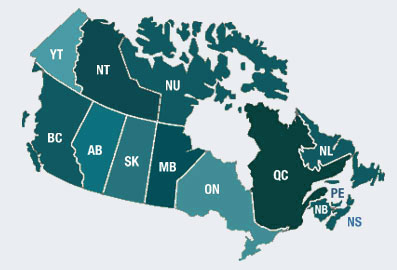
Education Requirements and Pathways
Canadian paralegals typically train through colleges, polytechnics, or universities. Which credential makes sense depends on what education you already hold, how quickly you want to start working, and whether Ontario licensing is your goal.
Certificate Programs
Certificates are usually shorter and more tightly focused than diplomas or degrees. Admission requirements, curriculum, and length vary a lot between institutions, and some are built for applicants who already hold another postsecondary credential while others aren’t. Check the specific program rather than relying on a general rule.
Diploma Programs
Diplomas are a common paralegal pathway. They combine substantive law and procedure with practical skills, and many include a field placement or co-op term, though that varies by institution. Typical coverage includes contract law, tort law, civil procedure, criminal procedure, real estate, legal research, and professional responsibility.
Degree Programs
A small number of Canadian institutions offer bachelor’s-level paralegal credentials. In Ontario, Durham College offers an Honours Bachelor of Paralegal and Humber Polytechnic offers a Bachelor of Paralegal Studies, both accredited by the Law Society. These take the longest and cost the most, and they make sense if you’re considering law school later or want a credential that travels into other professional roles. Our directory of Canadian paralegal programs covers what’s available by province.
Online and Part-Time Options
Many institutions now offer online or hybrid delivery, which helps if you’re working while you study. One warning matters more than the rest: if Ontario licensing is your goal, confirm the specific program is Law Society-accredited before you pay a deposit. Accreditation attaches to a particular program at a particular campus, and an online version of an accredited program is not automatically accredited itself.
Professional Associations and Credentials
This is the area where Canadian and American paralegal guidance most often gets mixed up. The United States has several national certifying bodies that administer voluntary credentialing exams. Canada doesn’t work that way.
What Canada Does and Doesn’t Offer
The Ontario license is the only paralegal credential in Canada that carries a defined legal scope of practice. Outside Ontario, there’s no provincial license and no national examination currently published as open to individual candidates by either of the country’s main paralegal associations. If a program or recruiter tells you a Canadian paralegal certification is required, ask which body issues it and check that body’s own website.
Canadian Association of Paralegals
The Canadian Association of Paralegals, also known as l’Association canadienne des parajuristes, is a national membership organization headquartered in Montreal. It publishes a code of ethics, runs continuing education and networking events, maintains a job board, and offers members group insurance and corporate discounts. Membership signals professional commitment. It isn’t a license and it isn’t a certification.
Paralegal Society of Canada
The Paralegal Society of Canada was formed in 1992 and describes itself as the oldest paralegal society in the country. Its focus is advocacy for the profession and consumer protection against unqualified practitioners. Full voting members carry professional liability insurance and pass a screening process. Most of its membership is in Ontario.
Continuing Professional Development
Licensed Ontario paralegals must complete continuing professional development hours every calendar year to keep their license in good standing. Nothing equivalent is mandatory elsewhere, but the reasons to keep learning don’t stop at the Ontario border. Legislation changes, tribunal practice changes, and employers notice who keeps current.
Salary and Job Outlook
Canadian paralegal salaries vary by province, sector, and specialization. The figures below come from the Government of Canada Job Bank for NOC 42200, drawn from Statistics Canada Labour Force Survey data. Read them as a pay distribution, not as career stages. The low figure isn’t an entry-level rate and the high figure isn’t a senior one. Where you land depends on province, sector, employer, and specialization.
National Wage Overview
Across Canada, paralegals earn a median wage of $33.05 per hour. The reported range runs from $21.63 at the low end to $52.19 at the high end. At full-time hours the national median works out to roughly $68,700 per year, though hours vary and annualizing an hourly figure is always an approximation. Job Bank also reports that 88% of workers in this occupation receive at least one non-wage benefit, such as an employer pension contribution, dental and medical coverage, or paid leave.
Wages by Province
British Columbia posts the highest provincial median in the country at $39.58 per hour. Alberta and Ontario follow closely. Some of the high-end figures rest on small samples, so treat a wide spread in a smaller province as volatility rather than as evidence of unusual opportunity.
| Province/Territory | Low ($/hour) | Median ($/hour) | High ($/hour) |
|---|---|---|---|
| Canada (national) | $21.63 | $33.05 | $52.19 |
| British Columbia | $26.43 | $39.58 | $50.67 |
| Yukon | $30.28 | $36.61 | $54.69 |
| Alberta | $25.96 | $33.65 | $55.00 |
| Ontario | $20.71 | $33.00 | $54.95 |
| Manitoba | $21.25 | $32.72 | $67.20 |
| New Brunswick | $20.00 | $30.26 | $46.15 |
| Saskatchewan | $20.00 | $30.00 | $85.00 |
| Quebec | $20.56 | $28.57 | $45.11 |
| Nova Scotia | $17.00 | $28.21 | $42.01 |
| Newfoundland and Labrador | $18.00 | $26.01 | $37.84 |
| Prince Edward Island | $20.65 | $26.00 | $32.97 |
Wages in the Territories
Yukon is the only territory with published wage data for this occupation. Its median of $36.61 per hour sits above the national figure, and its low of $30.28 is the highest floor in the country, which sits alongside a small labor market and a high cost of living, though Job Bank doesn’t attribute the estimate to either. Job Bank suppresses figures for the Northwest Territories and Nunavut because of data limitations and directs readers to the national numbers instead. If you’re considering territorial work, budget for cost of living separately rather than reading a wage figure on its own.
Employment Outlook
The Canadian Occupational Projections System rates labor demand and labor supply for this occupation as broadly in line at the national level over the 2024 to 2033 period. That’s a balance rating, not a growth rating, and it’s worth reading precisely. It means the number of people looking for these jobs and the number of jobs available are expected to track each other.
Two figures explain where openings will come from. Of the roughly 36,000 people working in the occupation in 2023, 31% were aged 50 or over, and the median retirement age was 64. Those figures point to meaningful replacement hiring over the coming decade, though the published national summary doesn’t quantify how much of it retirements will account for. Replacement openings are real openings, but they describe a different market from one that’s expanding, and it’s a mistake to read them as growth.
Job Bank also publishes three-year prospects by province, updated in December 2025. New Brunswick and Saskatchewan are the only two rated Good.
| Province/Territory | Job Prospects |
|---|---|
| New Brunswick | Good |
| Saskatchewan | Good |
| Ontario | Moderate |
| British Columbia | Moderate |
| Alberta | Moderate |
| Quebec | Moderate |
| Manitoba | Moderate |
| Nova Scotia | Moderate |
| Prince Edward Island | Moderate |
| Newfoundland and Labrador | Undetermined |
| Yukon, Northwest Territories, Nunavut | Undetermined |
Where Canadian Paralegals Work
Law firms are the employer most people picture, and they’re a large part of the market without being all of it.
Law Firms
Firms range from sole practitioners to national partnerships with offices in every major city. Small firms tend to need versatile paralegals who move between practice areas. Large firms more often hire specialists in corporate transactions, litigation support, intellectual property, or real estate.
Corporate Legal Departments
In-house teams hire paralegals to manage contracts, corporate records, compliance, and regulatory filings. These roles often come with structured benefits and closer contact with the business side than firm work provides.
Government and Public Administration
Federal, provincial, and municipal governments employ a substantial share of this occupational group across legal services, regulatory compliance, prosecutions, and administrative tribunals. In Ontario, Job Bank puts roughly three quarters of the occupation in public administration, split across provincial, federal, and municipal employers, which is higher than most people expect. That share describes the whole NOC 42200 group rather than licensed paralegals on their own. These positions tend to be posted on government job boards rather than general job sites, so they’re easy to miss if you’re only searching in the usual places.
Non-Traditional Employers
Community legal clinics, banks and insurers, real estate brokerages, unions, research firms, and educational institutions all hire paralegals. Clinic work is worth a look early in a career, since tribunal appearances are often a routine part of the caseload.
Independent Practice in Ontario
Licensed Ontario paralegals can run their own practices and bill clients directly within their permitted scope. That autonomy comes with running a small regulated business: insurance, trust accounting if you hold client money, annual filings, and the possibility of a practice review.
Common Specializations
- Litigation Support: Court procedures, discovery, and trial preparation
- Real Estate: Property transactions, title searches, and closings
- Corporate Law: Incorporations, corporate records, and regulatory compliance
- Family Law: Divorce, custody, and support matters. In Ontario, general family law sits outside the standard paralegal license, and only paralegals holding the separate Family Legal Services Provider authorization can offer the defined family services the Law Society permits
- Immigration: Applications and supporting documentation. In Ontario, a paralegal license covers only legal services tied directly to advocacy before the Immigration and Refugee Board. The Law Society has stated that preparing applications for Immigration, Refugees and Citizenship Canada, or advising on them, falls outside that scope
- Intellectual Property: Trademark and patent applications
- Wills and Estates: Wills, powers of attorney, and estate administration
If you’re weighing which direction to take, our overview of paralegal specializations compares the day-to-day work in each area.
Steps to Become a Paralegal in Canada
- Decide whether you want to practice independently. This single question determines everything else. Independent practice means Ontario. Supervised work is available across the country.
- Research your province’s requirements. Ontario licensing has specific education rules. Other provinces leave the choice of credential to you and your employer.
- Choose a program that matches your goal. For Ontario licensing, confirm Law Society accreditation for the exact program and campus before enrolling.
- Complete your education. Program length varies widely by institution and credential type, so verify with the school rather than assuming.
- Gain practical experience. Field placements, co-op terms, and clinic volunteering build both skills and the professional connections that produce job offers.
- Get licensed if you’re in Ontario. Register with the Law Society, satisfy the good character requirement, and pass the licensing examination.
- Join a professional association. Membership brings continuing education, a job board, and access to people already doing the work.
- Build your job search around the sector data. Public administration is a bigger employer than most candidates assume, and those roles are posted in different places.
- Keep learning. Mandatory in Ontario, sensible everywhere else.
Essential Skills for Success
Technical legal knowledge is the foundation. The rest of this list is what makes the job go well.
Legal Knowledge and Research Skills
You need a working grasp of legal principles, procedure, and terminology, plus the ability to research efficiently across case law, statutes, and regulations. Attention to detail when reviewing documents prevents errors that get expensive fast.
Communication Skills
Paralegals write constantly and talk to clients, lawyers, opposing counsel, and court staff. Clear writing is the core skill. In Quebec and in bilingual regions elsewhere, French proficiency is often a hiring requirement rather than a bonus.
Technology Proficiency
Expect to work with legal research databases, document management systems, case management software, and e-discovery tools. Many firms also run specialized software for time tracking and billing.
Organization and Time Management
Managing multiple files against hard deadlines and court dates is most of the job. Paralegals routinely juggle several matters at once while making sure nothing slips.
Ethical Judgment
Confidentiality, conflicts of interest, and the limits of your role are not abstract concerns. Knowing where your authority stops, and saying so, protects both the client and you.
Analytical Thinking
Identifying the relevant issue in a messy set of facts, then applying the right legal principle to it, is what separates substantive legal work from administrative support.
Frequently Asked Questions
Do I need a license to work as a paralegal in Canada?
Only in Ontario, and only if you want to provide legal services independently. The Law Society of Ontario issues that license. Everywhere else in Canada there’s no comparable license, and paralegal roles are generally supervised, though specific statutes and tribunals can authorize non-lawyers to represent parties in particular matters. British Columbia passed legislation in 2024 that would create a regulated paralegal category, but the Act isn’t in force yet and no BC paralegal is licensed today.
How long does it take to become a paralegal in Canada?
It depends on the credential and the institution. Certificates are the shortest route, diplomas sit in the middle, and bachelor’s degrees take the longest. Program lengths vary enough between schools that any blanket figure is unreliable, so check the specific program. In Ontario, add time after graduation for the licensing process.
What’s the difference between a paralegal and a legal assistant in Canada?
In Ontario the distinction is legal. “Paralegal” is a protected title reserved for Law Society licensees who can act for clients independently, while legal assistants and law clerks work under lawyer supervision and can’t use the title. Outside Ontario, employers use the titles inconsistently, so the difference often comes down to what a given employer means by them. They aren’t formally interchangeable, since Statistics Canada classifies legal administrative assistants separately from paralegals and related occupations. This trips up job seekers reading postings from another province.
Can I become a paralegal through online education in Canada?
Yes, many institutions offer online or hybrid delivery. One caution matters if Ontario licensing is your goal: accreditation attaches to a specific program at a specific campus, and an online version of an accredited program is not automatically accredited itself. Confirm the exact program on the Law Society’s accredited list before you enroll.
How much do paralegals earn in Canada?
Government of Canada Job Bank reports a national median wage of $33.05 per hour, with a range from $21.63 to $52.19. British Columbia has the highest provincial median at $39.58, followed by Alberta at $33.65 and Ontario at $33.00. These are points in a pay distribution rather than career stages, so the low figure isn’t an entry-level rate. Job Bank also reports that 88% of workers in this occupation receive at least one non-wage benefit.
Can paralegals represent clients in court in Canada?
Only licensed Ontario paralegals can represent clients independently, and only within a defined scope. That includes Small Claims Court, where the limit rose to $50,000 on October 1, 2025, Provincial Offences Act matters such as traffic and bylaw charges, specified Criminal Code summary conviction matters, and various administrative tribunals. Outside Ontario there’s no comparable paralegal license, though particular statutes and tribunals can authorize non-lawyers to represent parties in specific proceedings.
Is the paralegal job market growing in Canada?
Not meaningfully. The Canadian Occupational Projections System rates labor demand and supply as broadly in line for 2024 to 2033, which is a balance rating rather than a growth one. In 2023, 31% of the occupation was aged 50 or over and the median retirement age was 64, which points to meaningful replacement hiring. The published national summary doesn’t quantify how much of future hiring will come specifically from retirements. Job Bank rates three-year prospects as Moderate in most provinces, with New Brunswick and Saskatchewan the only two rated Good.
Key Takeaways
- Ontario is the only province that licenses paralegals for independent practice. Everywhere else there’s no comparable license and paralegal roles are generally supervised, though some statutes and tribunals authorize non-lawyers in specific matters.
- British Columbia’s Legal Professions Act would create a regulated paralegal category, but it isn’t in force and no BC paralegal is licensed today.
- Job Bank reports a national median wage of $33.05 per hour, ranging from $21.63 to $52.19, with British Columbia highest at $39.58. These are distribution points, not career stages.
- The 2024 to 2033 national outlook is balance, not growth. With 31% of the occupation aged 50 or over in 2023, replacement hiring looks meaningful, though the national summary doesn’t quantify how much of it retirements will account for.
- Canada has no national paralegal certification exam comparable to the US credentials. The Ontario license is the only credential carrying a defined scope of practice.
- Public administration employs a larger share of this occupational group than most candidates expect, and those jobs are posted on government boards rather than general job sites.
Ready to Start Your Paralegal Career in Canada?
Compare accredited paralegal programs across Canada and take the first step toward a career in the legal field.
Wage figures from the Government of Canada Job Bank wage report for paralegals in Canada (NOC 42200, Paralegals and related occupations), sourced from Statistics Canada Labour Force Survey data with a 2023-2024 reference period, updated November 19, 2025. Yukon figures use a 2024 reference period and Small Area Estimation. Employment outlook from the Job Bank job prospects report, updated December 10, 2025, and from the Canadian Occupational Projections System for the 2024-2033 period. Figures describe the full occupational group, which also includes law clerks, justices of the peace, notaries public, and trademark agents, not licensed paralegals alone, and not school-specific outcomes. Individual earnings vary by employer, experience, location, and specialization. Canadian wage and employment data is not tracked by the US Bureau of Labor Statistics. Data accessed September 2026.