As of 2025, Ontario is the only Canadian jurisdiction with a regulated paralegal licensing system, allowing licensed paralegals to practice independently in Small Claims Court and tribunals. Other provinces have no current licensing requirements—paralegals work under lawyer supervision with employer-determined qualifications. British Columbia may implement licensing by 2026, pending a court decision.
Paralegal education and credential recognition differ significantly across Canadian provinces due to Ontario’s unique regulatory framework. Ontario requires licensing through the Law Society of Ontario, granting paralegals independent practice rights. All other provinces currently have no licensing requirements—paralegals work under lawyer supervision with qualifications determined by individual employers.
If you’re considering paralegal work in Canada, your career path depends entirely on your target province. Ontario’s regulated licensing system offers independent practice rights unavailable elsewhere in the country. British Columbia may become the second regulated jurisdiction by 2026, pending an October 2025 court decision on the province’s Legal Professions Act.
This guide explains provincial differences in education requirements, licensing processes, salary expectations, and career outlook. Whether you’re a Canadian resident or considering cross-border opportunities from the United States, understanding these jurisdictional variations is essential for informed career planning.


Ontario’s Unique Licensing System
Ontario established paralegal regulation in 2007 through the Law Society of Ontario (LSO)—formerly known as the Law Society of Upper Canada until the name changed in May 2018. This makes Ontario the only Canadian jurisdiction where paralegals must be licensed and can practice independently.
Licensed Ontario paralegals are officers of the court with authority to represent clients in specific legal matters. This distinguishes them fundamentally from paralegals elsewhere in Canada, who must work under lawyer supervision and can’t provide independent legal services.
What Licensed Ontario Paralegals Can Do
The LSO licensing system grants paralegals authority to practice independently in:
- Small Claims Court – Civil disputes up to $35,000
- Provincial Offences Court – Traffic tickets and municipal bylaw violations
- Summary Criminal Matters – Criminal offences with a maximum of six months’ imprisonment
- Administrative Tribunals – Including Landlord and Tenant Board, Workplace Safety and Insurance Board, and Human Rights Tribunal
A significant 2025 development expands this scope further. The LSO approved a new Family Law Service Provider (FLSP) license allowing qualified paralegals to provide limited family law services. Training through Fanshawe College launches in January 2025, potentially opening substantial new practice opportunities.
Licensing Requirements
To become licensed in Ontario, you must:
- Graduate from an LSO-accredited paralegal education program
- Pass the Paralegal Licensing Examination (7-hour, 240-question open-book exam)
- Meet good character requirements
- Complete all requirements within a three-year licensing term
The licensing exam is offered three times annually (summer, fall, winter). Once licensed, paralegals pay an annual fee of $1,023 (2025 rate) and must complete 12 hours of continuing professional development (CPD) annually.
Paralegal Programs by Province in Canada
British Columbia
Manitoba
New Brunswick
Newfoundland and Labrador
Nova Scotia
Ontario
Prince Edward Island
Quebec
Saskatchewan
Northwest Territories
Nunavut
Yukon Territory
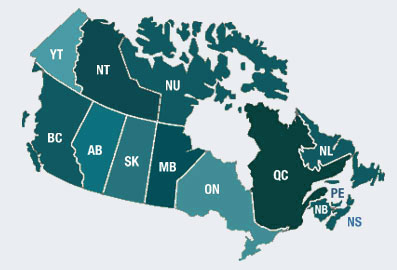
Provincial Requirements Across Canada
Outside Ontario, paralegal regulation does not currently exist. This creates a clear divide in how the profession operates across Canadian jurisdictions.
| Province | Licensing Required | Independent Practice | Regulatory Status |
|---|---|---|---|
| Ontario | Yes | Yes | Fully regulated by LSO |
| British Columbia | Not yet | Not yet | Legal Professions Act passed (2024); implementation uncertain |
| Alberta | No | No | Unregulated; advocacy ongoing |
| All Other Provinces/Territories | No | No | Unregulated; employer-determined qualifications |
British Columbia’s Uncertain Regulatory Future
British Columbia’s Legal Professions Act, which received Royal Assent in May 2024, would create Canada’s second regulated paralegal profession. The legislation envisions licensed paralegals providing independent legal services similar to Ontario’s model.
However, the Law Society of BC launched a constitutional challenge arguing that the act infringes on the society’s regulatory authority. A summary trial is scheduled for October 2025. If the law society’s challenge succeeds, BC paralegals will remain unregulated indefinitely. If the provincial government prevails, BC could implement licensing requirements by 2026.
Current Requirements in Unregulated Provinces
In provinces without licensing systems, paralegal qualifications are entirely employer-determined. You might find positions requiring:
- Certificate programs (6-12 months)
- Diploma programs (2 years)
- Bachelor’s degrees in paralegal studies or related fields
- No formal education, with on-the-job training
The Canadian Association of Paralegals (CAP) recommends contacting potential employers before choosing an education program, as standards vary significantly between firms and practice areas.
Education Programs and Pathways
Your education path depends on where you plan to practice and your current qualifications.
Ontario: LSO-Accredited Programs Required
If you’re targeting an Ontario practice, you must complete an LSO-accredited program. These programs meet specific curriculum standards and include mandatory field placement components.
| Program Type | Duration | Typical Cost (Domestic) | Best For |
|---|---|---|---|
| Ontario College Diploma | 2 years | $7,000–$11,000 | High school graduates, career changers |
| Graduate Certificate | 1 year | $4,500–$6,500 | Bachelor’s degree holders seeking faster entry |
| Private College Diploma | 52-60 weeks | $12,000–$20,000 | Accelerated timeline preference |
| Bachelor’s Degree | 4 years | $26,000–$34,000 | Comprehensive education, potential law school path |
International students face substantially higher costs: $30,000–$36,000 for diplomas and $15,600–$20,558 for graduate certificates.
Notable LSO-accredited institutions include Humber Polytechnic (Ontario’s only bachelor’s degree program), Seneca Polytechnic, Centennial College, and George Brown College. Each offers different delivery formats and specialization options.
Other Provinces: More Flexible Options
Outside Ontario, colleges and universities offer paralegal programs without mandatory accreditation standards. British Columbia’s Capilano University provides Western Canada’s only bachelor’s degree in paralegal studies, though BC doesn’t require any specific credentials.
Certificate programs typically take 6-12 months and focus on practical skills. They’re often offered through continuing education departments and are designed for working professionals or those with previous degrees seeking career transitions.
University degrees include both paralegal coursework and general education. Some students use these programs as preparation for law school, working as paralegals to gain legal experience before pursuing law degrees.
Choosing the Right Program
The CAP recommends completing paralegal education in the province where you plan to work, as statutes, procedures, and requirements vary between provinces. This is particularly important given Ontario’s unique licensing requirements and practice scope.
If you’re unsure about your target province, contact potential employers early in your educational planning. Their hiring requirements will help clarify which credentials matter most for your career goals.
Salary and Career Outlook
National Salary Data
Canadian paralegals earn a median hourly wage of $33.05 nationally, with significant provincial variation reflecting regional economies and cost-of-living differences.
| Province | Median Hourly Wage | High Wage (90th Percentile) |
|---|---|---|
| British Columbia | $39.58 | $50.67 |
| Yukon | $36.61 | $54.69 |
| Alberta | $33.65 | $55.00 |
| Ontario | $33.00 | $54.95 |
| Manitoba | $32.72 | $67.20 |
| Saskatchewan | $30.00 | $85.00 |
| Quebec | $28.57 | $45.11 |
| Nova Scotia | $28.21 | $42.01 |
Full-time paralegals typically earn $50,000–$75,000 annually, with British Columbia showing the highest median at approximately $73,205 per year. Importantly, 88% of paralegals receive non-wage benefits including pension plans, health insurance, or paid leave—substantially higher than many comparable occupations.
Job Market Outlook
The Canadian Occupational Projections System forecasts balanced supply and demand nationally through 2033. However, three-year provincial outlooks (2024-2026) show meaningful variation.
Provinces with good job outlook (strong hiring expected): New Brunswick, Saskatchewan
Provinces with moderate outlook: Ontario, British Columbia, Alberta, Quebec, Manitoba, Nova Scotia, Prince Edward Island
British Columbia projects 1,670 job openings over 10 years (2025-2035), primarily in public administration and professional services. The aging workforce drives much of this demand—31% of current paralegals are over 50, with a median retirement age of 64.
Employment concentrates heavily in government: Ontario data indicates approximately 77% of paralegals work in federal, provincial, or local government roles, with the remainder in private law firms and professional services.
Professional Development and Associations
Continuing Professional Development in Ontario
Ontario’s licensed paralegals must complete 12 CPD hours annually, including:
- 3 professionalism hours (with at least 1 hour on equity, diversity, and inclusion)
- Up to 9 substantive law hours
The LSO offers CPD through workshops, seminars, and conferences. Bar associations and professional paralegal organizations also provide qualifying programs, with increasing availability of online options.
No other province requires CPD since paralegal professions remain unregulated outside Ontario. However, voluntary professional development helps paralegals advance their careers, specialize within legal areas, and stay current with legal developments.
Professional Associations
The Canadian Association of Paralegals (CAP), incorporated federally since 1980 and headquartered in L’Assomption, Quebec, provides continuing education, networking opportunities, and member benefits, including insurance discounts. Student membership for the first year after graduation is approximately $99 CAD.
CAP does not offer national certification—no such credential exists in Canada, unlike the United States, where organizations like NALA and NFPA provide voluntary certifications.
Provincial associations include:
- Ontario Paralegal Association (OPA) – Largest licensed paralegal association; voting membership $175/year
- BC Paralegal Association (BCPA) – Advocacy for BC paralegals; active in regulation discussions
- Alberta Association of Professional Paralegals (AAPP) – Founded 1981; leading regulation advocacy efforts
These associations often provide “lunch and learn” sessions, networking events, and professional development opportunities outside formal regulatory requirements.
How Canada Differs from the United States
Canadian and American paralegal roles differ fundamentally in one critical aspect: Ontario licensed paralegals function as independent legal practitioners, while American paralegals universally work under attorney supervision.
| Aspect | United States | Canada (Ontario) | Canada (Other Provinces) |
|---|---|---|---|
| Independent Practice | Prohibited in all states | Permitted within the defined scope | Prohibited |
| Court Representation | Prohibited | Yes—Small Claims, tribunals, summary matters | No |
| Licensing Required | No state requires licensing | Mandatory via LSO | No |
| Provide Legal Advice | Prohibited | Yes, within permitted scope | No |
Education Standards: ABA vs. LSO
The American Bar Association’s voluntary paralegal program approval (covering about 223 US programs) has no Canadian equivalent. ABA approval does not apply to Canadian programs.
Instead, Ontario uses LSO accreditation as a mandatory legal requirement for licensure. This represents a stricter standard—graduation from LSO-accredited programs is legally required for practice, while ABA approval merely enhances employability in the US market.
For Americans considering Canadian practice or Canadians exploring US opportunities, understand that credentials don’t transfer directly. Ontario licensing doesn’t grant US practice rights, and US paralegal education doesn’t automatically meet Ontario’s LSO requirements.
Frequently Asked Questions
Do I need certification to work as a paralegal in Canada?
Only in Ontario. If you want to practice as a licensed paralegal in Ontario, you must complete LSO-accredited education and pass the licensing examination. In all other provinces and territories, certification isn’t required—qualifications are determined by employers. Some employers prefer formal education (certificate, diploma, or degree), while others provide on-the-job training.
Can Canadian paralegals represent clients in court?
Yes, but only licensed Ontario paralegals. They can represent clients in Small Claims Court (disputes up to $35,000), Provincial Offences Court, summary criminal matters, and various administrative tribunals. Paralegals in other provinces cannot represent clients in court or provide independent legal services—they must work under a lawyer’s supervision.
What’s the fastest way to become a paralegal in Canada?
For Ontario practice, graduate certificate programs take one year if you already have a bachelor’s degree. Private career colleges offer accelerated 52-60 week programs. For provinces without licensing requirements, some employers hire with minimal formal education and provide on-the-job training, though certificate programs (6-12 months) improve employability.
How much does paralegal education cost in Canada?
For domestic students, Ontario college diplomas cost $7,000–$11,000 total, graduate certificates run $4,500–$6,500, and bachelor’s degrees cost $26,000–$34,000 over four years. Private career college programs typically range from $12,000–$20,000. International students face significantly higher tuition, often $30,000–$36,000 for diploma programs.
Can US paralegal credentials transfer to Canada?
Not automatically. For Ontario practice, you must complete LSO-accredited education and pass Ontario’s licensing exam regardless of your US credentials. For other provinces without licensing requirements, US education and experience may be acceptable to some employers, but you’d need to verify with specific firms since requirements vary.
Is British Columbia about to require paralegal licensing?
Potentially, but it remains uncertain. BC’s Legal Professions Act (passed May 2024) would create licensed paralegals with independent practice rights, but the Law Society of BC has launched a constitutional challenge. A summary trial is scheduled for October 2025. If the provincial government prevails, BC could implement licensing requirements by 2026. If the law society succeeds, BC paralegals will remain unregulated indefinitely.
Do I need to complete continuing education as a Canadian paralegal?
Only licensed Ontario paralegals must complete continuing professional development—12 hours annually, including 3 professionalism hours. Paralegals in other provinces aren’t required to complete CPD since the profession isn’t regulated, though voluntary professional development helps career advancement and staying current with legal developments.
What’s the difference between a paralegal certificate and a diploma in Canada?
Diplomas are typically two-year programs offered by colleges, covering comprehensive paralegal education suitable for those starting their education after high school. Certificates are usually one-year programs designed for those who already have bachelor’s degrees in other fields and want to transition into paralegal work. Both can be LSO-accredited in Ontario if offered by approved institutions.
Key Takeaways
- As of 2025, Ontario is the only Canadian province requiring paralegal licensing, offering unique independent practice rights in Small Claims Court, tribunals, and summary criminal matters
- Ontario practice requires Law Society of Ontario-accredited education, passing a licensing exam, and completing 12 CPD hours annually, with a $1,023 annual licensing fee
- All other provinces currently have no licensing requirements—paralegal qualifications are employer-determined, and independent practice is not permitted
- Canadian paralegals earn a median wage of $33.05/hour ($50,000–$75,000 annually), with British Columbia showing the highest provincial earnings at $39.58/hour
- British Columbia’s Legal Professions Act could create Canada’s second regulated paralegal profession by 2026, pending an October 2025 court decision on constitutional challenges
- Unlike US paralegals, who must work under attorney supervision, Ontario licensed paralegals can practice independently within their defined scope of practice
- Job outlook remains balanced nationally through 2033, withthe strongest prospects in New Brunswick and Saskatchewan, driven partly by workforce aging (31% of paralegals over 50)
Exploring Paralegal Education Options?
Whether you’re considering Canadian paralegal programs or comparing opportunities across North America, understanding your education requirements is the first step toward a rewarding legal career.
Sources: National and provincial salary data from the Government of Canada Job Bank (2024 wage data) and WorkBC. Employment projections from the Canadian Occupational Projections System (2024-2033). Ontario licensing information and annual fees from the Law Society of Ontario and Law Times News (2025 rates). British Columbia regulatory information from BC Government Legal Professions Reform consultation. Program information from LSO-accredited institutions and provincial paralegal associations. Data accessed December 2025.