New York doesn’t require paralegals to meet standardized educational or training requirements, but the Empire State Alliance of Paralegal Associations (ESAPA) recommends earning an associate’s or bachelor’s degree in paralegal studies from an ABA-approved program. With 28,510 paralegals employed statewide and a median salary of $66,390, New York ranks among the top states for paralegal careers.
New York is the economic epicenter of the country and home to some 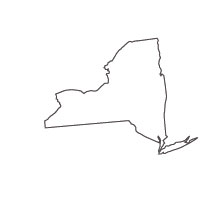 of the nation’s largest law firms. Paul, Weiss, Rifkind, Wharton & Garrison, Davis Polk & Wardwell, Skadden, Arps, Slate, Meagher & Flom, and Kirkland & Ellis, along with the New York City Law Department (one of the oldest legal offices in the world and one of the nation’s largest public law offices) all call NYC home. The NYC metro region ranks first in the nation for its number of paralegals, with nearly 29,300 professionals working in the legal services industry as of 2024.
If a career in the legal services industry appeals to you, and you have determination, grit, and a strong work ethic, now is the time to consider a career as a paralegal. Whether you’re drawn to Manhattan’s corporate towers, Albany’s government agencies, or Rochester’s growing legal market, you’ll need to understand how to become a paralegal in New York.
From Pfizer to NASDAQ, New York City serves as the global headquarters for some of the planet’s largest corporations. Many have massive legal departments filled with hundreds of paralegals and lawyers. The most lucrative jobs for paralegals are found in unexpected industry sectors, including aerospace, computer manufacturing, pharmaceutical, software, and electronic component manufacturing. Though most paralegals still work in traditional law firms, corporate legal teams increasingly delegate tasks to paralegals as a cost-saving measure.


Education Requirements in New York
New York state follows the American Bar Association (ABA) model that guides lawyers’ responsibilities to nonlawyer assistants. Under New York’s Rule 5.3, lawyers must provide supervision of all legal paraprofessionals, including instruction in ethics and confidentiality. The professional conduct of paralegals is considered the responsibility of the supervising attorney.
Paralegals in New York state are not required by law to meet any standardized educational or training requirements before entering the profession. Unlike states such as California that mandate specific qualifications, New York has no formal licensing or registration system for paralegals.
However, the Empire State Alliance of Paralegal Associations (ESAPA) articulates in its Position Statement on Paralegal Education in New York State its belief in standardized educational requirements. ESAPA outlines educational guidelines and encourages their adoption by both paralegals and the attorneys who employ them.
ESAPA Recommended Educational Standards
According to ESAPA, many hiring lawyers, particularly in locations with large concentrations of paralegals like New York City, prefer to hire entry-level paralegals who have earned degrees in paralegal studies. The suggested educational standards are:
- Associate’s degree in paralegal studies
- Post-baccalaureate certificate in paralegal studies
- Bachelor’s degree with a major, minor, or concentration in paralegal studies
Other important criteria include whether the program has ABA approval and whether the educational institution is accredited. ESAPA discourages paralegals from selecting programs that are online-only or that don’t contain academic standards similar to the ABA guidelines. There are numerous paralegal schools throughout New York offering these educational pathways.
Certification Options for New York Paralegals
It’s important to understand the difference between being “certificated” and being “certified” as a paralegal. These terms are often used incorrectly, but they represent two distinct credentials in the paralegal profession.
Certificate Programs (Certificated Paralegals)
Post-baccalaureate certificate programs are offered to aspiring paralegals who have previously earned a degree in another field. Certificate programs offer coursework specific to paralegals without many general education requirements, presumably because students have already fulfilled those while earning their bachelor’s degree. Graduates of such programs earn certificates of completion and thus become certificated paralegals. Learn more about post-degree certificate programs and their requirements.
National Certification (Certified Paralegals)
The member associations of the Empire State Alliance of Paralegal Associations (ESAPA) support the credentialing of paralegals through national certification, through which paralegals become certified paralegals. Certified paralegals demonstrate that they’re proficient in their profession by both meeting educational and training requirements and by passing one of the national certification exams offered by professional paralegal associations.
Currently, there are four exams from which to choose:
- The PACE (Paralegal Advanced Competency Exam) is offered by the National Federation of Paralegal Associations (NFPA)
- The PCCE (Paralegal CORE Competency Exam) is also offered by the National Federation of Paralegal Associations (NFPA)
- The CLA/CP (Certified Legal Assistant/Certified Paralegal) is offered by the National Association of Legal Assistants (NALA)
- The PP (Professional Paralegal) offered by the Association for Legal Professionals (NALS)
Each certification has its own requirements and benefits. Read our complete guide to NALA certification to understand the CLA/CP credential in depth. Requirements for the national exams differ between the three national paralegal organizations. In New York, most paralegals take the PACE or PCCE as the ESAPA member organizations are affiliated with the NFPA.
Paralegal Salary in New York
New York ranks among the top states in the nation for paralegal employment and compensation. As of May 2024, the Empire State was home to 28,510 paralegals, ranking it fourth in the nation for its employment level of paralegals. New York also ranked fourth in the nation for its relatively high average paralegal salary.
Statewide Salary Data (2024)
| Percentile | Hourly Wage | Annual Salary |
|---|---|---|
| 10th Percentile (Entry-Level) | $23.02 | $47,880 |
| 25th Percentile | $27.68 | $57,570 |
| Median (50th Percentile) | $31.92 | $66,390 |
| Mean (Average) | $35.86 | $74,580 |
| 75th Percentile | $43.05 | $89,540 |
| 90th Percentile (Experienced) | $50.92 | $105,910 |
New York’s average paralegal salary of $74,580 is about $8,000 higher than the national average. With experience, industry credentials, and expertise in one or more areas of law, you can climb the professional ladder and enjoy a salary that more closely reflects the top 10%, which started at $105,910 as of May 2024.
Metropolitan Area Salaries
Salary levels vary significantly across New York’s metropolitan areas. The New York City metro region leads the state and nation, posting the highest average salaries and total paralegal employment.
| Metropolitan Area | Average Salary | Top 10% Salary |
|---|---|---|
| New York City-Newark-Jersey City | $77,050 | $107,520 |
| Syracuse | $64,090 | $86,610 |
| Kingston | $62,640 | $81,860 |
| Albany | $62,020 | $81,560 |
| Poughkeepsie | $61,830 | $79,240 |
| Rochester | $61,090 | $79,650 |
| Binghamton | $60,280 | $78,210 |
| Ithaca | $60,110 | $74,970 |
| Glens Falls | $58,760 | $76,800 |
| Buffalo | $58,740 | $79,960 |
| Utica | $58,670 | $79,010 |
| Watertown | $55,300 | $73,940 |
The New York City metro area easily tops the nation for its number of paralegal jobs (29,300) and posted the highest salaries for paralegals as of May 2024, both at the average level and at the top 10%.
Job Outlook and Growth
The paralegal profession in New York shows promising growth prospects over the next decade. According to the Bureau of Labor Statistics employment projections, New York’s paralegal workforce is expected to expand significantly between 2022 and 2032.
Employment Projections (2022-2032)
| Metric | Value |
|---|---|
| Base Employment (2022) | 33,430 paralegals |
| Projected Employment (2032) | 35,830 paralegals |
| Total Job Growth | +2,400 positions |
| Growth Rate | +7.2% |
| Average Annual Openings | 240 positions per year |
This 7.2% growth rate reflects strong demand for paralegal services across New York’s diverse legal markets. Annual openings result from both job growth and the need to replace paralegals who retire, change careers, or leave the workforce. The combination of competitive salaries, strong job growth, and New York’s position as a legal industry hub makes it an excellent state for paralegal careers.
Paralegal Programs in New York
The body of knowledge required to effectively perform legal support services can only come from a formal education in paralegal studies. As attorneys, corporations, and government agencies work within an increasingly complex legal framework, the level of responsibility they expect paralegals to be able to take on has also increased. Law offices and other employers in New York have come to rely on paralegals with the kind of expertise that can only come from earning a certificate or degree in paralegal studies.
Are you one of those ambitious types always looking for new ways to position yourself over your competition? If you’re a practicing paralegal, Game Theory would dictate that a specialized certificate or advanced degree is your next move. Or maybe you’re shifting gears and looking to transition to the field of law after grinding it out for several years in some other job. If that’s the case, then a post-degree certificate in paralegal studies might be what you’re after. Are you just now putting high school behind you and looking to make your first foray into the professional world by way of a paralegal career? A bachelor’s or associate’s degree could be your best option.
Whether you’re just getting started, changing careers, or looking to advance, you could be strolling across the marble floors of a downtown high-rise on your way to work in the law offices of a major firm, and it could happen sooner than you think.
ABA-Approved Programs in New York
New York offers numerous paralegal education options through accredited institutions. Programs range from associate’s degrees and bachelor’s degrees to post-baccalaureate certificates. When selecting a program, prioritize those with ABA approval and institutional accreditation.
Dubbed Wall Street’s most powerful law firm by Forbes, Skadden is an example of why the nation’s best paralegals come to New York. Headquartered in the heart of NYC, Skadden operates 22 offices with over 1,700 attorneys and thousands of paralegals and support staff. Specializing in mergers and acquisitions, the firm handles billion-dollar deals that require highly skilled paralegal support.
New York Paralegal Schools by Type
Associate’s Degree Programs (AAS in Paralegal Studies):
- Asa College
- Berkeley College (campus and online)
- Bronx Community College (CUNY)
- Broome Community College (SUNY)
- Bryant & Stratton College (Albany, Buffalo, Greece, Syracuse, online)
- Dutchess Community College (SUNY)
- Erie Community College (SUNY)
- Finger Lakes Community College
- Genesee Community College
- Hilbert College
- Hostos Community College (CUNY)
- Jefferson Community College (SUNY)
- LaGuardia Community College
- Mildred Elley College
- Nassau Community College
- New York City College of Technology
- Plaza College
- Rockland Community College
- Schenectady County Community College
- Suffolk County Community College (SUNY)
- Tompkins Cortland Community College (online)
- Touro College
- Westchester Community College
Bachelor’s Degree Programs:
- Berkeley College (BS in Legal Studies, campus and online)
- College of Technology at Canton (SUNY) (BS in Legal Studies)
- Daemen College (BS in Paralegal Studies)
- Elmira College (BA/BS in Legal Studies)
- Hilbert College (BS in Paralegal Studies)
- Ithaca College (BA in Legal Studies)
- Manhattan College (BA in Legal Studies)
- Mercy College (BS in Legal Studies: Paralegal Studies)
- Nazareth College (BA in Legal Studies)
- New York City College of Technology (BS in Legal Assistant Studies)
- St. John Fisher College (BA in Legal Studies)
- St. John’s University (BS in Legal Studies)
- United States Military Academy (Bachelor’s in Law and Legal Studies)
- University of Buffalo (BA in Legal Studies)
Post-Baccalaureate Certificate Programs:
- Berkeley College (online)
- Bronx Community College (CUNY)
- Broome Community College (SUNY)
- Bryant & Stratton College (online)
- Corning Community College (SUNY, online)
- Daemen College
- Dutchess Community College (SUNY)
- Finger Lakes Community College
- Hofstra University
- Long Island University Brooklyn
- Marist College
- Mildred Elley College
- Monroe Community College (SUNY)
- Nassau Community College
- Pace University (online and hybrid)
- Plaza College
- Rockland Community College
- Suffolk County Community College (SUNY)
- Tompkins Cortland Community College (online)
- Westchester Community College
Every program listed is offered through an accredited school. When researching programs, verify the current ABA approval status and confirm the program format (campus, online, or hybrid) meets your needs.
Professional Associations in New York
New York is home to several regional NFPA affiliate associations that also work together as the Empire State Alliance of Paralegal Associations (ESAPA). ESAPA unites paralegals on statewide and national matters, ensures that all New York paralegals are informed of legislation and other issues concerning the paralegal profession, and provides networking opportunities.
Empire State Alliance of Paralegal Associations (ESAPA)
ESAPA currently has five local chapters:
- Capital District Paralegal Association (CDPA)
- New York City Paralegal Association (NYCPA)
- Western New York Paralegal Association (WNYPA)
- Paralegal Association of Rochester (PAR)
The member associations that belong to ESAPA offer support, education, advocacy, and networking tailored to the regions they serve. Continuing education and professional development are top priorities, as well as supporting members seeking national certification. The regional paralegal associations also cultivate working relationships with local bar associations and others in the legal field to help promote the growth of the paralegal profession.
NALS of New York
The state-level affiliate of NALS, this association and its local chapters encourage membership in NALS and promote NALS certifications. Local chapters include:
- Central NY Chapter of NALS
- NALS of Nassau County
- NALS of New York City
- NALS of Suffolk County
- NALS of Lower Hudson Valley
Greater New York Paralegal Association (GNYPA)
An affiliate of the National Association of Legal Assistants (NALA), GNYPA offers membership for students, associates, sustaining members, and active members who meet educational or certification requirements.
Key Professional Resources
- Empire State Alliance of Paralegal Associations (ESAPA)
- New York State Bar Association (NYSBA)
- New York Department of State
- New York State Unified Court System
Major Law Firms Hiring Paralegals
New York is home to many private law firms, which serve as major sources of paralegal employment. The state’s largest law firms include some of the most prestigious practices in the nation:
- Skadden, Arps, Slate, Meagher and Flom
- Paul, Weiss, Rifkind, Wharton & Garrison
- Simpson, Thatcher & Bartlett
- Davis Polk & Wardwell
- Weil, Gotshal & Manges
- Sullivan & Cromwell
- Cleary Gottlieb Steen & Hamilton
- Cravath Swaine & Moore
- Debevoise & Plimpton
- Kirkland & Ellis
These firms employ thousands of paralegals across multiple practice areas, from corporate mergers and acquisitions to litigation, intellectual property, and regulatory compliance. Beyond traditional law firms, corporate legal departments throughout New York’s financial, technology, pharmaceutical, and manufacturing sectors also hire significant numbers of paralegals.
Frequently Asked Questions
Do I need a license to work as a paralegal in New York?
No, New York doesn’t require paralegals to obtain a state license or meet standardized educational requirements. However, the Empire State Alliance of Paralegal Associations (ESAPA) strongly recommends earning an associate’s or bachelor’s degree in paralegal studies from an ABA-approved program. Many employers, especially large law firms in New York City, prefer or require formal paralegal education.
What’s the difference between a paralegal certificate and paralegal certification?
A paralegal certificate is earned by completing an educational program (usually a post-baccalaureate certificate program), making you a “certificated paralegal.” Paralegal certification, on the other hand, means you’ve passed a national exam like the PACE, PCCE, or CLA/CP, making you a “certified paralegal.” Certification demonstrates professional competency beyond educational credentials.
How much do paralegals make in New York City?
As of May 2024, paralegals in the New York City-Newark-Jersey City metro area earn an average salary of $77,050 per year ($37.04 per hour). Experienced paralegals in the top 10% earn $107,520 or more annually. NYC offers the highest paralegal salaries in New York state and among the highest in the nation.
Should I choose an ABA-approved paralegal program?
Yes, ESAPA strongly recommends choosing an ABA-approved program. ABA approval ensures the program meets quality standards for curriculum, faculty qualifications, and student services. Many employers in New York’s competitive legal market prefer graduates from ABA-approved programs, and ABA approval is often required for national certification eligibility.
What are the job prospects for paralegals in New York?
Job prospects are excellent. The Bureau of Labor Statistics projects New York’s paralegal workforce will grow by 7.2% (adding 2,400 positions) between 2022 and 2032, with an average of 240 annual openings. New York ranks fourth in the nation for total paralegal employment with 28,510 professionals currently working in the field.
Can I work as a paralegal with just a high school diploma in New York?
While New York law doesn’t prohibit it, finding paralegal employment with only a high school diploma is increasingly difficult. Most employers require at least an associate’s degree in paralegal studies or a bachelor’s degree with paralegal coursework. Formal education demonstrates competency in legal research, writing, ethics, and substantive law areas that employers expect.
Are online paralegal programs acceptable in New York?
ESAPA discourages selecting programs that are online-only or that don’t meet academic standards similar to ABA guidelines. However, many accredited New York schools offer hybrid programs combining online coursework with in-person components. When considering online options, verify the program has ABA approval and institutional accreditation, and ensure it includes practical skills training.
Key Takeaways
- New York doesn’t require paralegals to be licensed, but ESAPA strongly recommends earning an associate’s or bachelor’s degree in paralegal studies from an ABA-approved program
- With 28,510 paralegals employed statewide and a median salary of $66,390 ($74,580 average), New York ranks fourth in the nation for both employment and compensation
- The New York City metro area offers the highest paralegal salaries in the state at $77,050 on average, with top earners making $107,520 or more
- The paralegal profession in New York is projected to grow 7.2% through 2032, adding 2,400 positions with 240 average annual openings
- National certification through PACE, PCCE, CLA/CP, or PP exams demonstrates professional competency and is supported by ESAPA member associations
- New York’s major law firms and corporate legal departments offer diverse career opportunities across practice areas, from mergers and acquisitions to intellectual property
Ready to Start Your Paralegal Career in New York?
Explore ABA-approved paralegal programs across New York state and take the first step toward joining one of the nation’s most dynamic legal markets.
Salary Disclaimer: 2024 US Bureau of Labor Statistics salary and job market figures for Paralegals and Legal Assistants reflect state and national data, not school-specific information. Conditions in your area may vary. Data accessed December 2025.