Florida doesn’t mandate paralegal certification, but the state’s competitive legal market makes credentials valuable. Most successful paralegals hold associate or bachelor’s degrees and pursue national certification through NALA or NFPA to stand out to employers. With 37,410 paralegals employed and a median salary of $60,280, Florida ranks second nationally for paralegal employment.
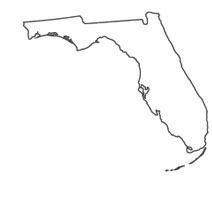
One of the nation’s powerhouse states, Florida has long enjoyed a strong GDP, growing by nearly 50% in the last 20 years. This type of meteoric economic growth has long supported a robust legal field, which, in turn, has created exciting opportunities for paralegals.
Publix, Winn-Dixie, Office Depot, HSN, and Fidelity National Financial are just some of the major employers of paralegals in Florida, while Cole Scott & Kissane PA in Tampa and Cole, Scott & Kissane in Miami are among the bigger regional firms in the state that employ paralegals specializing in litigation, estate law, immigration, real estate law, and more.
As of 2020, Fort Lauderdale, Tallahassee, Miami, West Palm Beach, Tampa, Port St. Lucie, and St Petersburg all rank among the top metros in the country for the highest concentration of paralegal jobs.
Paralegal Requirements in Florida
The Florida Legislature has revisited the matter of regulating paralegals several times in recent years. Although voluntary registration with the Florida Bar is available, currently, for professionals to refer to themselves as paralegals, all they have to do is meet the definition laid out by the Florida Bar Association:
A paralegal is a person with education, training, or work experience who works under the direction and supervision of a member of The Florida Bar and who performs specifically delegated substantive legal work for which a member of The Florida Bar is responsible.


Paralegals may not provide legal advice, must be directly supervised by an attorney, and an attorney must assume legal responsibility for the professional actions of any paralegal employees.
While the State Legislature has not yet required certification or registration of paralegals, professional paralegals and the Florida Bar Association have responded to the potential of regulation by offering voluntary certification and registration for paralegals. Currently, there are three options: Certified Paralegal (CP), Florida Certified Paralegal (FCP), and Florida Registered Paralegal (FRP).
Education & Training Options
Although there are no legal requirements for paralegal education in Florida, the Florida Association of Paralegals reports that most law firms will hire paralegals with a degree. Additionally, many want their new-hires to have passed the Certified Paralegal (CP) exam.
Paralegals may choose from several different educational pathways: certificate programs, associate’s degrees in paralegal studies, and bachelor’s degrees in paralegal studies. There are also a few schools offering master’s-level paralegal degrees. Each type of educational program has different entry requirements, and these requirements also vary from school to school. Additionally, some schools provide American Bar Association (ABA)-approved programs, which may be important to employers and to the national certifying exam requirements. Not all programs are offered by accredited institutions, so it’s vital to research that as well.
Certificate Programs
Certificate programs offer a certificate of paralegal studies to those who complete their coursework. Certificate programs may target students who have completed a bachelor’s degree in another field and wish to supplement it with a focus in paralegal studies. Other certificate programs don’t require a degree as a prerequisite and issue a stand-alone certificate. In Florida, only post-baccalaureate certificate programs are recognized by the FRP program. Some certificate programs in paralegal studies that don’t require a degree may meet the requirements for the CP and FCP.
Certification & Registration
Florida offers three distinct paralegal credential options. While none are mandatory, they provide competitive advantages in the state’s robust legal market.
Certified Paralegal (CP)
National certification, including the CP that many paralegals in Florida hold, is offered by the three national paralegal associations. The exams require education, training, or a combination of both.
Currently, there are four national exams to choose from. In Florida, the CLA/CP is the exam most paralegals decide to take because it’s a prerequisite for becoming an FCP or FRP.
- The CLA/CP offered by the National Association of Legal Assistants (NALA)
- The PACE and PCCE certifications provided by the National Federation of Paralegal Associations (NFPA)
- The PP supplied by the Association for Legal Professionals (NALS)
Florida Certified Paralegal (FCP)
The Paralegal Association of Florida (PAF) offers the Florida Certified Paralegal (FCP) exam. To qualify to sit for this exam, paralegals must already be NALA-certified CPs and must promise to uphold high ethical and professional standards. The FCP designation helps paralegals distinguish themselves as experts in Florida state law.
Florida Registered Paralegal (FRP)
The Florida State Bar, acting under Florida Supreme Court Rule 20, offers voluntary registration of paralegals who meet eligibility criteria. To register as an FRP, a paralegal must meet education and experience requirements or must hold national certification from NALA or the NFPA. Paralegals can earn all three (CP, FCP, and FRP) credentials if they so desire.
Paralegal Schools in Florida
The body of knowledge required to perform legal support services effectively can only be gained through a formal education in paralegal studies. As attorneys, corporations, and government agencies work within an increasingly complex legal framework, the level of responsibility they expect paralegals to take on has also increased. Law offices and other employers in Florida have come to rely on paralegals with the kind of expertise that can only come from earning a certificate or degree in paralegal studies.
Finding options isn’t the issue; narrowing them down to find the right fit is the challenge. Florida offers diverse paralegal programs at community colleges, universities, and technical colleges throughout the state. Programs range from certificate options (taking just months to complete) to bachelor’s degree programs (typically four years). Many schools now offer online and hybrid formats to accommodate working students.
Featured Florida Paralegal Programs
Atlantic Technical College
Legal Administrative Specialist Certificate – On-campus
Barry University
Bachelor of Science (BS) in Administration, Legal Studies Specialization – On-campus and online
Legal Studies Certificate – On-campus (undergraduate, pre-degree)
Legal Studies Post-Baccalaureate Certificate – On-campus
Minor in Legal Studies – On-campus
Broward College
Associate of Science in Paralegal Studies – On-campus
City College (Altamonte Springs, Fort Lauderdale, Miami)
Associate of Science (AS), Legal Assistant/Paralegal – On-campus
College of Central Florida
Associate of Science (AS) in Paralegal Studies – On-campus
Daytona State College
Associate of Science (AS) in Paralegal Studies/Legal Assisting – On-campus
Eastern Florida State College
Associate of Science (AS) in Paralegal Studies – On-campus
Florida Gulf Coast University
Bachelor of Science (BS) in Legal Studies – Online
Paralegal Certificate – Online, on-campus
Advanced Paralegal Certificate – Online
Legal Investigation Certificate – Online, on-campus
Legal Secretary Certificate – Online, on-campus
Florida National University-Main Campus
Associate of Arts (AA) in Paralegal Studies – Online
Bachelor of Arts (BA) in Legal Studies – Online
Legal Assistant Diploma – On-campus
Florida SouthWestern State College
Associate of Science (AS) in Paralegal Studies – On-campus
Florida State College at Jacksonville
Associate in Science (AS) in Paralegal Studies – On-campus
Gulf Coast State College
Associate of Science (AS) in Legal Assisting/Paralegal Studies – On-campus
Hillsborough Community College
Associate of Science (AS) in Paralegal Studies – On-campus
Advanced Technical Certificate – Paralegal Studies – On-campus (post-baccalaureate)
Hodges University
Associate’s Degree in Paralegal Studies – Online
Bachelor of Science (BS) in Legal Studies – Online
Indian River State College
Associate of Science (AS) in Paralegal Studies – On-campus
Keiser University
Associate of Arts (AA) in Paralegal Studies – On-campus or online
Key College
Associate of Science (AS) in Paralegal Studies – Online, on-campus
Miami Dade College
Associate of Science (AS) in Paralegal Studies – On-campus
Northwest Florida State College
Associate of Science (AS) in Paralegal Studies – On-campus
Nova Southeastern University
Bachelor of Science (BS) in Paralegal Studies – On-campus
Paralegal Studies Minor – Bachelor’s Degree – On-campus
Palm Beach State College
Associate in Science (AS) – Paralegal – On-campus
Paralegal Advanced Technical Certificate – On-campus (post-baccalaureate)
Pasco-Hernando State College
Associate in Science (AS) in Paralegal Studies – On-campus, online
Pensacola State College
Associate of Science (AS) in Paralegal Studies/Legal Assisting – On-campus, hybrid
Rasmussen University-Florida
Associate’s Degree in Paralegal Studies – Online
Certificate in Paralegal Studies – Online
Santa Fe College
Associate of Science (AS) in Paralegal Studies – On-campus
Seminole State College of Florida
Associate of Science (AS) in Legal Assistant/Paralegal – On-campus
South University – West Palm Beach
Associate of Science (AS) in Paralegal Studies – On-campus
Bachelor of Science (BS) in Legal Studies – On-campus
Southeastern University
Bachelor of Science (BS) in Legal Studies – On-campus
Southern Technical College
Associate of Applied Science (AAS) – Paralegal – Online
St. Petersburg College
Associate of Science (AS) in Paralegal Studies – On-campus
Bachelor of Applied Science (BAS) in Paralegal Studies – On-campus
Paralegal Studies Certificate – On-campus (post-baccalaureate)
State College of Florida-Manatee-Sarasota
Associate of Science (AS) in Paralegal Studies/Legal Assisting – On-campus, hybrid
Advanced Technical Certificate in Paralegal Studies (Undergraduate) – On-campus, hybrid
Tallahassee Community College
Associate of Science (AS) in Paralegal/Legal Studies – Hybrid
University of Central Florida
Bachelor of Arts/Science (BA or BS) in Legal Studies – On-campus, online
Minor in Legal Studies – On-campus
University of Miami
Bachelor of Science in Business Administration (BSBA) in Legal Studies – On-campus
Bachelor of Business Administration (BBA) in Legal Studies – On-campus
University of West Florida
Bachelor of Arts (BA) in Legal Studies – On-campus
Valencia College
Associate of Science (AS) in Paralegal Studies – On-campus
Salary & Compensation in Florida
Boasting one of the largest economies in the U.S., Florida is supported by its massive tourism and agriculture industries, as well as growing aviation, aerospace, and financial/professional services industries. Florida is a force to be reckoned with. Del Monte Foods, Royal Caribbean Cruises, Winn-Dixie… these Florida corporations can translate into exciting opportunities for Florida’s paralegals specializing in corporate law.
But that’s not all. Paralegals in Florida may land themselves a sought-after position with one of Miami’s big-name law firms like Holland & Knight LLP and Akerman LLP, a spot in Central Florida’s massive defense industry, or a career with a major nonprofit like Gainesville’s UF Health Shands Hospital.
Florida Paralegal Salary Overview
For professional opportunities in the paralegal profession, you simply can’t do better than Florida. As of May 2024, Florida ranked second in the nation for paralegal employment, with 37,410 paralegals employed, beating out more populous Texas.
Florida also boasts substantial paralegal salaries to match. As of May 2024, the average salary for paralegals in Florida was $61,150, or $29.40 per hour. The median salary was $60,280 annually. Plenty of experience and a law specialty on your resume will allow you to rise through the ranks among Florida’s paralegals and be among the big earners here with top 10% salaries that start at $82,450, or $39.64 per hour.
Salary by Major City
The Miami metro region reported the highest average salary among Florida’s paralegals as of May 2024, about $3,500 above the state average, although all metro regions reported average salaries that exceeded $50,000. Metro North Port’s top 10% salary is the only one in the state to break six figures, at $99,420.Nearly.
| City | Average Salary | Top 10% Salary |
|---|---|---|
| Miami | $64,660 ($31.09 hourly) | $89,950 ($43.24 hourly) |
| North Port | $63,260 ($30.41 hourly) | $99,420 ($47.80 hourly) |
| Tampa | $62,180 ($29.89 hourly) | $80,200 ($38.56 hourly) |
| Jacksonville | $61,960 ($29.79 hourly) | $89,990 ($43.26 hourly) |
| Naples | $60,530 ($29.10 hourly) | $81,990 ($39.42 hourly) |
| Crestview | $59,780 ($28.74 hourly) | $80,930 ($38.91 hourly) |
| Cape Coral | $58,690 ($28.22 hourly) | $78,330 ($37.66 hourly) |
| Port St. Lucie | $57,840 ($27.81 hourly) | $77,630 ($37.32 hourly) |
| Lakeland | $56,770 ($27.29 hourly) | $77,210 ($37.12 hourly) |
| Palm Bay | $56,580 ($27.20 hourly) | $78,910 ($37.94 hourly) |
| Ocala | $56,520 ($27.17 hourly) | $76,910 ($36.98 hourly) |
| Orlando | $56,360 ($27.10 hourly) | $77,410 ($37.22 hourly) |
| Wildwood | $55,910 ($26.88 hourly) | $80,840 ($38.86 hourly) |
| Daytona Beach | $55,060 ($26.47 hourly) | $76,830 ($36.94 hourly) |
| Sebastian | $55,000 ($26.44 hourly) | $78,070 ($37.53 hourly) |
| Punta Gorda | $54,660 ($26.28 hourly) | $77,480 ($37.25 hourly) |
| Tallahassee | $54,180 ($26.05 hourly) | $75,780 ($36.43 hourly) |
| Pensacola | $53,560 ($25.75 hourly) | $75,210 ($36.16 hourly) |
| Panama City | $52,640 ($25.31 hourly) | $77,300 ($37.16 hourly) |
| Gainesville | $51,740 ($24.88 hourly) | $75,980 ($36.53 hourly) |
| Sebring | $50,610 ($24.33 hourly) | $73,900 ($35.53 hourly) |
Factors Affecting Paralegal Salaries in Florida
- Geographic location: Major metropolitan areas like Miami, Tampa, and Jacksonville offer higher compensation than smaller cities
- Experience level: Entry-level paralegals start around $40,000, while experienced professionals can earn $80,000 or more
- Legal specialization: Corporate law, intellectual property, and complex litigation typically command higher salaries
- Employer type: Large law firms and corporations generally pay more than small practices or nonprofit organizations
- Education and credentials: Bachelor’s degrees and professional certifications (CP, FCP, FRP) increase earning potential
Job Outlook & Career Growth
Florida’s paralegal profession shows strong growth prospects. According to Bureau of Labor Statistics projections, the state will see approximately 4,430 annual job openings for paralegals from 2022 to 2032. This steady demand is driven by Florida’s growing population, expanding legal services sector, and increasing complexity of legal work.
The state’s diverse economy provides paralegal opportunities across multiple sectors, including real estate, corporate law, family law, criminal defense, immigration, and estate planning. South Florida’s concentration of international business creates a robust demand for paralegals with bilingual skills and expertise in international law.
Career advancement opportunities include senior paralegal positions, paralegal supervisors, litigation support managers, and legal operations roles. Many paralegals also transition into law office administration, compliance, or pursue law school to become attorneys.
Professional Associations
The Paralegal Association of Florida (PAF), an affiliate of NALA, is the only paralegal association that encompasses the entire state. It works to support and advocate for paralegals on the state level, especially by offering voluntary certification opportunities such as the NALA CLA/CP exam and the Florida Certified Paralegal exam. It also provides educational opportunities to aspiring and professional paralegals, including continuing legal education.
PAF has 12 local chapters and sponsors its own paralegal credential, and its local chapters have five classes of memberships:
- Active Member – You can qualify for this through one of the following routes:
- Have Certified Paralegal (CP)/Certified Legal Assistant (CLA) certification through NALA
- Graduated from a paralegal study program that the ABA currently approves
- Graduated from an institutionally-accredited paralegal program that includes at least 60 semester credits
- Graduated from a paralegal program and have at least six months of in-house paralegal training
- Have a bachelor’s degree in any field, plus at least six months of in-house paralegal training
- Have at least three years of law-related experience that includes at least six months of in-house paralegal training
- Have two years of in-house paralegal training
- Associate Member – You can qualify for this via one of the following:
- Be a Florida attorney
- Be an educator in Florida
- Be at least 55 years old and have been previously qualified for membership based on your occupation
- Be a non-resident of Florida who would otherwise qualify for membership
- Be a graduate of a paralegal program who has not yet gained six months of work experience
- Sustaining Member – Open to law firms, title companies, banking companies, and other entities providing services to the PAF or law offices
- Student Member – Complete at least six semesters of law-related courses, or three semesters plus full-time employment in a law-related field
- Emeritus Member – Retired paralegals who were formerly Active Members
PAF Local Chapters
The 12 PAF local chapters throughout the state are:
- At Large Chapter
- Big Bend Chapter
- Boca Raton Chapter
- Brevard Chapter
- Broward Chapter
- First Coast Chapter
- Hillsborough Chapter
- Palm Beach Chapter
- Pinellas Chapter
- Southwest Chapter
- Suncoast Chapter
- Treasure Coast Chapter
Each of these regional groups offers monthly meetings, networking, and community service opportunities. Many members also serve on their local colleges’ Technical Advisory Committees.
Regional Paralegal Associations
Regional associations meet throughout Florida, including the Central Florida Paralegal Association, Inc., the Gainesville Association of Paralegals, the Northeast Florida Paralegal Association, Inc., the Northwest Florida Paralegal Association, the South Florida Paralegal Association, the Tampa Bay Paralegal Association, the Gulf Coast Paralegal Association, the Southwest Florida Paralegal Association, Inc., and the Volusia Association of Paralegals.
Major Law Firms Employing Paralegals
Law firms employ more paralegals than any other type of business. Some of Florida’s largest law firms include:
- Akerman Senterfitt
- Greenberg Traurig
- Holland & Knight
- Adorno and Yoss
- Shutts and Bowen
- Broad and Cassel
- Cole Scott Kissane
- Gunster
- Fowler White Boggs
- GrayRobinson
- Carlton Fields
- Foley & Lardner
- Wicker Smith O’Hara
- Conroy Simberg
- Stearns Weaver
- Becker & Poliakoff
- Morgan & Morgan
- Fowler White Burnett
- Shumaker Loop
- Butler Pappas
Frequently Asked Questions
Does Florida require paralegal certification?
No, Florida doesn’t legally require paralegal certification or registration. However, most employers prefer candidates with formal education and credentials. The state offers voluntary certification options, including the Certified Paralegal (CP), Florida Certified Paralegal (FCP), and Florida Registered Paralegal (FRP) designations. While voluntary, these credentials provide competitive advantages in Florida’s robust legal market.
How long does it take to become a paralegal in Florida?
The timeline depends on your educational path. Certificate programs typically take 6-12 months to complete. Associate degree programs take about two years of full-time study. Bachelor’s degree programs require four years. Many schools offer part-time and online options that allow you to complete programs while working, which may extend the timeline but provides flexibility.
How much do paralegals make in Florida?
As of May 2024, the median paralegal salary in Florida is $60,280 per year, or $28.98 per hour. Entry-level paralegals typically earn around $40,000 annually, while experienced paralegals in the top 10% earn $82,450 or more. Salaries vary significantly by location, with Miami offering the highest average at $64,660, and major metro areas generally paying more than smaller cities.
Can I work as a paralegal in Florida without a degree?
Legally, yes. Florida doesn’t have specific educational requirements to work as a paralegal. However, the Florida Association of Paralegals reports that most law firms will only hire paralegals with a degree. Practical reality is that you’ll have much better job prospects with formal education. Entry-level positions may be available with a certificate, but career advancement typically requires an associate or bachelor’s degree.
Are online paralegal programs accepted in Florida?
Yes, online paralegal programs are widely accepted in Florida. Many reputable Florida institutions now offer accredited online paralegal programs, including bachelor’s and associate degrees. When selecting an online program, ensure that a regional or national accrediting body accredits the school. ABA-approved online programs carry additional recognition and may be required for specific certifications.
Do I need an ABA-approved program in Florida?
ABA approval isn’t legally required in Florida, but it’s highly recommended. ABA-approved programs meet rigorous quality standards and are recognized by employers nationwide. Graduating from an ABA-approved program also makes you eligible to sit for national certification exams like the NALA CP without additional requirements. If you’re considering pursuing Florida Certified Paralegal (FCP) or Florida Registered Paralegal (FRP) credentials, an ABA-approved program provides a strong foundation.
What’s the job outlook for paralegals in Florida?
The job outlook for Florida paralegals is strong. The state currently employs 37,410 paralegals, ranking second nationally. BLS projections show approximately 4,430 annual job openings from 2022 to 2032. Florida’s growing population, expanding legal services sector, and increasing complexity of legal work all contribute to steady demand. Major metropolitan areas like Miami, Tampa, Jacksonville, and Orlando offer the most opportunities.
What types of specializations can Florida paralegals pursue?
Florida paralegals can specialize in numerous practice areas, including corporate law, real estate, family law, immigration, estate planning, personal injury, criminal defense, intellectual property, and environmental law. South Florida’s international business climate creates strong demand for paralegals with expertise in international transactions and bilingual skills. Specialization typically leads to higher salaries and better advancement opportunities.
Key Takeaways
- Florida doesn’t mandate paralegal certification, but voluntary credentials (CP, FCP, FRP) provide competitive advantages in the state’s robust legal market.t
- With 37,410 paralegals employed and approximately 4,430 annual job openings projected through 2032, Florida ranks second nationally for paralegal employment. nt
- The median paralegal salary in Florida is $60,280, with top earners making $82,450 or more, and major metros like Miami offering the highest compensation.
- Educational options range from certificate programs (6-12 months) to bachelor’s degrees (4 years), with many accredited online programs available.
- Most employers prefer candidates with formal education and national certification, making an associate or bachelor’s degree the recommended path for career success.s
- Florida’s diverse economy provides paralegal opportunities across corporate law, real estate, family law, immigration, and other practice areas.
Ready to Start Your Florida Paralegal Career?
Explore accredited paralegal programs throughout Florida and take the first step toward a rewarding legal career in one of the nation’s top markets for paralegal employment.
Salary Disclaimer: 2024 US Bureau of Labor Statistics salary and job market figures for Paralegals and Legal Assistants reflect state and national data, not school-specific information. Conditions in your area may vary—data accessed December 2025.
Important Contacts for Paralegals
- The Paralegal Association of Florida, Inc.
- Central Florida Paralegal Association, Inc.
- The Florida Bar Association’s Florida Paralegal Resource Page
- The Florida Supreme Court’s Rule 20, which establishes the Florida Registered Paralegal Program
- Florida Registered Paralegal Discussion Board
- Central Florida Paralegal Association’s FAQ about certification and registration in Florida