Florida doesn’t require paralegal certification, and there’s no licensing exam. Credentials are voluntary. An associate degree is the typical entry-level education for the occupation, and many Florida paralegals add the NALA Certified Paralegal credential or register with The Florida Bar as a Florida Registered Paralegal.
Florida employs more paralegals than any state except California. As of May 2025, 40,950 paralegals and legal assistants work here, earning a median of $61,000 per year, or $29.33 per hour. The work is spread across a legal market that runs from Miami’s international transactional practices to Tallahassee’s government and regulatory bar.
Publix, Winn-Dixie, Office Depot, HSN, and Fidelity National Financial are among the larger corporate employers of paralegals in the state. On the firm side, Cole, Scott & Kissane maintains offices across Florida and employs paralegals in litigation, insurance defense, estate law, immigration, and real estate.
The Miami-Fort Lauderdale-West Palm Beach metro alone accounts for 17,820 paralegal jobs. Tampa-St. Petersburg-Clearwater follows with 6,630, Orlando-Kissimmee-Sanford with 5,480, and Jacksonville with 2,170. Four metro areas hold about three quarters of the state’s paralegal employment.
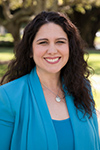
Jessica Garcia-Brown, J.D., LL.M.
Professor of Law and Director of Undergraduate Law Programs, Shepard Broad College of Law, Nova Southeastern University
Jessica has taught in NSU’s paralegal studies program and criminal justice major since 2005, and now directs the law school’s undergraduate programs. She holds an LL.M. from St. Thomas University, a J.D. from Nova Southeastern, and a B.S. from the University of Miami, and was admitted to practice before the U.S. Supreme Court in 2012.
Interviewed for our faculty series. Not an author of this page.
Paralegal Requirements in Florida
Florida sets no licensing requirement for paralegals. There’s no state exam, no mandatory registration, and no minimum education standard written into law. What the rules do set is a definition, and you have to fit it to use the title. It turns on three things together: a qualifying background, attorney supervision, and the kind of work you’re actually doing. Here it is, from Chapter 20 of the Rules Regulating The Florida Bar:
A paralegal is a person with education, training, or work experience who works under the direction and supervision of a member of The Florida Bar and who performs specifically delegated substantive legal work for which a member of The Florida Bar is responsible.


Paralegals may not provide legal advice, must be directly supervised by an attorney, and an attorney must assume legal responsibility for the professional actions of any paralegal employees.
What fills the gap is voluntary credentialing. Florida paralegals have three to work with: the national Certified Paralegal (CP) from NALA, the Florida Certified Paralegal (FCP) from the Paralegal Association of Florida, and the Florida Registered Paralegal (FRP) from The Florida Bar. None is required. All three signal to employers that you’ve met a standard beyond the statutory floor, which in Florida is no floor at all.
Education & Training Options
Education isn’t legally required, and Florida’s own definition recognizes education, training, or work experience as qualifying backgrounds. An associate degree is the typical entry-level education for the occupation nationally, per BLS, and it’s also what determines which FRP route is open to you and how many years of experience that route asks for.
Paralegals may choose from several different educational pathways: certificate programs, associate’s degrees in paralegal studies, and bachelor’s degrees in paralegal studies. There are also a few schools offering master’s-level paralegal degrees. Each type of educational program has different entry requirements, and these requirements also vary from school to school. Additionally, some schools provide American Bar Association (ABA)-approved programs, which may be important to employers and to the national certifying exam requirements. Not all programs are offered by accredited institutions, so it’s vital to research that as well.
Certificate Programs
Certificate programs offer a certificate of paralegal studies to those who complete the coursework. Some are built for people who already hold a bachelor’s degree in another field. Others are stand-alone and take no degree as a prerequisite.
The distinction matters in Florida. The FRP education route is built on degrees, so a certificate on its own doesn’t satisfy it. A post-baccalaureate certificate is fine, because it’s the underlying bachelor’s degree that qualifies, not the certificate.
If you hold only a stand-alone certificate, two other FRP routes remain open. You can sit for the NALA CP exam, provided you meet NALA’s own education and experience categories, which a certificate doesn’t automatically satisfy. Or you can build toward the attestation route, which turns on years of supervised work rather than on any degree. Both are covered below.
“This major is also good for those incoming freshman who know they want to become lawyers, but want to study a career that will help them be financially independent prior to beginning law school.
Professor of Law and Director of Undergraduate Law Programs, Shepard Broad College of Law, Nova Southeastern University
National and State Certification
Two of Florida’s three voluntary credentials are covered here. The third, the Florida Registered Paralegal, is administered by The Florida Bar and gets its own section below.
Certified Paralegal (CP)
National certification is voluntary everywhere, including Florida. Two of the national credentials also open a route to FRP registration, which gives them practical weight here that they don’t have in every state.
Two organizations currently accept applications from individual candidates:
- NALA offers the Certified Paralegal (CP), the only paralegal certification accredited by the National Commission for Certifying Agencies. Holders can go on to add Advanced Certified Paralegal (ACP) specialty credentials.
- NFPA offers two exams. The Paralegal CORE Competency Exam (PCCE) leads to the CORE Registered Paralegal (CRP) designation and is aimed at recent graduates. The Paralegal Advanced Competency Exam (PACE) leads to the Registered Paralegal (RP) designation and requires practical experience.
A third organization, NALS, the National Association for Legal Support Professionals, has placed its individual certification exams on temporary hiatus while it revises them. New candidates can’t register for the Professional Paralegal (PP) exam right now. Existing PP and CLP holders keep their credentials and can still recertify.
In Florida, the NALA CP does double duty. It’s the prerequisite for the state’s FCP credential, and it’s one of the two exams Rule 20-3.1 names for the FRP certification route. NFPA’s PACE also opens that FRP route. NFPA’s PCCE does not, so check the rule before you pick an exam.
Florida Certified Paralegal (FCP)
The Paralegal Association of Florida administers the Florida Certified Paralegal exam, which tests Florida-specific law. It was designed as a state-law layer on top of the NALA CP, and holding the CP is a prerequisite to sitting for it.
One caution: PAF’s own FCP program page hasn’t been updated since it described the 2020 exam cycle. If you’re planning around the FCP, contact PAF’s FCP Certifying Board directly to confirm the current exam schedule before you build a timeline on it.
Florida Registered Paralegal (FRP)
The FRP is Florida’s own credential, run by The Florida Bar under Chapter 20 of the Rules Regulating The Florida Bar. It’s the only one of the three administered by a regulatory body rather than a professional association, and it carries a title you’re required to disclose once you hold it.
Registration is voluntary and there’s no deadline. You can work as a paralegal in Florida indefinitely without it.
The Three Ways to Qualify
Rule 20-3.1 sets out three routes. You need one of them, plus current employment as a paralegal for a qualifying supervising lawyer. Chapter 20 defines that lawyer as a member of The Florida Bar, authorized house counsel, a foreign legal consultant, or a military lawyer with direct supervision over your work product.
Route 1: education plus work experience. Six variations, and the degree you hold determines how many years of experience the rule asks for.
| Degree | Minimum paralegal work experience |
|---|---|
| Bachelor’s in paralegal studies from an approved paralegal program | 1 year |
| Bachelor’s or higher in any other field, from an accredited institution | 3 years |
| Associate in paralegal studies from an approved paralegal program | 2 years |
| Associate in any other field, from an accredited institution | 4 years |
| Juris doctor from an ABA-accredited institution | 1 year |
| Juris doctor from an ABA-accredited institution, plus good-standing licensure in a U.S. jurisdiction other than Florida | None |
The accrediting agency has to be one recognized by the U.S. Department of Education or the Florida Department of Education. Foreign degrees don’t qualify. Notice the spread: an approved paralegal associate degree gets you in at two years, while an unrelated associate degree takes four. The program you pick is worth two years of your life on this route.
Route 2: certification plus good standing. The rule names two credentials specifically, and only two:
- NFPA’s Paralegal Advanced Competency Exam (PACE), with good standing at NFPA
- NALA’s Certified Legal Assistant / Certified Paralegal (CLA/CP) examination, with good standing at NALA
This is narrower than it looks at first glance. NFPA’s other exam, the PCCE leading to the CRP designation, is not named in Rule 20-3.1 and doesn’t open this route. If the FRP is your goal and you’re choosing between NFPA exams, that distinction matters. The Florida Bar’s plain-language materials sometimes say “NALA or NFPA certification,” but the rule is the controlling text and it names PACE and CLA/CP.
Route 3: designation by attestation. Restored effective July 8, 2024, when the Florida Supreme Court amended Rule 20-3.1. This route exists for people who meet neither of the first two, and it turns entirely on experience rather than on any degree or exam. You need:
- An attestation from an employing or supervising lawyer, on a Florida Bar form, that you have qualifying paralegal work experience for 5 of the 8 years immediately preceding the attestation, plus a statement of proficiency describing that work
- Proof of 30 hours of continuing education completed within the prior 3 years, including 10 hours of ethics or professionalism and 3 hours of technology. Courses must be approved by The Florida Bar, NALA, or NFPA
Read those CE numbers carefully, because they aren’t the same as the ongoing requirement. Applying under attestation takes 10 ethics or professionalism hours. Staying registered afterward takes 5. The entry bar is higher than the maintenance bar.
Whichever route you use, every employing or supervising attorney whose years you’re counting has to complete an attestation form. Your current attorney can only attest to the time you’ve worked for them, so prior employers have to fill out their own.
What It Costs and What It Takes to Keep
| Item | Requirement |
|---|---|
| Application fee | $145, nonrefundable regardless of outcome |
| Annual renewal | $150, due July 1, late after August 15 ($50 late fee) |
| Lapse | Status revoked if renewal is unpaid by October 1 |
| Ongoing continuing education | 30 hours per three-year cycle under Rule 20-6.1 |
| Ongoing CE composition | 5 hours ethics or professionalism, 3 hours technology |
| Attestation applicants | 30 hours within the prior 3 years, with 10 ethics or professionalism and 3 technology |
FRPs can earn CE credit for any course The Florida Bar offers to attorneys, and the Bar’s FRP Enrichment Committee currently runs free CLE every month, open to anyone whether registered or not. That’s worth knowing before you apply, because it’s how you can accumulate the 30 hours the attestation route requires at no cost.
Who Can’t Register
Two exclusions catch people out:
- Independent paralegals serving the public. If you provide services directly to the public rather than through a supervising attorney, you can’t register, and using the title paralegal in that context is the unlicensed practice of law in Florida.
- Paralegals not currently working. FRP status requires current employment as a paralegal, primarily performing paralegal duties, for a member of The Florida Bar. If you lose your job, you have to notify the Bar, and you reapply with a new $145 fee when you’re working again.
Out-of-state experience counts only if you were working under a member of The Florida Bar at the time. Clerical work is specifically excluded from the experience calculation.
Once registered, you’re required to disclose FRP status at the outset of any professional relationship with a client, attorney, court, or member of the public. You can use “Florida Registered Paralegal” or “FRP,” but if you use the abbreviation you also have to state the word paralegal. Registered paralegals get the same member benefits The Florida Bar offers attorneys, and the public can verify status through the Bar’s Find an FRP directory.
Nothing stops you from holding all three credentials. Plenty of Florida paralegals list CP, FCP, and FRP together.
Paralegal Schools in Florida
Florida’s rules recognize education, training, and work experience as qualifying backgrounds, so formal study isn’t the only path into the work. It is the most common one, and it’s the fastest. As attorneys, corporations, and government agencies work within an increasingly complex legal framework, the responsibility they hand to paralegals has grown with it, and a structured program is the most direct way to build that groundwork.
Finding options isn’t the issue, narrowing them down is. Florida’s programs run from short certificates to four-year degrees, spread across the Florida College System, private universities, and technical colleges. Many schools now offer online and hybrid formats for students who are already working.
Two filters are worth applying early. Check whether the program is ABA-approved, which nine Florida programs are and which some employers screen for. Then check the award level against your credential plan, because an associate degree keeps the FRP education route open and a stand-alone certificate doesn’t.
“The faculty and administration is very student oriented and supportive of their career goals as well as addressing any obstacles that may hinder their progression in the program.”
Alana Dasent · Broward College
ABA-Approved Programs in Florida
The American Bar Association approves paralegal programs that meet its guidelines, a process involving self-study, an on-site evaluation, and final action by the ABA House of Delegates. Approval isn’t required to work as a paralegal in Florida and isn’t a condition of any Florida credential, but it’s the closest thing the field has to a national quality marker, and some employers screen for it.
Nine of the ABA’s 222 approved paralegal programs nationwide are in Florida, as of the directory’s September 2026 listing:
| School | Location | Awards |
|---|---|---|
| Broward College | Coconut Creek | AS |
| Eastern Florida State College | Melbourne | AS |
| Florida SouthWestern State College | Fort Myers | AS |
| Florida State College at Jacksonville | Jacksonville | AS, Certificate (see note below) |
| Miami Dade College | Miami, Wolfson Campus | AS |
| Nova Southeastern University | Davie | BS, Certificate, Minor |
| Palm Beach State College | Lake Worth | AS, Certificate |
| Seminole State College of Florida | Sanford | AS, online |
| St. Petersburg College | Clearwater | AS, bachelor’s, Certificate, online |
One caveat worth knowing before you apply. The ABA directory currently lists Florida State College at Jacksonville with a Show Cause sanction notation alongside its approval. The program remains in the directory. If you’re considering FSCJ, ask the program directly about its approval status and check the ABA directory yourself before you enroll, because a program’s standing can change between the time a listing is published and the time you graduate.
Every program in the table is at a public institution except Nova Southeastern. Six award an associate degree as the primary credential, which is the award level that keeps The Florida Bar’s FRP education route open.
Featured Florida Paralegal Programs
The list below covers Florida paralegal programs more broadly, ABA-approved or not.
Atlantic Technical College
Legal Administrative Specialist Certificate – On-campus
Barry University
Bachelor of Science (BS) in Administration, Legal Studies Specialization – On-campus and online
Legal Studies Certificate – On-campus (undergraduate, pre-degree)
Legal Studies Post-Baccalaureate Certificate – On-campus
Minor in Legal Studies – On-campus
Broward College
Associate of Science in Paralegal Studies – On-campus
College of Central Florida
Associate of Science (AS) in Paralegal Studies – On-campus
Daytona State College
Associate of Science (AS) in Paralegal Studies/Legal Assisting – On-campus
Eastern Florida State College
Associate of Science (AS) in Paralegal Studies – On-campus
Florida Gulf Coast University
Bachelor of Science (BS) in Legal Studies – Online
Paralegal Certificate – Online, on-campus
Advanced Paralegal Certificate – Online
Legal Investigation Certificate – Online, on-campus
Legal Secretary Certificate – Online, on-campus
Florida National University-Main Campus
Associate of Arts (AA) in Paralegal Studies – Online
Bachelor of Arts (BA) in Legal Studies – Online
Legal Assistant Diploma – On-campus
Florida SouthWestern State College
Associate of Science (AS) in Paralegal Studies – On-campus
Florida State College at Jacksonville
Associate in Science (AS) in Paralegal Studies – On-campus
Gulf Coast State College
Associate of Science (AS) in Legal Assisting/Paralegal Studies – On-campus
Hillsborough Community College
Associate of Science (AS) in Paralegal Studies – On-campus
Advanced Technical Certificate – Paralegal Studies – On-campus (post-baccalaureate)
Indian River State College
Associate of Science (AS) in Paralegal Studies – On-campus
Keiser University
Associate of Arts (AA) in Paralegal Studies – On-campus or online
Miami Dade College
Associate of Science (AS) in Paralegal Studies – On-campus
Northwest Florida State College
Associate of Science (AS) in Paralegal Studies – On-campus
Nova Southeastern University
Bachelor of Science (BS) in Paralegal Studies – On-campus
Paralegal Studies Certificate – On-campus (post-baccalaureate)
Paralegal Studies Minor – Bachelor’s Degree – On-campus
Palm Beach State College
Associate in Science (AS) – Paralegal – On-campus
Paralegal Advanced Technical Certificate – On-campus (post-baccalaureate)
Pasco-Hernando State College
Associate in Science (AS) in Paralegal Studies – On-campus, online
Pensacola State College
Associate of Science (AS) in Paralegal Studies/Legal Assisting – On-campus, hybrid
Rasmussen University-Florida
Associate’s Degree in Paralegal Studies – Online
Certificate in Paralegal Studies – Online
Santa Fe College
Associate of Science (AS) in Paralegal Studies – On-campus
Seminole State College of Florida
Associate of Science (AS) in Legal Assistant/Paralegal – On-campus, online
South University – West Palm Beach
Associate of Science (AS) in Paralegal Studies – On-campus
Bachelor of Science (BS) in Legal Studies – On-campus
Southeastern University
Bachelor of Science (BS) in Legal Studies – On-campus
St. Petersburg College
Associate of Science (AS) in Paralegal Studies – On-campus
Bachelor of Applied Science (BAS) in Paralegal Studies – On-campus
Paralegal Studies Certificate – On-campus (post-baccalaureate)
State College of Florida-Manatee-Sarasota
Associate of Science (AS) in Paralegal Studies/Legal Assisting – On-campus, hybrid
Advanced Technical Certificate in Paralegal Studies (Undergraduate) – On-campus, hybrid
Tallahassee Community College
Associate of Science (AS) in Paralegal/Legal Studies – Hybrid
University of Central Florida
Bachelor of Arts/Science (BA or BS) in Legal Studies – On-campus, online
Minor in Legal Studies – On-campus
University of Miami
Bachelor of Science in Business Administration (BSBA) in Legal Studies – On-campus
Bachelor of Business Administration (BBA) in Legal Studies – On-campus
University of West Florida
Bachelor of Arts (BA) in Legal Studies – On-campus
Valencia College
Associate of Science (AS) in Paralegal Studies – On-campus
Salary & Compensation in Florida
Florida’s paralegal pay sits below the national average in dollar terms but covers a state with no income tax and a wide spread between metros. The gap between the bottom and top of the distribution here is close to $45,000.
Paralegal compensation is almost evenly divided between hourly and salaried pay. NALA survey data found that 51% of paralegals were salaried, while about 49% were paid hourly. Both figures appear below, because roughly half of readers are looking at one and half at the other.
Florida Paralegal Salary Overview
As of May 2025, Florida employed 40,950 paralegals and legal assistants, second nationally behind California’s 47,130 and ahead of New York and Texas. The state mean was $63,250 per year, or $30.41 per hour. The median, the midpoint of the distribution, was $61,000 per year, or $29.33 per hour.
For context, the national median is $62,890 per year, or $30.24 per hour. Florida runs slightly below that.
The mean sitting above the median tells you the distribution is skewed upward, which means the range is wide. It doesn’t tell you which practice areas or employers sit at the top.
| Percentile | Annual | Hourly |
|---|---|---|
| 10th | $38,830 | $18.67 |
| 25th | $48,230 | $23.19 |
| Median (50th) | $61,000 | $29.33 |
| 75th | $75,780 | $36.43 |
| 90th | $83,410 | $40.10 |
These are pay-distribution percentiles, not experience brackets. Where you land depends heavily on market and practice area as well as tenure. A long-serving paralegal in a small inland market can sit near the 10th percentile while a newer one in Miami sits near the 75th.
Salary by Metro Area
Naples and the Miami-Fort Lauderdale-West Palm Beach corridor lead on mean pay. Gainesville and Homosassa Springs sit at the bottom, roughly $14,000 below Naples. No Florida metro reaches a six-figure figure at the 90th percentile, though Wildwood-The Villages comes closest at $94,460.
| Metro Area | Employment | Annual Mean | Annual Median | 90th Percentile |
|---|---|---|---|---|
| Naples-Marco Island | 520 | $66,380 ($31.91/hr) | $64,660 | $82,920 |
| Miami-Fort Lauderdale-West Palm Beach | 17,820 | $66,130 ($31.79/hr) | $62,090 | $91,990 |
| Jacksonville | 2,170 | $64,930 ($31.22/hr) | $62,480 | $92,130 |
| Crestview-Fort Walton Beach-Destin | 180 | $64,300 ($30.91/hr) | $55,960 | $92,160 |
| North Port-Bradenton-Sarasota | 990 | $63,070 ($30.32/hr) | $60,070 | $87,570 |
| Tampa-St. Petersburg-Clearwater | 6,630 | $62,650 ($30.12/hr) | $60,150 | $80,880 |
| Cape Coral-Fort Myers | 910 | $61,930 ($29.77/hr) | $60,700 | $77,500 |
| Wildwood-The Villages | 50 | $61,850 ($29.74/hr) | $57,740 | $94,460 |
| Orlando-Kissimmee-Sanford | 5,480 | $60,040 ($28.87/hr) | $59,470 | $78,270 |
| Palm Bay-Melbourne-Titusville | 610 | $59,440 ($28.58/hr) | $58,250 | $76,460 |
| Sebastian-Vero Beach | 190 | $59,100 ($28.42/hr) | $56,960 | $77,670 |
| Deltona-Daytona Beach-Ormond Beach | 510 | $59,020 ($28.38/hr) | $57,110 | $76,930 |
| Port St. Lucie | 490 | $58,780 ($28.26/hr) | $60,370 | $78,130 |
| Ocala | 300 | $58,610 ($28.18/hr) | $50,900 | $85,050 |
| Pensacola-Ferry Pass-Brent | 810 | $56,070 ($26.96/hr) | $56,140 | $76,650 |
| Tallahassee | 780 | $56,570 ($27.20/hr) | $56,660 | $76,030 |
| Sebring | 60 | $55,350 ($26.61/hr) | $51,230 | $76,110 |
| Lakeland-Winter Haven | 630 | $55,100 ($26.49/hr) | $49,520 | $75,170 |
| Punta Gorda | 130 | $54,860 ($26.37/hr) | $48,910 | $75,250 |
| Panama City-Panama City Beach | 190 | $54,710 ($26.30/hr) | $51,340 | $74,680 |
| Gainesville | 360 | $53,590 ($25.77/hr) | $47,840 | $74,840 |
| Homosassa Springs | 80 | $52,080 ($25.04/hr) | $48,940 | $69,830 |
Mean and median don’t always move in the same direction. Port St. Lucie’s median sits above its mean, while Ocala’s sits $7,700 below. OEWS reports the wages but not the reasons, so treat these as signals to look at the underlying percentile spread for a metro rather than as conclusions about who’s hiring there.
What Moves Pay in Florida
- Metro area: the spread between Naples and Gainesville is about $12,800 on mean pay, the largest difference OEWS reports directly for Florida
- Practice area: corporate, intellectual property, and complex litigation work is generally understood to pay above family law and general practice, though OEWS doesn’t break Florida wages out by legal specialty
- Employer type: BLS reports meaningful wage differences by industry nationally, with legal services, government, and corporate departments each paying differently. The national pattern isn’t broken out by state
- Credentials: the CP, FCP, and FRP are all voluntary, and none carries a published wage premium. What they do is signal a verified standard in a field that has no licensing floor
- Bilingual capability: Spanish and Portuguese fluency is in demand across South Florida’s international transactional and immigration practices
Job Outlook & Career Growth
Two separate projection programs cover this occupation, and they’re on different cycles right now. They also point in different directions, so it’s worth reading them separately.
Florida. ProjectionsCentral’s 2024-34 outlook has the state going from 37,710 paralegal jobs in 2024 to 42,220 in 2034. That’s 4,520 added positions, a 12% increase, with about 4,610 average annual openings. Florida is one of the stronger state-level outlooks in the country.
National. The BLS Employment Projections program’s 2025-35 outlook is flat. Employment goes from 404,900 to 403,800, a decline of 1,100 jobs, which BLS characterizes as little or no change. There are still about 40,800 average annual openings nationally, but those come mainly from workers leaving the occupation or the labor force rather than from new positions. BLS attributes the limited growth partly to technology including artificial intelligence, which is expected to make paralegals more efficient at research and document preparation.
Replacement openings and newly created jobs both produce hiring opportunities, but they describe different labor markets. Florida’s projection is the more relevant one if you’re planning to work here, and it forecasts genuine growth rather than churn.
Beyond the paralegal role itself, career paths in Florida include senior and supervising paralegal positions, litigation support and e-discovery management, legal operations, compliance, and law office administration. Some paralegals go on to law school, and Florida’s undergraduate law and legal studies programs are structured with that in mind.
Professional Associations
The Paralegal Association of Florida (PAF), a NALA affiliate, is Florida’s statewide paralegal association, with chapters around the state rather than a single regional footprint. It marked its 50th year in 2026. PAF sponsors the Florida Certified Paralegal credential, holds an annual statewide seminar, and runs continuing education through its chapters.
PAF reports twelve local chapters. Membership comes in five classes:
- Active Member – You can qualify for this through one of the following routes:
- Have Certified Paralegal (CP)/Certified Legal Assistant (CLA) certification through NALA
- Graduated from a paralegal study program that the ABA currently approves
- Graduated from an institutionally-accredited paralegal program that includes at least 60 semester credits
- Graduated from a paralegal program and have at least six months of in-house paralegal training
- Have a bachelor’s degree in any field, plus at least six months of in-house paralegal training
- Have at least three years of law-related experience that includes at least six months of in-house paralegal training
- Have two years of in-house paralegal training
- Associate Member – You can qualify for this via one of the following:
- Be a Florida attorney
- Be an educator in Florida
- Be at least 55 years old and have been previously qualified for membership based on your occupation
- Be a non-resident of Florida who would otherwise qualify for membership
- Be a graduate of a paralegal program who has not yet gained six months of work experience
- Sustaining Member – Open to law firms, title companies, banking companies, and other entities providing services to the PAF or law offices
- Student Member – Complete at least six semesters of law-related courses, or three semesters plus full-time employment in a law-related field
- Emeritus Member – Retired paralegals who were formerly Active Members
PAF Local Chapters
PAF states that it operates twelve chapters. These are the ones currently identified on PAF’s own site, either with a chapter website or a seated chapter president:
- At Large Chapter
- Big Bend Chapter
- Broward Chapter
- First Coast Chapter
- Palm Beach County Chapter
- Pinellas Chapter
- Southwest Chapter
- Treasure Coast Chapter
Chapters run monthly meetings, local CLE, and community service projects, and members often serve on their local colleges’ advisory committees. Check PAF’s site for the chapter nearest you.
Regional Paralegal Associations
The Florida Bar maintains a current list of local paralegal organizations for FRPs looking to connect regionally. As of 2026 it includes the Central Florida Paralegal Association, the Northeast Florida Paralegal Association, the Northwest Florida Paralegal Association, the South Florida Paralegal Association, the Southwest Florida Paralegal Association, the Tampa Bay Paralegal Association, and the Volusia County Paralegals Association, along with the paralegal sections of the Dade County and Orange County bar associations.
Major Law Firms Employing Paralegals
Law firms employ more paralegals than any other type of employer. Florida’s larger firms, several of which are headquartered in the state, include:
- Akerman LLP
- Greenberg Traurig
- Holland & Knight
- Shutts & Bowen
- Cole, Scott & Kissane
- Gunster
- GrayRobinson
- Carlton Fields
- Foley & Lardner
- Wicker Smith
- Conroy Simberg
- Stearns Weaver Miller
- Becker & Poliakoff
- Morgan & Morgan
- Fowler White Burnett
- Shumaker
- Butler Weihmuller Katz Craig
- Buchanan Ingersoll & Rooney
- Nelson Mullins
Corporate legal departments, state and county government offices, public defender and state attorney offices, and legal aid organizations all hire paralegals as well. The Florida Bar runs a career network that carries paralegal postings from across the state.
Frequently Asked Questions
Does Florida require paralegal certification?
No. Florida has no licensing requirement, no state exam, and no minimum education standard for paralegals written into law. To use the title you have to fit Chapter 20’s definition, which combines a qualifying background of education, training, or work experience with attorney supervision and delegated substantive legal work. Three voluntary credentials exist: the NALA Certified Paralegal (CP), the Florida Certified Paralegal (FCP) from the Paralegal Association of Florida, and the Florida Registered Paralegal (FRP) from The Florida Bar.
How do I become a Florida Registered Paralegal?
Rule 20-3.1 gives you three routes. The education route pairs a degree with work experience, and the years required depend on the degree: one year for a bachelor’s in paralegal studies from an approved program, three for another bachelor’s, two for an approved paralegal associate, four for another associate. The certification route requires NALA’s CLA/CP or NFPA’s PACE specifically. The third route, designation by attestation, restored effective July 8, 2024, requires five of the preceding eight years in qualifying paralegal work plus 30 hours of continuing education. All three also require current paralegal employment and attorney attestation. The application fee is $145 and is nonrefundable.
What does it cost to keep FRP status?
Registration costs $145 up front. Renewal is $150 a year, due July 1 and late after August 15, with a $50 late fee. Status is revoked if renewal is unpaid by October 1. Staying registered takes 30 hours of continuing education every three years under Rule 20-6.1, including five hours of ethics or professionalism and three hours of technology. Applicants using the attestation route face a stricter version at entry: 30 hours within the prior three years, with ten in ethics or professionalism. The Florida Bar’s FRP Enrichment Committee currently runs free CLE every month, open to anyone whether registered or not.
Does a paralegal certificate qualify me for FRP status?
Not on its own. The education route in Rule 20-3.1 is built on degrees, and a certificate in paralegal studies doesn’t meet that standard regardless of who issued it. A post-baccalaureate certificate is different, because the underlying bachelor’s degree is what qualifies. If you hold only a stand-alone certificate, two other routes are open. You can sit for NALA’s CLA/CP or NFPA’s PACE, the two exams the rule names, provided you meet that organization’s own eligibility categories. Or you can qualify by attestation on five of the preceding eight years of supervised paralegal work.
How much do paralegals make in Florida?
As of May 2025, the median paralegal wage in Florida is $61,000 per year, or $29.33 per hour. The mean is $63,250, or $30.41 per hour. The 10th percentile sits at $38,830 and the 90th at $83,410. Pay varies most by metro area: Naples and the Miami corridor lead at around $66,000 mean, while Gainesville and Homosassa Springs sit near $52,000 to $53,600. These are pay-distribution percentiles, not experience brackets.
Can I work as a paralegal in Florida without a degree?
Yes. Florida sets no educational requirement, and an associate degree is the occupation’s typical entry-level education nationally rather than a Florida rule. You can also become a Florida Registered Paralegal without any degree. The designation by attestation route, restored in July 2024, turns on five of the preceding eight years of qualifying paralegal work plus 30 hours of continuing education, with no degree or exam required.
Can independent paralegals register as FRPs in Florida?
No. The Florida Bar excludes paralegals who provide services directly to the public rather than through a supervising attorney. Beyond the registration question, using the title paralegal while serving the public directly constitutes the unlicensed practice of law in Florida. FRP status also requires that you currently be employed as a paralegal, so it lapses if you stop working and has to be reapplied for with a new fee.
Do I need an ABA-approved program in Florida?
No. ABA approval isn’t legally required and isn’t a condition of the CP, the FCP, or the FRP. It is the field’s main quality marker, and some employers screen for it. Nine Florida programs currently hold ABA approval: Broward College, Eastern Florida State College, Florida SouthWestern State College, Florida State College at Jacksonville, Miami Dade College, Nova Southeastern University, Palm Beach State College, Seminole State College of Florida, and St. Petersburg College. One caveat: the ABA directory currently lists Florida State College at Jacksonville with a Show Cause sanction notation, so check that program’s status directly if you’re considering it.
What’s the job outlook for paralegals in Florida?
ProjectionsCentral’s 2024-34 outlook projects Florida going from 37,710 paralegal jobs to 42,220, a 12% increase, with about 4,610 average annual openings. That’s a stronger picture than the national one: the BLS Employment Projections program’s 2025-35 outlook shows little or no change nationally, with employment slipping from 404,900 to 403,800. The two figures come from different programs on different cycles and aren’t versions of the same number.
What can Florida paralegals specialize in?
Practice areas track the state’s economy. Real estate, insurance defense, personal injury, immigration, elder law and probate, and corporate work are all substantial in Florida. South Florida’s international business and immigration practices place a premium on Spanish and Portuguese fluency. Central Florida has hospitality, defense contracting, and healthcare work. Tallahassee concentrates government and administrative practice.
Key Takeaways
- Florida requires no paralegal license, exam, or minimum education. All three credentials, CP, FCP, and FRP, are voluntary.
- The Florida Registered Paralegal is the state’s own credential, run by The Florida Bar. It costs $145 to apply, $150 a year to keep, and requires 30 hours of continuing education every three years.
- Rule 20-3.1 gives three FRP routes, not two. Alongside education and certification, designation by attestation has been available since July 8, 2024, and qualifies you on five of the preceding eight years of supervised work with no degree or exam.
- The certification route names two exams specifically, NALA’s CLA/CP and NFPA’s PACE. NFPA’s PCCE and its CRP designation don’t open it.
- Florida employed 40,950 paralegals as of May 2025, second nationally, with a median wage of $61,000 per year or $29.33 per hour and a 10th-to-90th range of $38,830 to $83,410.
- The state outlook is stronger than the national one: ProjectionsCentral projects 12% growth in Florida through 2034 against a flat national picture through 2035.
- Independent paralegals serving the public directly can’t register as FRPs, and using the title in that context is the unlicensed practice of law in Florida.
Ready to Start Your Florida Paralegal Career?
Explore accredited paralegal programs throughout Florida and take the first step toward a rewarding legal career in one of the nation’s top markets for paralegal employment.
May 2025 US Bureau of Labor Statistics salary figures for Paralegals and Legal Assistants. Long-term 2024-34 job growth projections from the US Department of Labor-sponsored resource, ProjectionsCentral. Figures reflect city, state, and national data, not school-specific information. Conditions in your area may vary. Data accessed August 2026.
Important Contacts for Paralegals
- The Florida Bar’s Florida Registered Paralegal Program, with eligibility rules, fees, and the application
- The Florida Bar’s FRP Corner, for free monthly CLE, the FRP Times newsletter, and job listings
- Chapter 20 of the Rules Regulating The Florida Bar, which establishes the FRP program
- The Florida Bar’s Find an FRP directory
- The Paralegal Association of Florida, Inc.
- Central Florida Paralegal Association, Inc.