To become a paralegal in Kansas, you don’t need a license or a specific degree. The Kansas Bar Association’s voluntary guidelines recommend an ABA-approved program, national certification, or a degree plus in-house training. Kansas paralegals earn a median $55,000 a year, and the state projects 240 annual openings through 2034.
Kansas paralegals have a host of professional opportunities across  the state. Corporate paralegals find positions with major employers like T-Mobile, which runs a large campus in Overland Park, and Seaboard Corporation. Paralegals specializing in litigation, immigration law, and bankruptcy law build careers at firms such as Shook, Hardy & Bacon in Kansas City and Foulston Siefkin LLP in Wichita. State agencies, the courts, and Kansas healthcare systems, including the University of Kansas Health System, hire both new and established paralegals.
This guide covers what you need to know about becoming a paralegal in Kansas: education requirements, certification options, which programs hold ABA approval, what the job pays across the state’s metro areas, what the employment projections actually say, and the professional associations worth joining.


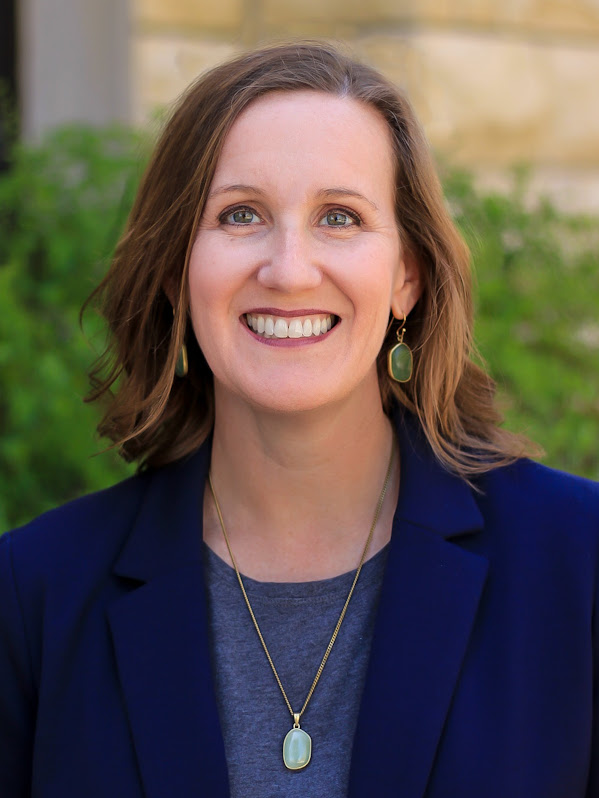
Director of Pre-Law and Legal Studies, Fort Hays State University
Rohleder-Sook chairs the Department of Communication Studies, Law and Political Science at Fort Hays State University, where she also serves as the university’s pre-law advisor and teaches Introduction to the Law, Legal Research Methods, and Legal Advocacy. She holds a B.A. and a J.D. from the University of Kansas and previously served as pre-law advisor at KU and Associate Dean for Student Affairs at the KU School of Law.
Interviewed for our faculty series. Not an author of this page.
Kansas Paralegal Requirements
Kansas doesn’t regulate the training or education of paralegals. There’s no state license, no registration, and no mandatory credential. What Kansas has instead is a set of voluntary guidelines from the Kansas Bar Association, which recommends that a legal assistant or paralegal be considered qualified if they meet one of the following:
- Completion of a paralegal studies program that’s either ABA-approved or accredited to similar standards
- Passing one of the national certification exams offered by professional paralegal associations
- A bachelor’s degree in any field plus one year of in-house paralegal training
- An associate’s degree in any field plus three years of in-house paralegal training
Because these are guidelines rather than rules, meeting them isn’t a condition of working as a paralegal in Kansas. What they offer is a common reference point in a state with no licensing scheme. Individual employers still set their own education, training, and certification requirements, so check the postings you’re actually targeting.
In Kansas, paralegals may perform substantive legal work when a supervising lawyer delegates it. Under the Kansas Rules of Professional Conduct, that lawyer carries supervisory duties over the nonlawyer assistants they employ. The paralegal must maintain confidentiality, and the lawyer must keep direct contact with the client. That framework lets paralegals carry real responsibility while the ethical duty stays with the attorney.
Paralegal Certification in Kansas
Kansas lets you enter the field through on-the-job training. Plenty of working paralegals got there that way. Formal education still helps, and for many people it’s the quickest way to satisfy the Kansas Bar Association guidelines. It isn’t the only door to certification, though. NALA’s CP has education routes, coursework routes, and a route based on years of paralegal experience.
Educational Pathways
You have several options, including certificate programs and degree programs at the associate, bachelor’s, and master’s levels.
A certificate in paralegal studies concentrates on legal coursework without the general education requirements of a degree. Some certificate programs are post-degree, meaning you need an associate’s or bachelor’s first. Others accept students with no prior college. If your goal is meeting the Kansas Bar Association guidelines or sitting for a national exam, check the program’s approval status and credit hours before you enroll, because both exams and employers draw distinctions there.
A degree in paralegal studies offers something a focused certificate doesn’t. It can satisfy a certification education requirement on its own, and it carries general education credit that may count toward a bachelor’s later if you decide on law school or another legal role. Both eligibility and credit transfer are institution-specific, so confirm rather than assume. Associate and bachelor’s degrees are the most common choices.
Career changers show up in these programs in varying numbers, and faculty have been watching for more of them.
“While we haven’t seen a significant number of career changers in our program to date, it is likely that this projected growth in the profession may spur an increase in the number of individuals looking to pursue a career in the legal profession.
National Certification Exams
Three organizations issue national paralegal credentials. As of 2026, two of them are accepting individual candidates and one is not, so the choice is narrower than older guides suggest.
NALA offers the Certified Paralegal (CP) credential. It’s the only paralegal certification accredited by the National Commission for Certifying Agencies, and the American Bar Association has acknowledged it as a mark of professional achievement. NALA also offers the Advanced Certified Paralegal for specialty areas once you hold the CP. Note that the older Certified Legal Assistant name has been retired, so a program advertising the “CLA/CP exam” is using dated language for what is now simply the CP.
The National Federation of Paralegal Associations offers two. The Paralegal CORE Competency Exam is built for early-career paralegals and leads to the CORE Registered Paralegal designation. The Paralegal Advanced Competency Exam is for paralegals with both comprehensive education and years of practice, and it carries the Registered Paralegal designation. Eligibility for the advanced exam is more restrictive. Both credentials have been recognized by the ABA and by U.S. Courts for fee petition purposes, and both are delivered through Prometric testing centers or remotely.
NALS, the National Association for Legal Support Professionals, has placed all of its individual certification exams on a temporary hiatus while it revises them. New candidates can’t currently register for the Professional Paralegal. During the pause, the only NALS exam being administered is the Certified Legal Support Professional, formerly the Accredited Legal Professional, and that’s offered through partner school groups rather than to individuals. Paralegals who already hold the PP or the Certified Legal Professional keep their credentials and can still recertify.
Meeting the Kansas Bar Association guidelines through certification signals that you’ve been measured against a national standard rather than a single employer’s judgment. In a state with no licensing scheme, it’s one of several things an employer can verify independently, alongside your degree, your transcript, and your references.
Paralegal Programs and Schools
Legal support work rewards structured study, even though Kansas allows entry through experience. As attorneys, corporations, and government agencies work within a more complex legal framework, the responsibility they hand to paralegals has grown with it.
That’s the practical reason most Kansas postings ask for a certificate or a degree even where no rule requires one.
A working day might mean drafting a memo that shapes what evidence gets sought in discovery, then briefing your supervising attorney over lunch on what you turned up in county courthouse records, then following up with a prospective client before you leave. That’s ordinary work for a paralegal in Topeka, Overland Park, or anywhere else in the state. You get there by building credentials that give you both the skills and the real-world exposure to compete.
ABA-Approved and Accredited Programs in Kansas
| School | Location | Credentials Offered | Delivery | ABA-Approved |
|---|---|---|---|---|
| Johnson County Community College | Overland Park | Paralegal Certificate (32 credits). Students without a qualifying degree enroll concurrently in the Liberal Arts AA | Campus and online, some synchronous | Yes |
| Hutchinson Community College | Hutchinson | AAS in Paralegal (60 credits), Paralegal Certificate (36 credits, requires an associate’s or higher) | Campus and online | No |
| Kansas City Kansas Community College | Kansas City | AAS in Paralegal | Available entirely online | No |
| Washburn University | Topeka | Certificate of Completion in Legal Studies (36 credits), AA in Legal Studies (60 credits), Bachelor of Legal Studies (120 credits) | Campus and online | No |
| Washburn Institute of Technology | Topeka | Legal Office Professional Certificate (48 credits) | Campus | No |
| Rasmussen University | Online, Kansas campuses in Overland Park and Topeka | Paralegal AAS, post-degree Paralegal Certificate | Online | No |
Johnson County Community College is the only ABA-approved paralegal program in Kansas. The ABA’s directory of approved programs lists one Kansas entry, and JCCC is it. The college states it has held that approval continuously for more than 40 years. The credential itself is a 32-credit Paralegal Certificate. If you already hold an associate, bachelor’s, or graduate degree, you apply for the certificate directly. If you don’t, you can still enter the program, but you enroll concurrently in JCCC’s Liberal Arts AA and complete 60 credits between the two. Coursework can be completed remotely, though ABA rules require at least nine credits of synchronous, real-time instruction, which can happen on campus or online.
That doesn’t make the other programs poor choices. ABA approval is voluntary, most U.S. paralegal programs don’t hold it, and Kansas has no rule requiring it. What it does mean is that if a specific employer or exam pathway asks for an ABA-approved credential, JCCC is the only in-state option, and everyone else is choosing between accredited non-approved programs and out-of-state or online ABA-approved alternatives.
The distinction matters most for certificate seekers. A post-degree certificate from an ABA-approved program satisfies the education route for NALA’s CP without further argument. A certificate from a non-approved program can still qualify you, but the exam body will look at credit hours and coursework rather than treating approval as a shortcut. Each credential sets its own eligibility rules, so check them against your transcript before you enroll anywhere.
“Our program has a certificate program and I am finding this is appealing to students who already have a degree in some other field and they are wanting to make a career change and are interested in the legal/paralegal field as a career.”
Cheryl Clark · Hutchinson Community College, at the time of this interview
One institutional note on the table above. On August 4, 2026, Rasmussen University combined with American Public University System and Hondros College of Nursing to form a single institution. Rasmussen keeps its name, its Overland Park and Topeka campuses, and its paralegal programs, since the combination carried over all programs, locations, and operations. What changed is the accreditation: the Higher Learning Commission approved the combined academic units to operate under American Public University System’s institutional accreditation, and the Department of Education approved the combination for federal financial aid purposes. If you’re comparing accreditation across schools, that’s the entity to look up.
Kansas Paralegal Salary
Kansas built its economy on aviation, agriculture, and energy, and each of those brings legal work with it. Wichita’s aerospace cluster is the most visible piece of it. Boeing completed its acquisition of Wichita-based Spirit AeroSystems in December 2025, bringing roughly 12,000 Wichita workers back under Boeing and about 15,000 across five sites, and in May 2026 it announced a further $1 billion investment in the Wichita site over three years, covering facility upgrades, production systems, and workforce training. Textron Aviation builds Cessna and Beechcraft aircraft there, and Airbus operates a large engineering center in the city. Corporate transactions, supplier contracts, employment matters, and regulatory work all follow that concentration of manufacturing.
Legal services in Kansas track this activity, which is what supports paralegal demand across the state’s metro areas.
Statewide Salary Overview
Kansas paralegals earn a median of $55,000 a year, or $26.44 an hour, according to May 2025 Bureau of Labor Statistics figures. The mean sits higher at $57,680 a year, or $27.73 an hour. When the mean runs above the median, it tells you the range is wide and stretched upward at the top. It doesn’t tell you which employers or practice areas account for the stretch. The 10th-to-90th spread below, $38,860 to $79,090, shows that range more directly.
The state median trails the national median of $62,890. Kansas living costs also run below those of the coastal markets that pull the national figure upward, which is worth weighing alongside the raw numbers. The state employs about 2,210 paralegals.
The percentiles below describe how pay is distributed across Kansas, not how much experience someone has. A long-tenured paralegal in a small rural practice can sit near the bottom of this range, and a relatively new one at a Kansas City firm can sit near the top.
| Percentile | Hourly | Annual |
|---|---|---|
| 10th | $18.68 | $38,860 |
| 25th | $22.60 | $47,000 |
| 50th (median) | $26.44 | $55,000 |
| 75th | $30.85 | $64,170 |
| 90th | $38.02 | $79,090 |
| Mean | $27.73 | $57,680 |
Both the hourly and annual figures matter here. Paralegal compensation is almost evenly divided between hourly and salaried pay. NALA survey data found that 51% of paralegals were salaried, while about 49% were paid hourly. Being paid hourly doesn’t mean freelancing, and most hourly-paid paralegals are firm employees.
Kansas Metro Salary Comparison
Pay varies by market, and the widest gap in Kansas is the state line. The Kansas City metro spans Missouri and Kansas and pays well above every Kansas-only market. Among Kansas-only metros, Wichita posts the highest mean at $53,960, while Lawrence posts the highest median at $52,530.
| Metropolitan Area | Mean Annual | Median Annual | 90th Percentile |
|---|---|---|---|
| Kansas City, MO-KS | $68,680 ($33.02 hourly) | $63,880 | $97,890 ($47.06 hourly) |
| Wichita, KS | $53,960 ($25.94 hourly) | $50,240 | $74,770 ($35.95 hourly) |
| Topeka, KS | $53,630 ($25.78 hourly) | $50,350 | $74,340 ($35.74 hourly) |
| Lawrence, KS | $52,900 ($25.44 hourly) | $52,530 | $62,890 ($30.23 hourly) |
| Manhattan, KS | $51,820 ($24.91 hourly) | $47,890 | $73,320 ($35.25 hourly) |
The Kansas City metro’s advantage is substantial. Its median beats the best Kansas-only metro by more than $11,000, and its 90th percentile clears $97,000. For paralegals living in Johnson or Wyandotte County, the Missouri side of the metro is a commute rather than a relocation, which makes that gap unusually accessible.
Lawrence is the outlier worth reading carefully. Its median is the highest of any Kansas-only metro at $52,530, but its 90th percentile is the lowest at $62,890. That’s a narrower wage distribution in the May 2025 estimates rather than a ceiling on what any individual can earn. Manhattan runs the opposite way, with a lower median and a top end comparable to Wichita and Topeka.
Job Outlook and Growth
Kansas isn’t projected to add paralegal jobs. ProjectionsCentral’s 2024-34 projection for the state has employment moving from 2,350 to 2,330, a decline of 20 positions, or 0.9%. The state is projected to average 240 annual openings over that period.
The national picture is similar. The Bureau of Labor Statistics projects little or no change in paralegal employment nationally between 2025 and 2035, with about 40,800 average annual openings. BLS attributes the limited demand growth partly to advances in technology, including artificial intelligence, which are expected to make paralegals more efficient at research and document preparation.
These are two different data programs on two different cycles, so the state and national figures aren’t versions of the same number and shouldn’t be read as confirming each other.
What Flat Projections Mean for Job Seekers
An occupation that isn’t growing still hires. Those 240 Kansas openings a year are real jobs. With net employment projected to fall by 20, the great majority of them come from paralegals retiring, moving into other roles, or leaving the workforce rather than from firms adding positions.
Projections don’t tell you what Kansas employers weigh when they hire, so the useful move is to read current postings in your target market and note what they actually ask for: education level, years of experience, case management and e-discovery software, and familiarity with a practice area.
The practice areas that recur in Kansas postings follow the state’s economy: corporate and contract work around the Wichita aerospace cluster, agricultural and energy matters, healthcare compliance around systems like the University of Kansas Health System, and litigation support in the Kansas City metro. Certification is one credential an employer can verify independently, alongside your degree, transcript, and references.
Professional Associations
Kansas has two statewide paralegal associations, one affiliated with each of the national bodies still certifying individual candidates. Paralegals in the Kansas City metro also have the Kansas City Paralegal Association, which covers both sides of the state line.
Kansas Paralegal Association (KPA)
The Kansas Paralegal Association is an NFPA member association organized into three districts covering the state. It was incorporated in 1977 as the Kansas Legal Assistants Society and took its current name in 1996. Districts host monthly luncheons, mini-seminars, pro bono events, and PACE study groups, and the association holds a statewide annual seminar each June that carries CLE credit.
Joining the KPA makes you an NFPA member as well, since $35 of your dues, or $25 for students, is forwarded to the national organization. The membership year runs July 1 to June 30. The KPA offers seven categories:
- Voting ($75) for employed paralegals holding a paralegal degree, a degree in another field plus a year of experience, a certificate plus experience totaling three years, or three years of paralegal experience
- Affiliate ($65) for qualified paralegals not currently employed as paralegals
- Student ($40) for anyone enrolled in a paralegal program
- Educator ($50) for full-time paralegal instructors and program coordinators
- Retired ($40) for those who’ve retired from a paralegal career
- Military ($60) for paralegals on active duty, with the same benefits and voting rights as voting members where the qualifications are met
- Qualified Fellowship ($65) which isn’t a membership but a fellowship giving recipients limited benefits, available to those given a code by the KPA, often through their paralegal program
Kansas Association of Legal Assistants (KALA)
The Kansas Association of Legal Assistants, Paralegals formed in 1981 and is affiliated with NALA. KALA runs CLE seminars and practicums, holds monthly membership meetings, publishes the quarterly KALA Reports, maintains a job registry for members and employers, and convenes a CP study group as needed. Membership is open to paralegals and legal assistants, students in paralegal programs, attorneys, educators, and others with comparable qualifications in related fields.
KALA lists six membership categories:
- Voting ($50) for those who’ve passed the NALA CP exam, graduated from an ABA-approved program and work as a paralegal, graduated from an institutionally accredited program of at least 60 semester hours and work as a paralegal, or meet one of several education-plus-experience combinations attested to by an attorney-employer
- Affiliate ($25) for former paralegals, program graduates not yet employed, and working paralegals who don’t meet voting criteria
- Sustaining ($60) for bar association members, educators, and firms or institutions supporting the profession
- Student ($15) for students in good standing pursuing paralegal studies
- Honorary, bestowed by the executive board for significant contributions, without voting rights or eligibility for office
- Emeritus, for members with 25 consecutive years in both KALA and NALA
Top Employers and Law Firms
Most Kansas paralegals work in law firms, concentrated in Wichita, Topeka, and Overland Park. Corporate legal departments, government agencies, and healthcare systems account for much of the rest.
Major Law Firms in Kansas
Firms with a significant Kansas presence include:
- Foulston Siefkin LLP
- Stinson LLP, formed from Kansas City’s Stinson Morrison Hecker
- Sloan, Eisenbarth, Glassman, McEntire & Jarboe, L.L.C.
- Fisher, Patterson, Sayler & Smith
- Wallace Saunders
- Gilliland & Hayes, PA
- Hampton & Royce L.C.
- Kutak Rock LLP
- Morris, Laing, Evans, Brock & Kennedy, Chartered
Many Kansas paralegals commute to Kansas City, Missouri, where the metro’s larger firms hire:
- Shook, Hardy & Bacon
- Polsinelli
- Lathrop GPM
- Husch Blackwell
- Stinson LLP
Firm names in this market change through mergers, so a listing you find elsewhere may be out of date. Polsinelli Shughart shortened to Polsinelli, Lathrop & Gage became Lathrop GPM after combining with Gray Plant Mooty, and Stinson Morrison Hecker became Stinson LLP following its merger and later rebrand.
Other Employers
Beyond private practice, Kansas paralegals work in:
- State agencies and government offices
- The Kansas court system
- Healthcare organizations, including the University of Kansas Health System
- Corporate legal departments at companies such as T-Mobile, which operates a major Overland Park campus, and Seaboard Corporation
- Evergy, the utility formed when Topeka’s Westar Energy merged with Kansas City Power & Light, which keeps administrative offices in Topeka
Frequently Asked Questions
Do I need a license to work as a paralegal in Kansas?
No. Kansas doesn’t license or register paralegals and doesn’t require any specific education. The Kansas Bar Association publishes voluntary guidelines recommending an ABA-approved program, a national certification exam, a bachelor’s degree plus one year of in-house training, or an associate’s degree plus three years of in-house training. These aren’t legally binding, but employers treat them as a baseline, so meeting one of them strengthens your position.
Which paralegal programs in Kansas are ABA-approved?
Johnson County Community College in Overland Park is the only ABA-approved paralegal program in Kansas, and the college says it has held that approval for more than 40 years. The credential is a 32-credit Paralegal Certificate, open directly to anyone who already holds an associate, bachelor’s, or graduate degree. Students without one enroll concurrently in JCCC’s Liberal Arts AA. Five other Kansas schools offer paralegal or legal studies credentials without ABA approval: Hutchinson Community College, Kansas City Kansas Community College, Washburn University, Washburn Institute of Technology, and Rasmussen University. ABA approval isn’t required to work as a paralegal in Kansas.
How much do paralegals make in Kansas?
Kansas paralegals earn a median of $55,000 a year, or $26.44 an hour, according to May 2025 Bureau of Labor Statistics figures. Pay ranges from $38,860 at the 10th percentile to $79,090 at the 90th, with a mean of $57,680. Location drives much of the spread. The Kansas City, MO-KS metro pays a median of $63,880, well ahead of Wichita at $50,240 and Topeka at $50,350. These percentiles describe how pay is distributed, not how much experience a paralegal has.
Can I become a paralegal without a degree in Kansas?
Yes. Kansas Bar Association guidelines recognize an associate’s degree in any field plus three years of in-house paralegal training, and nothing in Kansas law requires a degree at all. BLS reports that paralegals typically enter with an associate’s degree or a certificate, that some employers prefer a bachelor’s, and that others hire candidates with a high school diploma and relevant experience and train them on the job. Formal programs do cover legal research, writing, ethics, and substantive law more systematically than on-the-job training usually does, and they open more certification routes.
What’s the difference between the CP, PCCE, and PACE exams?
They’re the three national paralegal exams currently open to individual candidates. NALA’s Certified Paralegal exam leads to the CP credential and is the only paralegal certification accredited by the National Commission for Certifying Agencies. NFPA’s Paralegal CORE Competency Exam is designed for early-career paralegals and leads to the CORE Registered Paralegal designation. NFPA’s Paralegal Advanced Competency Exam is for experienced paralegals and leads to the Registered Paralegal designation, with more restrictive eligibility. NALS has paused its individual exams, so the Professional Paralegal isn’t currently available to new candidates.
How long does it take to become a paralegal in Kansas?
It depends on the pathway and on what you’ve already finished. An associate’s degree takes about two years of full-time study and a bachelor’s about four. Post-degree certificates vary by school: Rasmussen advertises completion in as few as eight months, while JCCC’s 32-credit certificate runs on its own schedule. If you take the Kansas Bar Association’s associate’s-plus-training route, that’s two years of school followed by three years of supervised in-house training.
Which Kansas cities pay paralegals the most?
The Kansas City, MO-KS metro leads by a wide margin, with a mean of $68,680 and a median of $63,880. Among Kansas-only metros the differences are small, and the ranking depends on which measure you use. On means, Wichita leads at $53,960, followed by Topeka at $53,630, Lawrence at $52,900, and Manhattan at $51,820. On medians, Lawrence leads at $52,530, ahead of Topeka at $50,350 and Wichita at $50,240. Weigh cost of living alongside these figures.
Is the paralegal job market in Kansas growing?
No. ProjectionsCentral projects Kansas paralegal employment declining slightly from 2,350 to 2,330 between 2024 and 2034, a drop of 0.9%. Nationally, BLS projects little or no change between 2025 and 2035. Kansas still averages about 240 openings a year, but those come mostly from paralegals leaving the occupation rather than from firms adding roles. Hiring continues, and candidates with a recognized credential or a specialty tied to the state’s aerospace, agriculture, energy, or healthcare sectors compete best for it.
Key Takeaways
- Kansas requires no license, registration, or specific education for paralegals, and the Kansas Bar Association’s voluntary guidelines are what employers use as a baseline instead
- Johnson County Community College is the only ABA-approved paralegal program in Kansas, though five other schools offer paralegal or legal studies credentials without approval
- Kansas paralegals earn a median of $55,000 a year, with the range running from $38,860 to $79,090 across the state’s pay distribution
- The Kansas City, MO-KS metro pays a median of $63,880, more than $11,000 above any Kansas-only metro, and is a commute rather than a move for paralegals in the northeast corner of the state
- Kansas paralegal employment is projected to decline slightly through 2034, and the roughly 240 openings a year come mostly from replacement rather than new positions
- Three national exams are open to individual candidates: NALA’s CP and NFPA’s PCCE and PACE. NALS has paused its individual certification exams, so the PP isn’t currently available
- The Kansas Paralegal Association affiliates with NFPA and the Kansas Association of Legal Assistants with NALA, and both run CLE programming and networking across the state
Ready to Start Your Kansas Paralegal Career?
Compare paralegal programs, see what the job pays across Kansas, and find the credential that fits the work you want.
May 2025 US Bureau of Labor Statistics salary figures for Paralegals and Legal Assistants. Long-term 2024-34 job growth projections from the US Department of Labor-sponsored resource, ProjectionsCentral. Figures reflect city, state, and national data, not school-specific information. Conditions in your area may vary. Data accessed August 2026.