
To become a paralegal in West Virginia, complete a paralegal studies program (certificate, associate, or bachelor’s degree), gain practical experience through internships, and consider earning national certification through NALA, NFPA, or NALS. West Virginia doesn’t currently regulate paralegals, giving you flexibility in your educational path.
From Charleston to Morgantown to Wheeling, West Virginia’s paralegals are 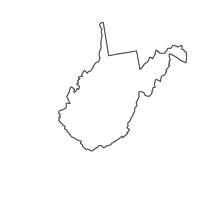 essential members of legal teams who provide critical support services that help deliver legal services efficiently and cost-effectively. The state’s legal industry spans diverse sectors, including energy, federal government agencies, and healthcare, creating strong demand for skilled paralegals across the Mountain State.
Your path to becoming a paralegal in West Virginia involves earning the right education and credentials, gaining practical experience, and potentially pursuing professional certification. While the state doesn’t currently regulate the paralegal profession, completing a formal education program significantly improves your career prospects in this competitive field.
West Virginia has one of the highest concentrations of paralegals per capita in the nation, with approximately 1,680 professionals working across law firms, corporate legal departments, government agencies, and courts. This guide covers everything you need to know about education requirements, certification options, salary expectations, and career opportunities in West Virginia’s paralegal profession.


Educational Requirements in West Virginia
West Virginia state law doesn’t currently regulate paralegals, which means there are no mandatory licensing or certification requirements to work in the field. However, this doesn’t diminish the importance of formal education. As in other states, West Virginia lawyers’ professional conduct is governed by Rule 5.3, which requires lawyers to directly supervise any nonlawyer assistants, including paralegals. Lawyers remain responsible for the professional conduct of their assistants and must provide instruction in ethics and confidentiality.
Proposed 2010 Certification Bill
A bill was introduced in 2010 to require state certification of paralegals in West Virginia, though it didn’t pass. The legislation could be brought before the state legislature again in the future. Under the proposed bill, paralegal certification would have included any of the following qualifications:
- Successful completion of the National Association of Legal Assistants (NALA) Certified Legal Assistant/Certified Paralegal (CLA/CP) exam
- Graduation from an American Bar Association (ABA) approved paralegal studies program
- Graduation from a paralegal studies program that is institutionally accredited but not ABA approved, which includes at least 60 semester hours of classroom study
- Graduation from a paralegal studies program not described above, plus a minimum of six months of in-house training as a paralegal
- Special cases for grandfathering in paralegals with experience and previous employment within twenty-four months of the date of enactment
While this bill didn’t become law, these requirements reflect industry standards that employers typically seek. Completing formal education prepares you for employment and positions you competitively in the job market.
Why Education Matters
Even without state regulation, most West Virginia employers prefer or require formal paralegal education. Paralegal studies programs provide comprehensive training in legal research, writing, litigation support, and specialized areas of law. This foundation proves essential as attorneys, corporations, and government agencies work within an increasingly complex legal framework and expect paralegals to handle substantial responsibilities.
Paralegals with degrees and certificates stand out in West Virginia’s competitive job market. Education demonstrates commitment to the profession and provides the knowledge base necessary for career advancement.
Paralegal Programs in West Virginia
West Virginia offers various paralegal education options, from certificate programs that can be completed quickly to comprehensive degree programs that provide broader educational foundations. You’ll find campus-based and online options available throughout the state.
Types of Programs
Certificate Programs: These focused programs work well if you already have a bachelor’s degree or want to enter the field quickly. Certificate programs typically require 18-30 credit hours of paralegal-specific coursework and can be completed in less than a year. Students who complete certificate programs become certificated paralegals.
Associate Degree Programs: Associate of Applied Science (AAS) programs in paralegal studies typically require two years of full-time study and combine general education courses with specialized paralegal coursework. These programs provide a solid foundation for entry-level positions.
Bachelor’s Degree Programs: Four-year bachelor’s programs offer the most comprehensive education, combining liberal arts coursework with in-depth paralegal training. These degrees provide the strongest foundation for career advancement and specialization.
Master’s Degree Programs: Advanced degree programs serve paralegals seeking leadership roles or career changes into legal fields.
West Virginia Paralegal Schools and Programs
Alderson Broaddus University
- BS/BA in Legal Studies – Campus
- Legal Studies Minor – Campus
American Public University System
- AS in Legal Studies – Online
- BS in Legal Studies – Online
- MA in Legal Studies – Online
- Undergraduate Certificate in Paralegal Studies – Online
Blue Ridge Community and Technical College
- AAS in Paralegal Studies – Campus
- Legal Office Assistant Certificate – Campus
BridgeValley Community and Technical College
- AAS in Paralegal Studies – Campus
Mountwest Community & Technical College
- AAS in Paralegal Studies – Campus
- Certificate of Proficiency in Legal Support – Campus
New River Community and Technical College
- Certificate of Applied Science, Legal Office Assistant – Campus
- AAS in Legal Assisting – Campus
Pierpont Community and Technical College
- AAS in Paralegal Studies – Campus
West Virginia Junior College
- Associate Degree in Legal Office Assisting – Campus and Online
- Certificate in Legal Office Assisting – Campus
West Virginia University
- Master of Legal Studies – Online
Choosing the Right Program
When selecting a paralegal program, consider whether it has ABA approval or institutional accreditation. If you plan to pursue professional certification, program accreditation becomes particularly important as certification exams often require graduation from approved programs.
ABA-approved programs meet specific standards for curriculum, faculty qualifications, library resources, and student services. Institutionally accredited programs have been vetted by regional accrediting bodies. Both types of programs provide quality education that employers recognize and value.
Certification Options
National certification isn’t required in West Virginia, but it distinguishes you among peers and demonstrates expertise to employers. Upon passing a national certification exam, you become a certified paralegal. National certification can complement or even substitute for advanced formal education in some circumstances.
National Certification Exams
Four national exams are available for paralegals who meet educational or work experience requirements:
PACE (Paralegal Advanced Competency Exam) – Offered by the National Federation of Paralegal Associations (NFPA), PACE tests advanced competency across substantive legal topics and professional responsibility.
PCCE (Paralegal CORE Competency Exam) – Also offered by the National Federation of Paralegal Associations (NFPA), PCCE assesses core knowledge and skills for entry-level paralegals.
CLA/CP (Certified Legal Assistant/Certified Paralegal) – Offered by the National Association of Legal Assistants (NALA), this exam covers communications, ethics, legal research, judgment and analysis, and substantive law.
PP (Professional Paralegal) – Offered by the Association for Legal Professionals (NALS), this certification validates professional knowledge and skills.
Benefits of Certification
Professional certification demonstrates commitment to excellence and validates your competence to employers. Many West Virginia paralegals pursue NALA certification to enhance their credentials and advance their careers. The Legal Assistants/Paralegals of Southern West Virginia actively encourages members to seek NALA certification and provides scholarships and study groups to support exam preparation.
West Virginia Paralegal Salaries
West Virginia’s paralegal profession offers competitive compensation, particularly for experienced professionals with specializations. Salary levels vary significantly by location, experience, and practice area.
Statewide Salary Data
As of 2024, West Virginia employed 1,680 paralegals across the state. The mean annual salary reached $56,540, or $27.18 per hour. The median salary stood at $49,620 annually, representing the midpoint where half of paralegals earn more and half earn less.
Salary ranges in West Virginia span from $31,640 annually for entry-level positions (10th percentile) to $87,050 for experienced professionals (90th percentile). Once you’ve gained considerable experience and developed expertise in areas like corporate litigation, labor law, estate law, or consumer law, your earning potential increases substantially.
Salary by Metropolitan Area
Geographic location significantly impacts paralegal salaries in West Virginia. The table below shows mean annual salaries and top-earner compensation (90th percentile) across major metropolitan areas:
| Metropolitan Area | Mean Annual Salary | Mean Hourly Rate | Top 10% Annual | Top 10% Hourly |
|---|---|---|---|---|
| Parkersburg-Vienna | $70,800 | $34.04 | $101,440 | $48.77 |
| Morgantown | $62,230 | $29.92 | $130,350 | $62.67 |
| Charleston | $52,920 | $25.44 | $77,380 | $37.20 |
| Wheeling | $50,820 | $24.43 | $78,180 | $37.59 |
| Huntington-Ashland | $50,010 | $24.04 | $74,050 | $35.60 |
| Weirton-Steubenville | $47,780 | $22.97 | $69,330 | $33.33 |
| Beckley | $46,340 | $22.28 | $77,110 | $37.07 |
| Rural Southern WV | $39,830 | $19.15 | $48,720 | $23.42 |
Parkersburg-Vienna offers the highest average paralegal salaries in West Virginia, exceeding the state average by approximately $14,000. While Charleston serves as the state capital and largest city, smaller metropolitan areas like Parkersburg and Morgantown often provide competitive compensation packages.
Job Market and Career Outlook
West Virginia’s paralegal job market benefits from the state’s diverse economy and strong demand for legal services across multiple sectors.
Employment Sectors
West Virginia’s paralegals work across various industries that create consistent demand for legal support services:
Energy Sector: The state’s energy industry remains a key component of West Virginia’s economy, generating substantial legal work related to mining operations, energy production, environmental compliance, and regulatory matters.
Federal Government: A strong federal government presence through agencies like the FBI, U.S. Treasury, and National Park Service creates opportunities for paralegals in government legal departments.
Healthcare: Large healthcare employers, including West Virginia United Health System in Morgantown and CAMC Health Systems in Charleston, require legal support for compliance, contracts, and healthcare law matters.
Private Law Firms: Law firms throughout West Virginia employ paralegals across practice areas, including litigation, corporate law, family law, real estate, and estate planning.
Job Growth Projections
The U.S. Bureau of Labor Statistics projects West Virginia’s paralegal employment to grow from 2,200 positions in 2022 to 2,400 positions by 2032. This represents an increase of 200 jobs, or 9.1% growth over the decade. The state expects approximately 250 annual job openings for paralegals from 2022 to 2032, accounting for both new positions and the replacement of workers who transition to other careers or retire.
This growth rate aligns with national trends reflecting the legal profession’s ongoing efforts to control costs by delegating more substantive work to qualified paralegals. As legal complexity increases across all sectors, the paralegal role becomes more essential to efficient legal service delivery.
Competitive Advantages
Despite West Virginia’s high concentration of paralegals, demand for skilled professionals remains strong. You’ll improve your competitiveness by:
- Completing formal education from accredited programs
- Earning national certification (NALA, NFPA, or NALS)
- Gaining practical experience through internships
- Developing specialized knowledge in high-demand practice areas
- Building professional networks through associations
- Maintaining current knowledge through continuing education
Professional Associations and Networking
Professional associations provide valuable resources for career development, networking, continuing education, and professional recognition.
Legal Assistants/Paralegals of Southern West Virginia (LAPSWV)
The Legal Assistants/Paralegals of Southern West Virginia serves the Charleston and Huntington regions, offering members opportunities for continuing legal education, professional development, networking, charitable involvement, and representation within the legal community. LAPSWV actively encourages members to pursue national certification through its affiliate organization, NALA, and provides scholarships and study groups to support CLA/CP exam preparation.
LAPSWV Membership Levels
Active Membership – Open to paralegals who meet any of the following:
- Passed NALA’s Certified Legal Assistant (CLA)/Certified Paralegal (CP) exam
- Graduated from an ABA-approved paralegal program
- Graduated from an institutionally-accredited paralegal program, including at least 60 hours of classroom study
- Graduated from a paralegal program plus completed six months of in-house paralegal training
- Hold a bachelor’s degree in any fiel,d plus completed six months of in-house paralegal training
- Have three years of law-related experienc,e including six months of in-house paralegal training
- Completed two years of in-house paralegal training
Provisional Membership – Available to employed paralegals who don’t yet qualify for Active membership.
Student Membership – Open to full-time students enrolled in paralegal studies programs who maintain good academic standing.
Sustaining Membership – Available to any individual or entity that promotes the use of paralegals.
West Virginia Bar Association Paralegal Division
The West Virginia State Bar operates a Paralegal Division with goals of furthering professional development, offering continuing legal education (CLE), and promoting fellowship between legal community members. The Paralegal Division regularly provides CLE through seminars, meetings, and workshops that help paralegals maintain current knowledge and skills.
Major Employers in West Virginia
West Virginia’s paralegals find employment across various practice settings, from large law firms to corporate legal departments and government agencies.
Major Law Firms
Many West Virginia paralegals work for established law firms throughout the state. Major employers include:
- Steptoe & Johnson PLLC
- Bowles Rice McDavid Graff & Love LLP
- Jackson Kelly PLLC
- Spilman Thomas & Battle, PLLC
- Bailey & Glasser LLP
- Flaherty Sensabaugh Bonasso, PLLC
- Huddleston Bolen LLP
- Jenkins Fenstermaker, PLLC
- Robinson & McElwee PLLC
- Dinsmore & Shohl
- Eckert Seamans Cherin & Mellott
- Bailey & Wyant, PLLC
- Campbell Woods PLLC
- Farmer Cline Campbell Arnold
- Kay Casto & Chaney
- Lewis Glasser Casey & Rollins, PLLC
- Martin & Seibert
- McDermott & Bonenberger, P.L.L.C.
- Offutt Nord
- Phillips Gardill Kaiser & Altmeyer, PLLC
- Pitragallo Gordon Alfano
- Pullin, Fowler, Flanagan, Brown & Poe, PLLC
- Roger D. Hunter Attorney at Law
- Stephen & Johnson
- Zimmer Kunz, PLLC
These firms handle diverse practice areas, including corporate law, litigation, energy law, healthcare law, real estate, and more, creating opportunities for paralegals to develop specialized expertise.
Corporate and Government Opportunities
Beyond law firms, paralegals work in corporate legal departments, government agencies, courts, healthcare systems, financial institutions, and insurance companies. These positions often offer regular hours, comprehensive benefits, and opportunities for advancement.
Frequently Asked Questions
Do I need a license to work as a paralegal in West Virginia?
No, West Virginia doesn’t currently regulate paralegals or require state licensing. However, completing formal education from an accredited paralegal program significantly improves your employment prospects. A certification bill was proposed in 2010 but didn’t pass, though similar legislation could be introduced in the future.
What’s the difference between certificated and certified paralegals?
A certificated paralegal has completed a certificate program at a college or university. A certified paralegal has passed a national certification exam offered by organizations like NALA, NFPA, or NALS. You can be both certificated and certified by completing a certificate program and then passing a certification exam.
How long does it take to become a paralegal in West Virginia?
Timeline depends on your educational path. Certificate programs can be completed in under a year. Associate degree programs typically require two years of full-time study. Bachelor’s degree programs take four years. Many programs offer part-time and online options that provide flexibility for working adults.
Should I choose an ABA-approved program?
ABA-approved programs meet specific standards for curriculum, faculty, and resources, which many employers recognize and value. If you plan to pursue national certification, check the exam requirements since some certifications prefer or require graduation from ABA-approved programs. However, institutionally accredited programs also provide quality education.
What’s the job outlook for paralegals in West Virginia?
The U.S. Bureau of Labor Statistics projects 9.1% growth in paralegal employment in West Virginia from 2022 to 2032, adding approximately 200 jobs. The state expects about 250 annual job openings, accounting for both new positions and replacements. West Virginia has one of the highest concentrations of paralegals per capita in the nation.
What’s the highest-paying city for paralegals in West Virginia?
Parkersburg-Vienna offers the highest average paralegal salary in West Virginia at $70,800 annually, with top earners making over $101,440. Morgantown also offers competitive compensation, with mean salaries of $62,230 and top earners reaching $130,350. Charleston, despite being the state capital, has a mean salary of $52,920.
Can I join professional associations as a student?
Yes, the Legal Assistants/Paralegals of Southern West Virginia (LAPSWV) offers student membership for full-time paralegal studies students in good academic standing. Student membership provides networking opportunities, access to continuing education, and connections with practicing professionals who can offer career guidance.
Key Takeaways
- West Virginia doesn’t currently regulate paralegals, but formal education from accredited programs remains essential for competitive employment opportunities and career advancement.
- The state offers diverse paralegal education options, including certificate programs, associate degrees, bachelor’s degrees, and master’s programs available both on campus and online through nine institutions.
- West Virginia paralegals earned a mean salary of $56,540 in 2024, with significant geographic variation from $39,830 in rural areas to $70,800 in Parkersburg-Vienna.
- The state projects 9.1% job growth from 2022 to 2032, adding approximately 200 positions with 250 annual job openings for paralegals across law firms, government agencies, and corporate legal departments.
- National certification through NALA, NFPA, or NALS distinguishes you in the competitive job market, and professional associations like LAPSWV provide valuable support, networking, and continuing education resources.
Ready to Start Your Paralegal Career in West Virginia?
Explore accredited paralegal programs throughout West Virginia and take the first step toward joining one of the state’s most dynamic legal professions.
2024 US Bureau of Labor Statistics salary and job market figures for Paralegals and Legal Assistants reflect state and national data, not school-specific information. Conditions in your area may vary. Data accessed December 2025.