To become a paralegal in Minnesota, you’ll complete a certificate, associate, or bachelor’s program in paralegal studies. Four Minnesota programs hold ABA approval, though the state doesn’t license paralegals or require certification. Minnesota paralegals earn a median $75,570 per year ($36.33 per hour), with about 730 annual openings projected through 2034.
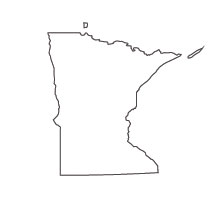
Minneapolis, St. Paul, and Duluth are among Minnesota’s largest metro areas, where paralegal opportunities are concentrated. Whether you want to work for a corporation, a state or federal agency, or a law firm where you’ll specialize in an area like bankruptcy or estate law, you’ll need to learn how to become a paralegal in Minnesota. In short, you’ll want the education, credentials, and practical know-how that today’s lawyers expect.
The Minneapolis-St. Paul metro is the state’s economic hub and home to major corporations including Target, General Mills, and 3M. With 18 Fortune 500 companies headquartered here as of the 2026 list, Minnesota offers steady demand for paralegals in traditional settings like law firms and courts, and in corporate legal departments too.


Education Requirements & Certification
Minnesota doesn’t license or regulate paralegals, and there’s no state exam, registration, or minimum education requirement. What the state does regulate is the supervising attorney. Rule 5.3 of the Minnesota Rules of Professional Conduct makes a lawyer responsible for the conduct of nonlawyer assistants, which includes making sure they understand their ethical obligations and client confidentiality.
That leaves the education decision to you. Aspiring paralegals can enter the field through on-the-job training or through formal study, and they can pursue careers in law firms, corporate legal departments, government agencies, and nonprofits. As competition for good roles has increased, formal education has become the practical dividing line between applicants. Certificates and degrees in paralegal studies also build the coursework hours the voluntary national certification exams require.
Certificate vs. Degree Programs
Certificate programs in paralegal studies are shorter than degree programs because they skip most general education requirements and concentrate on legal coursework. Graduates receive a certificate of completion, which makes them certificated paralegals.
Entry requirements vary. Some certificate programs are post-degree and expect you to already hold a bachelor’s in another field. Others accept students with no prior college work at all. Read the admission requirements before you apply, because the two types are often listed side by side.
Degrees suit people who want both the legal coursework and the broader academic foundation. Minnesota schools offer associate and bachelor’s degrees in paralegal and legal studies, and one graduate-level certificate option.
National Certification Options
Minnesota doesn’t require national certification, but many paralegals pursue it to demonstrate competence to employers. Three national associations have historically offered paralegal credentials, and as of 2026 not all of them are accepting new candidates.
Currently open to individual candidates:
- The Certified Paralegal (CP) exam from the National Association of Legal Assistants (NALA), which now operates as NALA | The Paralegal Association. This credential was previously known as the CLA.
- The PACE exam from the National Federation of Paralegal Associations (NFPA), which leads to the RP designation.
- The PCCE exam, also from NFPA, which leads to the CRP designation.
Not currently open: NALS, the National Association for Legal Support Professionals, has placed its individual certification exams on a temporary hiatus while it revises them, so new candidates can’t register for the Professional Paralegal (PP) exam. Existing PP and CLP holders keep their credentials and can still recertify.
Minnesota’s largest paralegal association is an NFPA affiliate, so the PACE and PCCE exams are the ones you’ll hear about most often at local meetings and continuing education events.
Minnesota’s Legal Paraprofessional Program
Minnesota does something most states don’t, and it’s worth understanding before you plan your career here. The state operates a Legal Paraprofessional Program, which allows approved individuals to advise and represent clients directly in a defined set of cases, under the oversight of a licensed Minnesota attorney.
The program began as a pilot on March 1, 2021, following a Minnesota Supreme Court order. After several years of data collection, the court made it a permanent statewide Judicial Branch program effective January 1, 2025.
What Legal Paraprofessionals Can Do
Approved legal paraprofessionals appear in court and advise clients in landlord-tenant housing matters and in a defined set of family law cases. Their scope has widened over the life of the program to cover some matters involving allegations of domestic or child abuse, along with certain orders for protection and harassment restraining orders. Every legal paraprofessional on the roster must have a written agreement with a supervising Minnesota attorney.
The program exists to close the representation gap. In housing and family court, one or both parties frequently appear without a lawyer, and the paraprofessional role gives lower and moderate-income Minnesotans an affordable option.
How It Differs from Working as a Paralegal
These are two separate roles, and the overlap in the words causes real confusion. A paralegal in Minnesota works under attorney supervision and can’t give legal advice, set fees, accept a case, or appear in court on a client’s behalf. Those restrictions apply everywhere in the country and they haven’t changed.
A legal paraprofessional on the Judicial Branch roster can do some of those things, within the specific case types the court has authorized. That authority comes from admission to the roster, not from a job title, and there’s a separate application and approval process run through the Minnesota Judicial Branch.
Working as a paralegal doesn’t automatically make you a legal paraprofessional, and the program doesn’t replace the paralegal role. For most people reading this page, the paralegal path is the relevant one. The paraprofessional roster is worth knowing about as a possible later step, and as a sign that Minnesota takes an unusually expansive view of what trained legal professionals can do.
Paralegal Salaries in Minnesota
Minnesota’s legal sector is large enough to sustain steady paralegal demand. The American Bar Association‘s most recent count for the state puts resident active attorneys at 26,065, a 2021 figure the ABA has carried forward because Minnesota hasn’t submitted updated numbers since. The Minneapolis-St. Paul metro area ranks 15th among all US metropolitan areas for paralegal employment, with 5,990 paralegals and legal assistants working there as of May 2025.
Statewide Salary Overview
Minnesota employs 7,400 paralegals and legal assistants, who earn a mean wage of $35.56 per hour and $73,960 per year. The state median is $36.33 per hour and $75,570 per year, which is the sixth highest median of any state or the District of Columbia.
| Percentile | Hourly Wage | Annual Salary |
|---|---|---|
| 10th percentile | $22.95 | $47,730 |
| 25th percentile | $27.03 | $56,230 |
| Median (50th percentile) | $36.33 | $75,570 |
| 75th percentile | $40.11 | $83,420 |
| 90th percentile | $49.48 | $102,920 |
These percentiles describe how pay is distributed across the state, not how far along someone is in their career. A long-tenured paralegal in a smaller market can sit near the 10th percentile, and a relatively new one at a large Twin Cities firm can sit above the 75th.
Salary by Metro Area
Location moves paralegal pay more than almost any other factor in Minnesota. The Twin Cities lead the state, and the gap between the metro and the outstate areas is real but narrower than you might expect.
| Metropolitan Area | Mean Hourly Wage | Mean Annual Salary | 90th Percentile |
|---|---|---|---|
| Minneapolis-St. Paul-Bloomington, MN-WI | $36.65 | $76,230 | $105,220 |
| Rochester, MN | $31.27 | $65,040 | $96,640 |
| St. Cloud, MN | $31.09 | $64,670 | $87,480 |
| Mankato, MN | $30.82 | $64,100 | $82,330 |
| Duluth, MN-WI | $29.12 | $60,560 | $80,660 |
The Minneapolis-St. Paul metro’s mean of $76,230 runs about $2,300 above the state mean. At the top of that market, the 90th percentile reaches $105,220 per year, or $50.59 per hour. That figure describes the highest-paid tenth of paralegals in the metro, not a starting offer.
Factors Affecting Salary
Paralegal compensation is almost evenly divided between hourly and salaried pay. NALA survey data found that 51% of paralegals were salaried, while about 49% were paid hourly. Both figures in the tables above matter, and which one applies to you depends on the employer.
Education plays a role, and graduates of ABA-approved programs often see stronger starting offers. National certification through the CP, PACE, or PCCE can also lift earning potential, particularly at larger firms that formalize their pay bands.
Specialization matters. Paralegals in intellectual property, corporate transactions, and complex litigation typically earn more than those in general practice, which reflects the Twin Cities concentration of corporate and IP work.
Employer type matters too. Large corporate legal departments, especially at Fortune 500 companies, often pay above what small firms can offer. Government positions tend to pay less but come with strong benefits and job security. You can compare Minnesota against the rest of the country on our paralegal compensation page.
Paralegal Programs & Schools
The knowledge required to do legal support work well is hard to pick up informally. As attorneys, corporations, and government agencies operate in an increasingly complex legal framework, the responsibility they hand to paralegals has grown with it. Minnesota employers have come to expect the kind of grounding that a certificate or degree in paralegal studies provides.
Minnesota rewards that preparation. The state ranks sixth nationally for median paralegal pay, and it’s home to 18 Fortune 500 companies, which means a lot of busy in-house legal departments alongside the Twin Cities firms.
ABA-Approved and Accredited Programs
Whether a program is approved by the American Bar Association or simply offered by an accredited institution is worth checking before you enroll. ABA approval signals that a program has met standards for curriculum, faculty qualifications, and student services, and some employers prefer or require it. The ABA updates its directory of approved programs every February and August, and programs not listed in it are not ABA-approved. Four Minnesota programs currently hold that approval: Hamline University, Inver Hills Community College, North Hennepin Community College, and Winona State University. They’re marked below.
One distinction to watch as you compare the list below. Some of these are paralegal studies programs. Others are legal administrative or legal office programs, which train for legal support roles centered on office procedure and documentation rather than substantive legal work. Both lead to jobs, but they aren’t the same credential, and the program name usually tells you which one you’re looking at.
Minnesota Paralegal Programs
Alexandria Technical & Community College
AAS in Paralegal Studies – Campus and online
Anoka Technical College
AAS in Legal Office Specialist – Online
Legal Office Specialist Diploma – Online
Legal Office Specialist Certificate – Online
Bethany Lutheran College
BA in Legal Studies – Campus
Minor in Legal Studies – Campus
Paralegal Certificate – Campus
Dakota County Technical College
AAS in Legal Administrative Assistant – Online
Legal Administrative Assistant Diploma – Online
Hamline University (ABA-approved)
Legal Studies Bachelor’s Degree – Campus
Paralegal Certificate (graduate-level, open to undergraduates) – Online
Inver Hills Community College (ABA-approved)
AS in Paralegal Studies – Campus and online
Paralegal Certificate (post-associate) – Campus and online
Lake Superior College
AAS in Paralegal Studies – Campus and online
AS in Paralegal Studies – Campus and online
Paralegal Studies Certificate – Campus and online
Minnesota State University Moorhead
BS in Paralegal Studies – Campus
North Hennepin Community College (ABA-approved)
AS in Paralegal Studies – Campus and online
Paralegal Certificate (post-associate) – Campus and online
Rasmussen University
AAS in Paralegal Studies – Online
Paralegal Certificate (post-degree) – Online
Ridgewater College
AAS in Legal Assistant – Campus
Legal Assistant Diploma – Campus
Legal Assistant Certificate – Campus and online
Winona State University (ABA-approved)
BS in Legal Studies – Campus
Legal Studies Certificate – Campus
Law (3+3) with Mitchell Hamline School of Law – Campus
Job Outlook & Growth
Minnesota’s paralegal workforce is projected to grow modestly through the next decade. The state figures below come from ProjectionsCentral and cover 2024 to 2034.
Employment Projections (2024-34)
| Metric | Figure |
|---|---|
| Base employment (2024) | 6,880 positions |
| Projected employment (2034) | 6,980 positions |
| Change in jobs | +110 positions |
| Percent change | 1.6% |
| Average annual openings | 730 positions per year |
Read those two numbers together, because they say different things. Minnesota expects to add 110 paralegal positions over ten years, which is slow net growth. The state also expects about 730 openings a year, which is a healthy amount of hiring. The gap between them is replacement demand, meaning openings created when people retire, move into other roles, or leave the workforce. Replacement openings are real jobs you can apply for, but they aren’t evidence that the occupation is expanding.
Nationally, the picture is flatter still. The Bureau of Labor Statistics projects little or no change for paralegals and legal assistants between 2025 and 2035, with about 40,800 average annual openings. BLS attributes the limited demand growth partly to advances in technology, including artificial intelligence, which are expected to make paralegals more efficient at research and document preparation.
The practical takeaway for Minnesota is that openings exist in steady numbers, and candidates who arrive with formal training and a credential compete better for them than candidates who don’t.
Career Advancement Opportunities
Minnesota’s legal market offers clear paths for career advancement. Paralegals early in their careers can progress to senior positions with wider responsibility and higher pay. Some move into specialized roles tied to a practice area, such as intellectual property, environmental law, or healthcare compliance.
Experienced paralegals may advance to paralegal manager or legal operations coordinator, supervising teams and managing workflow. Others use their legal knowledge to move into compliance, contract administration, or legal technology. The state’s concentration of corporate legal departments creates advancement routes that don’t run through a traditional law firm at all.
Professional Associations
Minnesota Paralegal Association (MPA)
The Minnesota Paralegal Association, an NFPA affiliate, has members across the state and regional groups that reflect their varied needs. The MPA provides resources to aspiring paralegals, including a mentoring program and a career center. It supports continuing education through meetings, seminars, continuing legal education (CLE), and sectional work organized by practice area. The MPA also engages in pro bono work and maintains its own directory of Minnesota paralegal education programs.
Minnesota Certified Paralegal (MnCP) Credential
The MPA sponsors a voluntary state credential, the Minnesota Certified Paralegal (MnCP). Note that the MPA counts substantive paralegal experience, not time in a legal office generally. You must meet one of these eight qualifications:
- An associate’s degree or its equivalent in paralegal studies from an ABA-approved or institutionally accredited institution, plus four years of substantive paralegal experience
- A baccalaureate degree in paralegal studies from an ABA-approved or institutionally accredited institution, plus two years of substantive paralegal experience
- A baccalaureate degree in any discipline from an accredited institution, a post-baccalaureate certificate in paralegal studies from an ABA-approved or institutionally accredited institution, and two years of substantive paralegal experience
- A baccalaureate degree in any discipline from an institutionally accredited institution, plus four years of substantive paralegal experience
- Status as a PACE Registered Paralegal
- Status as a CORE Registered Paralegal, or a Certified Paralegal through NALA, plus four years of substantive paralegal experience
- A high school diploma or equivalent, at least 10 years of substantive paralegal experience, and 10 CLE credits including two ethics credits (or one ethics and one DEI credit) in the two years before applying
- Graduation from an accredited law school without disbarment or suspension in any jurisdiction, plus two years of substantive paralegal experience immediately before applying
MnCPs renew every two years, which takes 10 CLE credits including two ethics credits.
MPA Membership Levels
In addition to the MnCP credential, the MPA offers different levels of membership:
- Voting – Open to paralegals employed in Minnesota
- Greater Minnesota Voting – Open to paralegals employed in Minnesota who live outside the Seven-County Twin Cities Metro Area
- Associate – Open to those who meet any of the following:
- Not employed in the legal field and seeking first-time employment as a paralegal
- Have previously been employed as a paralegal, but are not currently
- Are employed as a paralegal outside the state
- Paralegal Educator – Open to anyone employed or previously employed as a paralegal educator
- Student – Open to any student enrolled in a paralegal program or internship
- Greater Minnesota Student – Open to any student enrolled in a paralegal program or internship that is located outside the Seven County Twin Cities Metro Area
- Sustaining – Open to any entity that supports the MPA
- Individual Sustaining – Open to any employee of an entity that does not wish to, or cannot, be a sustaining member
NALS Twin Cities
A NALS affiliate, this organization offers these membership levels:
- Individual – Open to those engaged in work of a legal nature
- Associate – Open to those engaged in work of a legal nature, such as educators, judges, and attorneys
- Students – Open to students taking at least nine semester credits from a legal-related program offered by an accredited school
- Retired – Open to those who have been a NALS-affiliated member for at least five years before retirement
- Life – Open to qualified individual members
- International – Open to those engaged in work of a legal nature who reside outside the US
Red River Valley Paralegal Association (RRVPA)
Paralegals working in western Minnesota may choose to join the Red River Valley Paralegal Association. The RRVPA, a NALA affiliate, includes paralegals working in eastern North Dakota and western Minnesota. It runs several CLE opportunities through the year, including Lunch and Learns and an annual fall seminar generally held in Fargo, North Dakota. Those credits count toward maintaining a CP certification. The RRVPA also operates a mentor program aimed at students and career changers.
Law Firms & Employers
Large law firms employ paralegals in volume, and the Twin Cities legal market has consolidated considerably over the past decade. Major firms with a significant Minnesota presence include:
- Fredrikson & Byron
- Dorsey & Whitney
- Robins Kaplan
- Faegre Drinker Biddle & Reath, which absorbed Faegre & Benson
- Taft Stettinius & Hollister, which merged with Briggs and Morgan in 2020
- Ballard Spahr, which merged with Lindquist & Vennum in 2018
- Stinson, successor to Leonard, Street and Deinard
Beyond law firms, Minnesota’s 18 Fortune 500 companies staff substantial in-house legal teams. Target, General Mills, 3M, Best Buy, and U.S. Bancorp all employ paralegals in specialized roles, and UnitedHealth Group, the state’s largest public company, ranks third nationally by revenue.
Important Contacts
- Minnesota Paralegal Association (MPA), affiliated with NFPA
- Minnesota State Bar Association
- Minnesota Secretary of State
- Minnesota Judicial Branch
- Red River Valley Paralegal Association (RRVPA), affiliated with NALA
Frequently Asked Questions
Do I need certification to work as a paralegal in Minnesota?
No. Minnesota has no mandatory certification or licensing requirement for paralegals. Voluntary certification through NALA or NFPA can demonstrate competence and may improve job prospects and pay. The Minnesota Paralegal Association also offers a state credential, the Minnesota Certified Paralegal (MnCP).
What’s the average paralegal salary in Minnesota?
Minnesota paralegals earn a median of $36.33 per hour and $75,570 per year, and a mean of $35.56 per hour and $73,960 per year, according to May 2025 Bureau of Labor Statistics data. Pay ranges from $47,730 at the 10th percentile to $102,920 at the 90th. The Minneapolis-St. Paul metro averages $76,230.
How long does it take to become a paralegal in Minnesota?
The timeline depends on your path. Certificate programs typically take 6 to 12 months, associate degrees about two years, and bachelor’s degrees four years. Post-baccalaureate certificate programs, for people who already hold a bachelor’s in another field, usually take 6 to 18 months.
What’s the difference between a paralegal and a legal paraprofessional in Minnesota?
A paralegal works under attorney supervision and can’t give legal advice or appear in court for a client. A legal paraprofessional approved by the Minnesota Judicial Branch can advise clients and appear in court in certain housing and family law matters, with a supervising Minnesota attorney. The program became permanent statewide on January 1, 2025, and admission runs through a separate application process.
Are ABA-approved programs better than non-approved programs?
ABA approval indicates a program meets standards for curriculum, faculty qualifications, and student services. Many employers prefer it, and some certifications specify it in their education requirements. Non-approved programs can still provide a quality education, so weigh approval alongside cost, format, and local employer preferences.
Can I work as a paralegal without a degree?
Yes. Minnesota doesn’t require formal education to work as a paralegal, and some people still enter through on-the-job training. Most employers prefer candidates with formal paralegal education, and a certificate or degree meaningfully improves your prospects in a competitive market.
What’s the job outlook for paralegals in Minnesota?
Minnesota expects to add 110 paralegal positions between 2024 and 2034, a 1.6% increase, with about 730 openings per year. Most of those openings come from replacement demand rather than new positions. Nationally, BLS projects little or no change for the occupation from 2025 to 2035.
What’s the difference between certificated and certified paralegals?
A certificated paralegal has completed an educational certificate program. A certified paralegal has passed a national certification exam, currently the CP from NALA or the PACE or PCCE from NFPA. Minnesota also offers the state-specific Minnesota Certified Paralegal (MnCP) credential through the Minnesota Paralegal Association.
Which paralegal association should I join in Minnesota?
The Minnesota Paralegal Association (MPA) is the state’s primary organization, offering networking, continuing education, the MnCP credential, and a directory of Minnesota paralegal programs. As an NFPA affiliate, it’s also the route to the PACE and PCCE exams. If you work in western Minnesota, the Red River Valley Paralegal Association covers that region.
Key Takeaways
- Minnesota doesn’t license paralegals or require certification, so your education choice is yours to make, and formal training is what separates candidates in practice
- Paralegals here earn a median $36.33 per hour and $75,570 per year, the sixth highest median of any state, with the 90th percentile at $102,920
- Twelve Minnesota schools offer paralegal, legal studies, or legal administrative programs, and four of them hold ABA approval: Hamline, Inver Hills, North Hennepin, and Winona State
- State projections show 1.6% growth from 2024 to 2034 and about 730 annual openings, most of which come from replacement demand rather than new positions
- The Minneapolis-St. Paul metro ranks 15th nationally for paralegal employment and pays the most in the state, averaging $76,230
- Minnesota’s Legal Paraprofessional Program, permanent statewide since January 2025, is a separate licensed role that allows court appearances in some housing and family law matters
Ready to Start Your Paralegal Career in Minnesota?
Compare paralegal programs in the Twin Cities and across the state. Minnesota pays its paralegals the sixth highest median in the country, and the first step is picking the right program.
May 2025 US Bureau of Labor Statistics salary figures for Paralegals and Legal Assistants. Long-term 2024-34 job growth projections from the US Department of Labor-sponsored resource, ProjectionsCentral. Figures reflect city, state, and national data, not school-specific information. Conditions in your area may vary. Data accessed August 2026.