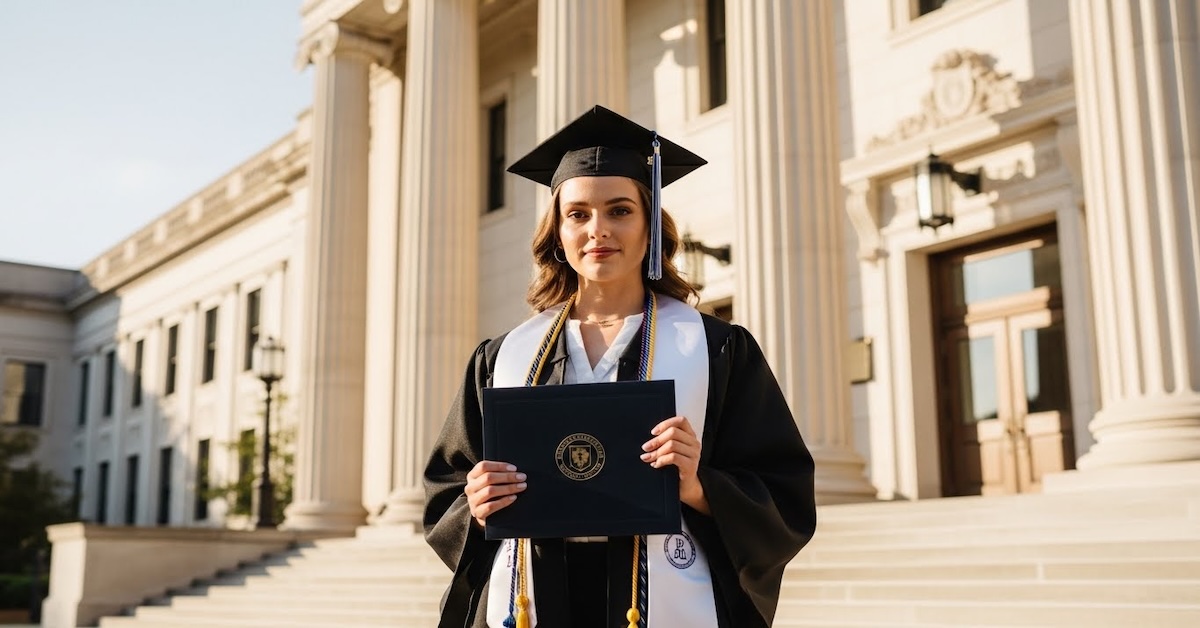

Legally, no. Most states don’t require a bachelor’s degree, and BLS still lists an associate degree or certificate as the typical entry-level education. But some major firms do require four-year degrees, and NALA found bachelor’s holders earn about 8% more than associate degree holders. Your target employer decides whether it matters.


The paralegal profession is changing. What used to be a field you could enter with a certificate or associate degree has shifted toward higher educational expectations, particularly at large law firms and corporate legal departments.
This doesn’t mean you can’t become a paralegal without a bachelor’s degree. You can. But understanding where the profession is heading helps you make smarter decisions about your education. This guide breaks down what employers actually require, how education affects your earning potential, and which pathway makes the most sense for your situation.
What Major Law Firms Actually Require
Some of the country’s most selective law firms require a bachelor’s degree for entry-level paralegal work, and they publish it on their own careers pages where you can read it for yourself.
| Firm | What the Firm States | Source |
|---|---|---|
| Sullivan & Cromwell | Paralegals must be college graduates with a four-year degree, and provide an official college transcript at the time of hire | S&C paralegal careers page |
| Davis Polk | Entry-level paralegal program is built for recent college graduates, and applications require a college transcript | Davis Polk paralegal careers page |
These are two documented examples, not a survey of the market. Firms revise their postings constantly, and a requirement published this year can read differently next year. Treat them as evidence about these two firms.
What they share is a program design. Both recruit paralegals as a pre-law track, hiring people who expect to apply to law school within a few years, and both ask for a college transcript with the application. That shapes the work toward drafting, research, and due diligence rather than administrative support. Whether the rest of the market hires the same way is a separate question, and the national data further down suggests a lot of it doesn’t.
The Salary Advantage of a Bachelor’s Degree
The Bureau of Labor Statistics reports that paralegals and legal assistants earned a median wage of $30.24 per hour, or $62,890 per year, in May 2025. That’s the middle of the distribution, not a starting figure. Where you land in the range depends on a mix of factors, and education is one of them.
NALA reports that its 2024 National Utilization and Compensation Report found paralegals with bachelor’s degrees earning about 8% more on average than those with associate degrees. The 2020 and 2022 editions of the same survey both put that gap at 5%, so the increase showed up in the most recent round rather than building steadily across the decade. It’s one survey moving, not a long trend line.
Location amplifies the difference. Ranked by mean annual wage, the top-paying metro areas are San Jose-Sunnyvale-Santa Clara at $103,080, San Francisco-Oakland-Fremont at $92,830, Seattle-Tacoma-Bellevue at $92,230, and Washington-Arlington-Alexandria at $87,900. Read those as averages, not as what a typical job pays. San Francisco’s median is $84,030 against that $92,830 mean, which tells you the range is wide. Wage data also doesn’t record what employers ask for, so treat a high-paying metro as a place to go read job postings rather than proof that a degree is required there.
Applied to the $62,890 median, an 8% difference works out to about $5,030 a year. Resist multiplying that across a career. NALA’s figure compares two groups at one moment, and those groups differ in experience, region, employer, and specialty as well as education. It shows an association, not a degree that pays you a fixed amount every year for thirty years.
Why Technology Demands Are Raising the Bar
Legal technology proficiency is becoming part of the core job rather than a bonus skill. E-discovery platforms like Relativity, document automation systems, and AI-assisted research tools all turn up in ordinary paralegal work now. How well a program prepares you for them varies by program rather than by credential level, so compare actual course lists instead of assuming a four-year degree covers more ground.
Law firms increasingly expect paralegals to handle case management software, navigate e-discovery platforms, and understand AI-assisted document review. A bachelor’s program has more total credit hours to work with, which can mean deeper coverage of these tools. Whether it actually does depends on how the school built its curriculum.
Specialized practice areas raise the bar further. Data privacy and cybersecurity work, regulatory compliance, and intellectual property all sit where law meets technical subject matter, and staffing those groups calls for people who can work through a technical document unaided. A bachelor’s in a related field is one way to show that on a resume. It isn’t the only way, and requirements differ from firm to firm.
There’s a flip side worth understanding before you commit to four years. BLS projects employment of paralegals and legal assistants will show little or no change from 2025 to 2035, moving from 404,900 jobs to 403,800. The agency links that flat outlook partly to advances in technology, including artificial intelligence, which are expected to make paralegals more efficient at research and document preparation. About 40,800 openings are still projected each year on average, but most of those come from workers leaving the occupation or the labor force rather than from new positions being created. Replacement hiring is real hiring. It just means you’re competing for a seat someone vacated rather than one that was added.
Note: employers increasingly prefer bachelor’s degrees, but that’s a market preference, not a legal rule. California is the only state that sets minimum qualifications for anyone using the paralegal title, and a bachelor’s degree doesn’t satisfy them on its own. Under Business and Professions Code section 6450, the degree route also requires at least a year of law-related work under attorney supervision plus a written declaration from that attorney. An ABA-approved paralegal certificate qualifies by itself.
The Post-Baccalaureate Path for Career Changers
If you already have a bachelor’s degree in another field, you don’t need to start over. Post-baccalaureate paralegal certificates are usually the quickest route in for career changers who already hold a degree. Learn more about changing careers to become a paralegal.
These programs typically take 6 to 18 months and cost between $5,000 and $15,000. They focus exclusively on paralegal training since you’ve already completed general education requirements. Many are ABA-approved, which some employers screen for. Treat the figures below as typical ranges rather than quotes, since tuition swings widely with residency, institution type, and transfer credit.
| Pathway | Timeline | Cost Range | Best For |
|---|---|---|---|
| Certificate Only | 6-12 months | $3,000-$8,000 | Quick entry, smaller markets |
| Associate Degree | 2 years | $8,000-$20,000 | Career starters without prior college |
| Bachelor’s Degree | 4 years | $40,000-$80,000 | Maximum career flexibility |
| Post-Bacc Certificate | 6-18 months | $5,000-$15,000 | Career changers with existing degrees |
The combination of an existing bachelor’s degree plus a paralegal certificate is highly marketable. Law firms value the specialized knowledge career changers bring from previous fields, especially backgrounds in healthcare, business, IT, or finance that align with practice areas.
When an Associate Degree Still Works
Not every paralegal position requires a bachelor’s degree. Smaller law firms, particularly outside major metropolitan areas, often hire paralegals with associate degrees or certificates. Government positions at the state and local levels may have more flexible requirements than those of federal agencies.
BLS still lists an associate’s degree or a certificate in paralegal studies as the typical entry-level education for the occupation. It also notes that some employers will consider candidates who have a high school diploma and relevant experience.
O*NET asks a narrower question of job incumbents and occupational experts: how much education a new hire actually needs to do the work. Among respondents, 37% said a bachelor’s degree is required, 20% said an associate degree or other two-year degree, and 19% said a high school diploma or equivalent. Read those three answers together and you get a split market rather than a closed door. The bachelor’s is the single most common response, and it’s still a minority of them.
If you’re planning to work in a smaller market, at a small firm, or in specific practice areas that value experience over credentials, an associate degree combined with strong skills can launch your career. The key is understanding your target employers before investing in education. For a complete overview of all pathways, see our guide to becoming a paralegal.
Frequently Asked Questions
Do you need a bachelor’s degree to become a paralegal?
Legally, no. Most states don’t require any specific degree to work as a paralegal. California is the only state that sets minimum qualifications for using the title, and even there a bachelor’s degree counts only when paired with a year of attorney-supervised legal work. In practice, some major firms and competitive employers do require bachelor’s degrees for entry-level positions, while many other employers accept an associate degree, a certificate, or relevant experience.
How much more do paralegals with bachelor’s degrees earn?
NALA’s 2024 National Utilization and Compensation Report found paralegals with bachelor’s degrees earning about 8% more on average than those with associate degrees. The 2020 and 2022 editions both measured that gap at 5%. Bear in mind this compares two groups that also differ in experience, region, and employer, so it isn’t a guaranteed raise for finishing a degree.
What do BigLaw firms require for paralegal positions?
It varies by firm, and most don’t publish a policy at all. Two that do: Sullivan & Cromwell states that paralegals must be college graduates with a four-year degree, and Davis Polk runs its entry-level program for recent college graduates. Both require a college transcript with the application. Those are two firms’ requirements, not a rule that holds across BigLaw.
Can I become a paralegal with an associate’s degree?
Yes. Many paralegals work successfully with associate degrees, particularly at smaller firms, in less competitive markets, or in government positions. BLS still lists an associate’s degree or a certificate in paralegal studies as the typical entry-level education. Your target employer and location determine whether this pathway works for your goals.
Is a post-baccalaureate paralegal certificate worth it?
For career changers who already have a bachelor’s degree in another field, yes. This combination, an existing four-year degree plus a paralegal certificate, is one of the most marketable credential packages. Programs typically take 6-18 months and cost $5,000-$15,000, offering an efficient path into the profession.
Key Takeaways
- Sullivan & Cromwell and Davis Polk both require a four-year degree for entry-level paralegal roles, though two firms don’t establish what the wider market does.
- NALA’s 2024 survey found bachelor’s degree holders earning about 8% more than associate degree holders, up from 5% in its 2020 and 2022 rounds. That’s an association across groups, not a guaranteed raise.
- Technology demands are driving higher educational requirements as firms expect proficiency in e-discovery, AI tools, and case management systems.
- BLS projects little or no change in paralegal employment from 2025 to 2035, with about 40,800 annual openings coming mostly from workers leaving the occupation rather than from new positions.
- Career changers with existing bachelor’s degrees can earn a post-baccalaureate paralegal certificate in 6-18 months, creating a highly competitive credential combination.
- Associate degrees still work at smaller firms, in less competitive markets, and in many government positions, but they close off the employers that require a four-year degree.
Ready to Explore Bachelor’s Degree Programs?
Find accredited paralegal programs that match your career goals and prepare you for the competitive legal job market.
May 2025 US Bureau of Labor Statistics salary figures for Paralegals and Legal Assistants. National 2025-35 employment projections from the US Bureau of Labor Statistics Employment Projections program. Figures reflect national data, not school-specific information. Conditions in your area may vary. Data accessed August 2026.